Kitchen cabinet design solutions are the single most powerful lever you can pull to transform your kitchen’s look, feel, and functionality — without committing to a full-scale renovation. Whether your cabinets feel outdated, cramped, or simply mismatched with your evolving taste, the right design approach can reinvent the heart of your home faster and more affordably than you might expect. See cabinet refacing cost for budgeting details.
According to the National Kitchen and Bath Association, kitchen renovations rank among the top home improvement investments year after year — yet a full remodel is rarely the most efficient path. For Cincinnati homeowners, targeted cabinet updates deliver remarkable, lasting results at a fraction of the cost and disruption of complete replacement.
This guide covers every major kitchen cabinet design solution available today — from cabinet refacing and door style selection to finish materials, hardware upgrades, organizational add-ons, layout strategies, and current color trends — so you can make a fully informed decision for your space.
What Are Kitchen Cabinet Design Solutions?
Kitchen cabinet design solutions encompass every strategy, technique, and material choice used to update, reorganize, or visually transform kitchen cabinetry. These solutions span a wide spectrum — from swapping out hardware in an afternoon to professionally refacing every cabinet in your kitchen over a few days — and each approach serves a specific budget, timeline, and aesthetic objective.
The most widely used approaches include:
- Cabinet refacing — replacing doors and applying new veneer to existing boxes
- Cabinet painting or refinishing — applying new color to existing surfaces
- Hardware replacement — swapping knobs, pulls, and hinges
- Cabinet organizational upgrades — adding pull-out shelves, lazy Susans, drawer inserts
- Partial or full cabinet replacement — removing and installing entirely new units
- Open shelving integration — removing select doors to create display and breathing space
Of all these options, contemporary cabinet refacing consistently stands out as the optimal balance of impact, cost-efficiency, and timeline — especially for kitchens where the existing cabinet framework is structurally sound.
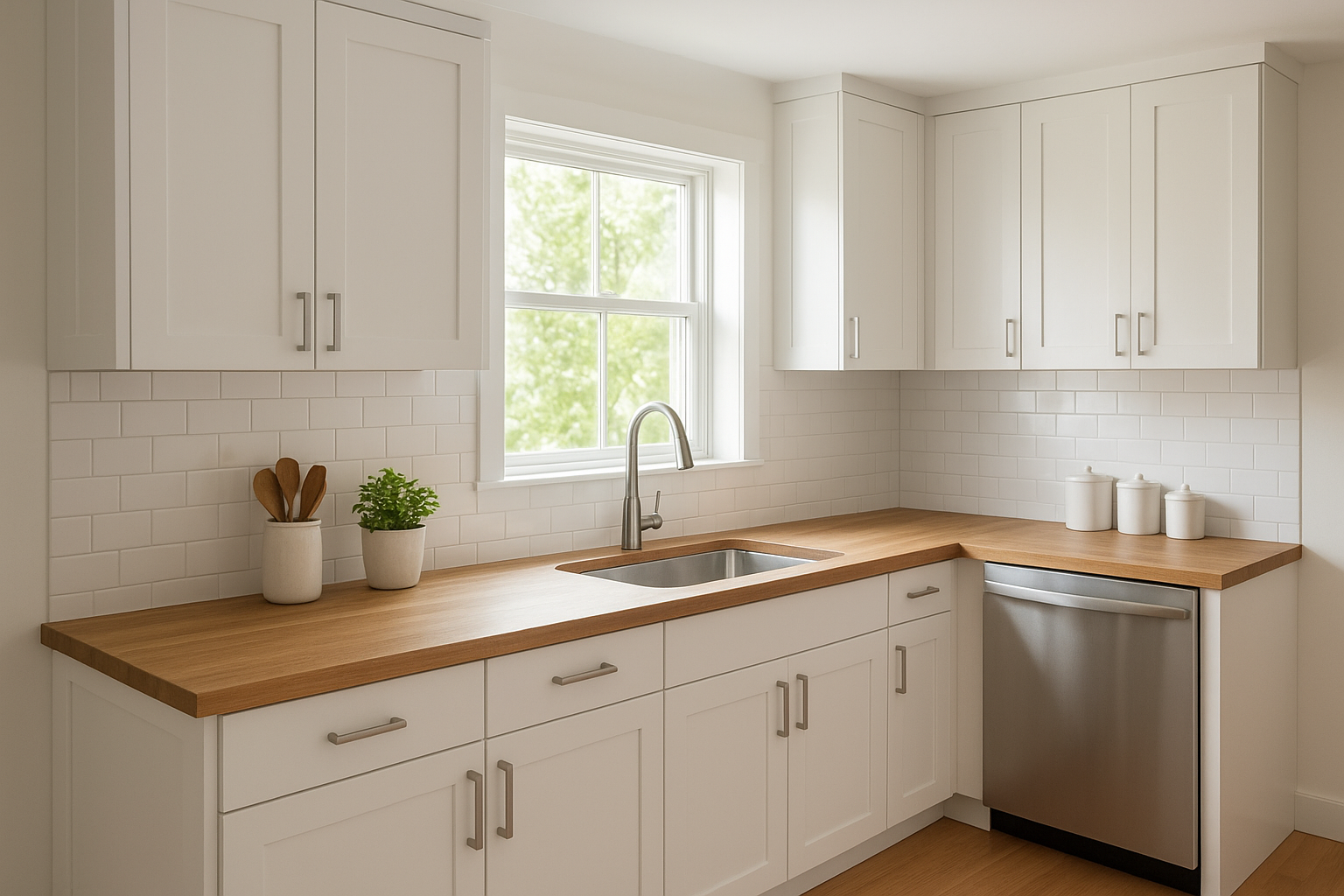
Cabinet refacing is one of the most effective kitchen cabinet design solutions for achieving a modern look without full replacement. For a deeper walkthrough, see our Kitchen Design Consultation Guide for Cincinnati Homes.
Cabinet Refacing: The Gold Standard Among Kitchen Cabinet Design Solutions
Cabinet refacing is the process of replacing existing cabinet doors and drawer fronts while applying a fresh veneer, laminate, or rigid thermofoil (RTF) surface to the existing cabinet boxes. The underlying structure remains entirely in place — only the visible, aesthetic surfaces are updated. The result is a kitchen that looks brand new, without the cost, waste, or construction disruption of full replacement. Learn about professional Cincinnati cabinet refacing.
Refacing typically costs 30 to 50 percent less than full cabinet replacement, making it an extraordinarily smart financial decision. For Cincinnati homeowners, this means accessing a high-quality kitchen transformation without depleting their renovation budget. See the kitchen cabinet renovation guide for budgeting and planning details.
The team at Kitchen Transformations Cabinet Refacing specializes exclusively in this kind of targeted, high-impact update. Their deep expertise in cabinet refacing means Cincinnati homeowners receive skilled craftsmanship with minimal disruption to daily life. Last updated: 2026-08-12. Author: Kitchen Transformations Cincinnati team.
Cabinet Refacing vs. Full Replacement: A Clear Comparison
Understanding how refacing stacks up against full replacement helps homeowners make a confident, well-informed choice:
| Factor | Cabinet Refacing | Full Replacement |
|---|---|---|
| Cost | 30–50% less than replacement | Highest cost option |
| Timeline | 2–5 days | Several weeks |
| Disruption | Minimal — kitchen stays functional | Extensive — full demolition required |
| Waste Generated | Very low — existing boxes reused | High — all old cabinets discarded |
| Visual Impact | Dramatic — completely updated look | Dramatic — completely new units |
| Additional Repairs Needed | Rarely — boxes stay in place | Often — walls, plumbing may need work |
| ROI at Resale | High — low investment, high perceived value | Lower ROI due to higher cost basis |
Cabinet Refacing vs. Cabinet Painting
Cabinet painting applies a fresh coat of paint to existing door and box surfaces. While it is the lowest-cost option, it also carries the most significant durability limitations. Paint in a kitchen environment is subject to moisture, grease, frequent cleaning, and impact — all of which cause chipping, peeling, and yellowing over time.
Refacing materials — particularly RTF and high-pressure laminate — are specifically engineered for kitchen environments and maintain their appearance far longer. If you want a result that looks professional and lasts a decade or more, refacing is the superior choice.
Popular Cabinet Door Styles and What They Communicate
Your cabinet door profile is the most visible design decision in the kitchen. Each style communicates a distinct aesthetic philosophy — and choosing the right one anchors the entire room’s visual identity. Here are the most widely chosen modern cabinet styles today:
Shaker
The shaker door style features a flat recessed center panel framed by four straight rails and stiles. It is currently the most popular cabinet door profile in North America due to its exceptional versatility — equally at home in modern farmhouse, transitional, and minimalist contemporary kitchens. Its clean geometry pairs beautifully with both painted finishes and natural wood veneers.
Raised Panel
Raised panel doors feature a center panel that projects outward from the surrounding frame. This adds visual depth and a sense of architectural craftsmanship. This style is the traditional standard and works best in formal, heritage, or classic kitchen designs. It pairs ideally with rich wood stains and ornate hardware.
Flat Panel (Slab)
Slab doors are completely flat with no framing or panel detail whatsoever. They are the defining style of European and high-gloss contemporary kitchens. Slab doors in matte lacquer or high-gloss acrylic create a sleek, uninterrupted visual surface that feels sophisticated and deliberately minimal.
Beadboard
Beadboard doors incorporate vertical groove detailing — the same tongue-and-groove paneling traditionally found on cottage and farmhouse walls. They add texture, warmth, and visual interest without overwhelming a small kitchen. This style pairs well with shiplap accents, apron-front sinks, and vintage-inspired hardware.
Louvered and Glass-Insert Doors
Louvered doors feature horizontal slats that allow air circulation — traditionally used in base cabinets near appliances. Glass-insert doors (clear, frosted, seeded, or leaded glass) replace the solid panel with a glass pane, creating visual depth and an opportunity to display curated dishware or decorative items. Glass inserts are a compelling way to add visual lightness to a kitchen with heavy upper cabinetry.
Two-Tone Cabinet Designs
One of the strongest current refacing trends 2024 in kitchen cabinet design solutions is the two-tone approach: pairing a bold or deep color on lower cabinets with a lighter, airier tone on upper cabinets. Classic pairings include navy lower cabinets with white uppers, or warm sage green bases with cream upper units. Two-tone designs add personality and depth without sacrificing cohesion.
Choosing the Right Cabinet Finish Material
The material applied to cabinet doors and box exteriors determines both how your kitchen looks and how long it lasts. Each finish material carries distinct trade-offs in appearance, durability, moisture resistance, and cost.
Wood Veneer
Wood veneer is a thin slice of genuine hardwood — oak, maple, cherry, birch, walnut, and more — bonded to a stable substrate. It delivers authentic wood grain patterns and the warmth that no synthetic material can fully replicate. Veneer can be stained, bleached, or finished with oil, wax, or lacquer to achieve virtually any color direction. It is the premium choice for homeowners who want a natural, high-end result.
Rigid Thermofoil (RTF)
Rigid thermofoil (RTF) is a vinyl film heat-formed and pressure-bonded over an MDF core. It is moisture-resistant, seamless (no visible joints), and available in an extensive range of solid colors, woodgrain prints, and textures. RTF is particularly well-suited to bathrooms and high-humidity kitchens. Its seamless surface is also exceptionally easy to clean — a significant practical advantage for families.
High-Pressure Laminate (HPL)
High-pressure laminate is constructed by bonding layers of resin-saturated kraft paper under extreme heat and pressure, then applying a decorative surface layer. It is exceptionally scratch-resistant, impact-resistant, and UV-stable — making it the most durable option for high-traffic kitchens. HPL is available in an enormous array of colors, patterns (including convincing stone and concrete finishes), and textures from matte to gloss.
Acrylic and High-Gloss Finishes
Acrylic panels are polished to an ultra-high-gloss mirror finish that dramatically brightens a kitchen by reflecting light. They are most commonly used on slab-style doors in contemporary kitchens. While they require careful maintenance to avoid visible fingerprints and surface scratches, the visual impact they deliver is unmatched.
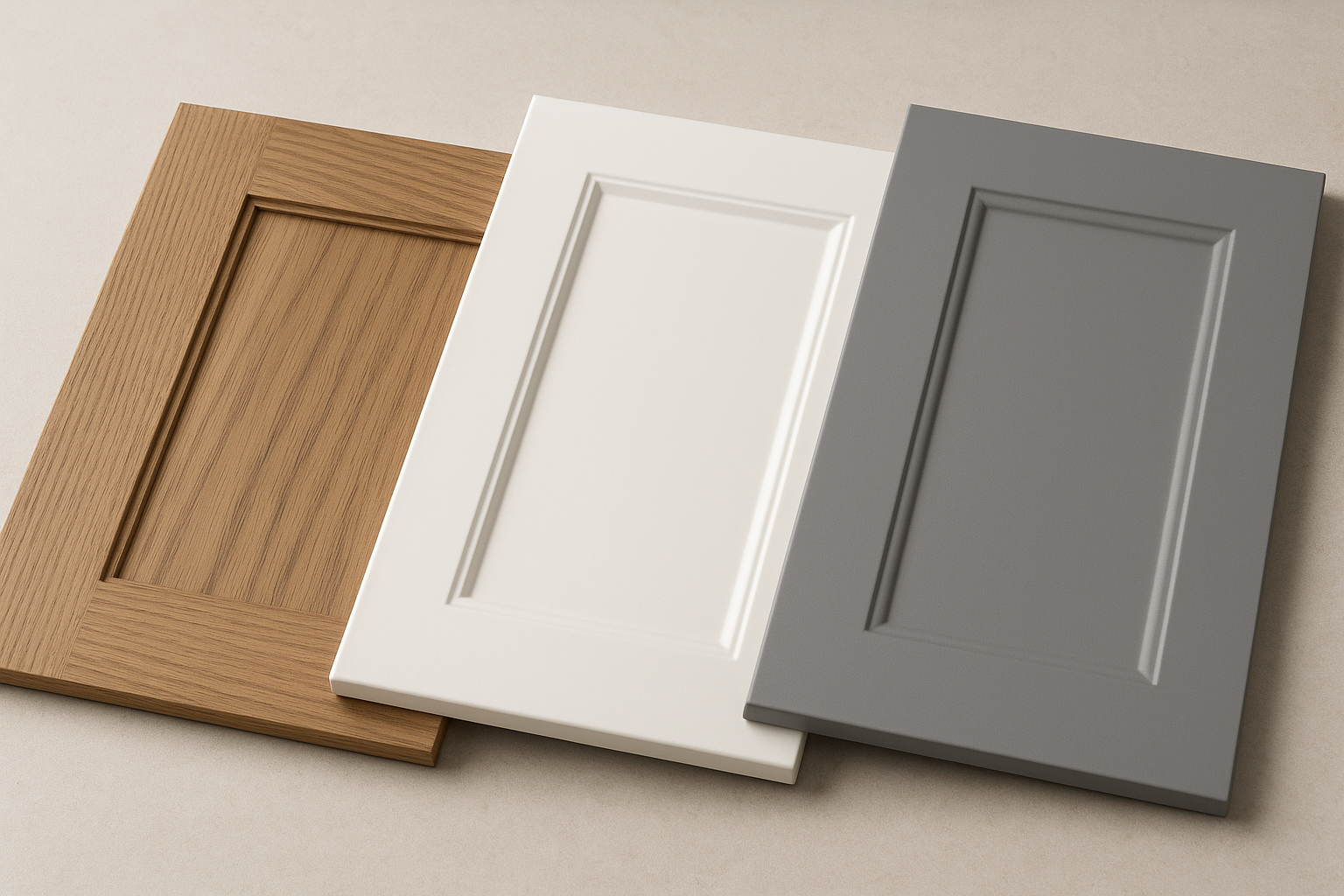
Selecting the right finish material is a critical step in any cabinet design update — each option offers distinct advantages in durability and aesthetics.
Material Selection Tip: Families with young children or frequent cooking should prioritize RTF or HPL for their superior moisture and scratch resistance. Homeowners focused on a premium natural aesthetic will find wood veneer the most rewarding long-term investment.
The Transformative Power of Cabinet Hardware
Cabinet hardware is frequently called the “jewelry of the kitchen” — and the description is precise. The right knobs, pulls, and hinges can elevate a simple door profile into something that feels deliberately designed, cohesive, and refined. Hardware is also one of the most budget-friendly upgrades available; the impact it delivers relative to its cost is extraordinary.
Current Hardware Finish Trends
- Matte black — bold, graphic, and modern; pairs exceptionally well with white, gray, and warm wood tones
- Brushed nickel — a perennial favorite; cool-toned, understated, and highly versatile across styles
- Satin brass / unlacquered brass — warm, artisanal, and currently trending strongly in transitional and farmhouse kitchens
- Brushed gold — a warmer, more polished take on brass; works beautifully with navy and forest green cabinets
- Oil-rubbed bronze — rich, dark, and traditional; the right choice for formal or heritage-style kitchens
- Polished chrome — clean and timeless; most at home in contemporary or minimalist kitchens
Hardware Sizing and Placement
Oversized bar pulls (8 to 12 inches) on base cabinet drawers create a strong, confident visual statement in modern kitchens. Smaller cup pulls or round knobs tend to feel more appropriate on shaker or beadboard door styles. Always consider the scale of your cabinets and the visual weight of adjacent elements when selecting hardware size.
The Value of Soft-Close Hinges
Soft-close hinges are a small functional upgrade with a dramatically positive daily impact. They prevent cabinet doors from slamming, protect both the door and the cabinet box from repeated impact damage, and add a quiet, quality feel to every interaction with your cabinets. If you are investing in a refacing project, upgrading to soft-close hardware simultaneously is one of the most cost-effective add-ons available.
Cabinet Color Strategies and Current Design Trends
Color is arguably the most immediately impactful element of any kitchen cabinet design solution. The palette you choose defines the kitchen’s entire mood — from serene and timeless to bold and personality-driven. Here is a breakdown of the most compelling color strategies currently used in kitchen design:
Warm Neutrals
Crisp white has given way to warm neutrals as the dominant kitchen cabinet palette. Creamy whites (Benjamin Moore White Dove, Sherwin-Williams Alabaster), warm greiges, and soft taupes create a kitchen that feels both inviting and timeless. These tones work in virtually any lighting condition and pair beautifully with quartz, marble, and wood countertops alike.
Bold Statement Colors
Deep navy blue, forest green, and charcoal gray have become the preferred statement colors for kitchen islands and lower cabinet sections. These rich tones ground a kitchen visually and create a compelling contrast with lighter upper cabinets and bright countertops. Navy-and-white two-tone kitchens, in particular, have achieved near-universal appeal across design demographics.
Natural Wood Accents
Incorporating a natural wood finish — walnut, white oak, or light maple — on a kitchen island or a lower cabinet section introduces organic warmth that balances painted upper cabinets beautifully. This “warm wood moment” has become a defining feature of aspirational kitchen design over the last several years and shows no sign of retreating.
Sage Green and Earthy Tones
Sage green, dusty olive, and warm terracotta tones are experiencing a sustained surge in popularity. These earth-connected colors feel grounded, calming, and contemporary — particularly appealing to homeowners who want character without committing to high-contrast drama.
All-White and All-Gray: Still Viable, Executed Thoughtfully
All-white and all-gray kitchens remain viable — but they require more intentional material layering today to avoid feeling sterile. Introduce contrast through textured backsplashes, veined countertops, and mixed-metal hardware to keep these classic palettes feeling alive and current.
Cabinet Layout and Storage Design Solutions
The most visually stunning kitchen still fails if its cabinets cannot support how you actually cook, store, and live. The best kitchen cabinet design solutions address both aesthetics and functional organization. Here are the layout and storage upgrades that make the most meaningful difference:
Pull-Out Shelves and Drawer Inserts
Pull-out shelves inside base cabinets are one of the most popular kitchen upgrades available. They eliminate the frustrating “dig through the back of the cabinet” experience by bringing everything to the front in a single motion. Similarly, custom drawer inserts for utensils, cutlery, and spices transform chaotic drawers into organized, functional systems.
Lazy Susans and Corner Solutions
Corner cabinets are notoriously inefficient. Lazy Susan turntables, blind corner pull-outs, and magic corner systems convert these dead zones into genuinely accessible, high-capacity storage. This single upgrade can add substantial usable storage to a kitchen without changing a single cabinet door.
Tall Pantry and Tower Cabinets
Floor-to-ceiling pantry cabinets maximize vertical storage in a kitchen — particularly valuable in smaller kitchens where floor space is at a premium. These tall tower units can house everything from a built-in oven to a pull-out pantry organizer with dozens of linear feet of shelf space.
Open Shelving Integration
Replacing one or two upper cabinet door sections with open shelving is a simple, impactful design move. It creates visual breathing room, prevents the kitchen from feeling closed in, and offers an opportunity to display curated dishware, cookbooks, or decorative objects. Floating wood shelves in particular add warmth and a handcrafted feel.
Under-Cabinet Lighting
Under-cabinet LED strip lighting serves a dual purpose: it illuminates countertop work surfaces for safer, more comfortable food preparation, and it adds an ambient glow that visually elevates the entire kitchen design. This is one of the most affordable yet transformative additions possible during a cabinet update project.
Built-In Appliance Garages
Appliance garages — a cabinet section with a roll-up tambour door positioned on the countertop — keep small appliances like toasters, coffee makers, and mixers accessible but hidden from view. They maintain a clutter-free countertop appearance while ensuring appliances are always within reach.
How to Plan Your Kitchen Cabinet Design Update: A Step-by-Step Guide
Planning a successful kitchen cabinet design solution does not need to feel overwhelming. Following a clear, logical process makes the entire experience smooth, efficient, and satisfying from start to finish.
- Assess Your Existing Cabinets for Structural Soundness: Inspect every cabinet box for levelness, rigidity, and signs of water damage or warping. Cabinets that are structurally sound but visually dated are ideal candidates for refacing. Cabinets with significant structural damage may warrant replacement of those specific units before any design update proceeds.
- Define Your Budget and Timeline: Establish a clear budget range before making any design decisions. Refacing projects typically run 30–50% less than full replacement and complete in 2–5 days — a compelling combination for homeowners with firm budgets or time constraints. Knowing your parameters upfront prevents scope creep.
- Choose Your Door Style and Finish Material: Select a door profile — shaker, raised panel, flat panel, beadboard, or glass-insert — and a finish material (wood veneer, RTF, or HPL) that aligns with both your aesthetic goals and household lifestyle. Consider durability requirements alongside visual preferences.
- Select Complementary Hardware: Choose knobs, pulls, and hinges in a finish that complements your cabinet color and door profile. Decide whether to incorporate soft-close hinges at this stage — doing so during refacing is significantly more cost-effective than retrofitting later.
- Identify Storage and Organizational Upgrades: Determine whether any pull-out shelves, drawer inserts, lazy Susans, or other organizational components should be incorporated into the project. These functional upgrades are easiest and most economical to add during a scheduled refacing project.
- Schedule a Professional Consultation and Installation: Work with a skilled cabinet refacing specialist to review your selections, confirm measurements, and schedule installation. A professional team will apply veneer to cabinet boxes, install new doors and drawer fronts, fit hardware, and ensure every detail is precisely aligned and finished.
- Review the Completed Work and Enjoy Your Transformed Kitchen: Walk through every detail with your contractor upon completion. Confirm that all doors align correctly, hinges operate smoothly, and surfaces are cleanly finished — then enjoy a kitchen that looks and functions completely transformed.
According to Remodeling Magazine’s Cost vs. Value Report, minor kitchen remodels — which include targeted updates like cabinet refacing — recoup an average of 77 percent of their cost at resale. This places cabinet design updates among the most financially intelligent home improvement investments available to homeowners.
Kitchen Cabinet Design Solutions for Small Kitchens
Small kitchens present unique design challenges — but the right cabinet strategies can make a compact kitchen feel substantially larger, more organized, and more visually open. Here are the most effective kitchen cabinet design solutions specifically for smaller spaces:
- Carry cabinets to the ceiling: Extending upper cabinets all the way to the ceiling eliminates the awkward dead space above standard-height uppers and dramatically increases storage capacity. Crown molding at the ceiling line completes the built-in look.
- Choose light cabinet colors: Light, reflective cabinet colors (warm whites, pale creams, light grays) visually expand a small kitchen by bouncing light throughout the space. Dark cabinets absorb light and make tight spaces feel smaller.
- Use flat-panel or slab doors: The absence of frame detail on slab doors reduces visual clutter and makes a small kitchen feel cleaner and more spacious.
- Incorporate glass-insert upper doors: Glass doors on upper cabinets create visual depth and make the space feel less boxed in — especially effective when backed by interior cabinet lighting.
- Maximize vertical storage: Tall pantry towers, stacked cabinets, and ceiling-height uppers use vertical space rather than claiming more floor area.
- Integrate pull-out storage: Every inch of base cabinet space counts in a small kitchen. Pull-out shelves, drawer inserts, and corner solutions ensure nothing goes to waste.
Why Cincinnati Homeowners Choose Professional Cabinet Refacing
For homeowners across the greater Cincinnati area, professional cabinet refacing offers a uniquely compelling combination of quality, speed, and value. Rather than enduring weeks of full kitchen demolition, refacing delivers a fresh, professionally finished aesthetic in as little as two days. The existing cabinet structure is preserved — reducing material waste, construction debris, and the risk of discovering costly hidden damage during demolition. Find experienced cabinet refacers in Cincinnati.
Kitchen Transformations Cabinet Refacing works closely with each Cincinnati homeowner to align every design decision — door style, finish material, hardware, and organizational upgrades — with their personal vision, household lifestyle, and budget. Their focused expertise in cabinet refacing means every project is handled by specialists, not generalist contractors who occasionally do cabinet work.
You can explore completed projects in their project gallery to see the full range of door styles, finishes, and color directions available — from crisp all-white shaker kitchens to dramatic two-tone designs with navy lowers and natural wood accents.
Additionally, the U.S. Department of Energy notes that thoughtful kitchen design — including efficient layout and considered material choices — contributes to a more functional and energy-conscious home. Cabinet refacing supports this goal by minimizing construction waste, preserving serviceable materials, and avoiding the energy-intensive manufacturing processes required to produce entirely new cabinetry.
“A targeted cabinet update — especially professional refacing — is one of the highest-return improvements a homeowner can make. It transforms the kitchen’s entire atmosphere without the cost or disruption of a full renovation.”
How Much Do Kitchen Cabinet Design Solutions Cost?
Budget clarity is essential before any kitchen project begins. Here is a realistic overview of what different kitchen cabinet design solutions typically cost for an average-sized kitchen:
- Hardware replacement only: $100–$800 depending on number of pieces and finish quality. The lowest-cost update with immediate visual impact.
- Cabinet painting (professional): $1,200–$7,000 depending on kitchen size and surface preparation required. Results vary significantly by painter skill and paint quality.
- Cabinet refacing (professional): $4,000–$15,000 for most residential kitchens, depending on kitchen size, door style, and finish material selected. Delivers a complete aesthetic transformation.
- Full cabinet replacement: $12,000–$40,000+ for stock to semi-custom cabinetry, plus installation. Custom cabinetry can exceed $50,000 in large kitchens.
- Organizational upgrades (pull-outs, inserts): $200–$2,000 depending on quantity and complexity. Most cost-effective when added during a scheduled refacing project.
For most Cincinnati homeowners, quality cabinet refacing hits the optimal intersection of cost, impact, and ROI — delivering the visual transformation of full replacement at a fraction of the price.
Frequently Asked Questions About Kitchen Cabinet Design Solutions
What are kitchen cabinet design solutions?
Kitchen cabinet design solutions are the full range of methods used to update, refresh, or transform cabinet appearance and functionality. They include cabinet refacing, professional painting, hardware replacement, organizational upgrades, open shelving integration, and full cabinet replacement — each suited to different budgets and goals.
How does cabinet refacing work as a kitchen cabinet design solution?
Cabinet refacing replaces your existing cabinet doors and drawer fronts while applying a new veneer, RTF, or laminate surface to the existing cabinet boxes. The structural framework stays in place — only the visible surfaces are updated — resulting in a completely transformed kitchen appearance without demolition or full replacement.
Is cabinet refacing cheaper than full replacement?
Yes. Cabinet refacing typically costs 30 to 50 percent less than full cabinet replacement. It saves on both materials and labor, eliminates demolition costs, and reduces the risk of uncovering additional repair work — while delivering an equally dramatic visual result.
How long does cabinet refacing take?
Most professional cabinet refacing projects are completed in two to five days, depending on kitchen size and design complexity. This is dramatically faster than a full kitchen remodel, which typically takes several weeks and requires the kitchen to be largely non-functional throughout.
What is the best cabinet door style for a modern kitchen?
Shaker and flat-panel (slab) doors are the leading choices for modern kitchens. Shaker doors offer timeless versatility across transitional and contemporary styles, while slab doors deliver the clean, uninterrupted lines of European minimalism. Glass-insert doors are also increasingly popular for adding visual depth and a display element to modern upper cabinets.
What cabinet color is most popular right now?
Warm neutrals — creamy whites, warm greiges, and soft taupes — have replaced stark white as the dominant cabinet palette. Two-tone combinations (navy or sage green lowers with white or cream uppers) and natural wood accents on islands are among the strongest current design directions in kitchen cabinet design solutions.
Can I change the color of my cabinets through refacing?
Absolutely. Cabinet refacing allows you to choose from an extensive range of colors, finishes, and materials. Whether you want a crisp warm white, a rich navy, a natural wood tone, or a bold two-tone design, refacing can achieve it with professionally applied, long-lasting results.
What materials are used in professional cabinet refacing?
The three primary materials are wood veneer (authentic hardwood surface), rigid thermofoil (RTF — a moisture-resistant vinyl film), and high-pressure laminate (HPL — extremely scratch- and impact-resistant). Each offers different benefits; your best choice depends on your household lifestyle, aesthetic preferences, and budget.
How long do refaced cabinets last?
With quality materials and professional installation, refaced cabinets typically last 10 to 20 years with normal care. RTF and HPL finishes are particularly durable in kitchen environments and maintain their appearance well even with frequent cleaning.
What is the difference between cabinet refacing and cabinet painting?
Cabinet painting applies new paint to existing surfaces — a lower-cost option that is prone to chipping, peeling, and showing wear in kitchen environments. Cabinet refacing replaces doors entirely and applies new veneer or laminate to box exteriors, delivering a more durable, polished, and long-lasting result.
Are kitchen cabinet design solutions a good home investment?
Yes. Kitchen updates consistently rank among the highest-return home improvement projects. Minor kitchen remodels — including cabinet refacing — recoup an average of 77 percent of their cost at resale according to Remodeling Magazine’s Cost vs. Value Report. The kitchen is one of the most scrutinized spaces by potential buyers, and updated cabinets make a powerful first impression.
Can I add organizational upgrades during a cabinet refacing project?
Yes — and it is the most cost-effective time to do so. Pull-out shelves, drawer inserts, lazy Susans, soft-close hinges, and other organizational components can all be incorporated into a refacing project at significantly lower incremental cost than scheduling them as a separate project later.
Do I need to vacate my kitchen during cabinet refacing?
You do not need to fully vacate, but kitchen access will be limited during the project. Professional refacing teams work efficiently and are focused on minimizing disruption — most homeowners find the 2–5 day project window very manageable compared to the weeks-long disruption of a full remodel.
Ready to Transform Your Kitchen?
Taking the first step toward a beautifully updated kitchen is easier — and more affordable — than most homeowners expect. Whether you are drawn to the clean lines of shaker-style doors in a warm neutral finish, the drama of a two-tone design with a navy island, or the timeless elegance of natural wood veneer, the right kitchen cabinet design solution is within reach.
The team at Kitchen Transformations Cabinet Refacing is available to guide Cincinnati homeowners through every decision — from initial concept and door style selection through material choice, hardware, organizational upgrades, and professional installation. They bring focused expertise and genuine dedication to every project. Add an author byline and brief author bio plus a visible "Last updated" date on the page to strengthen E‑E‑A‑T and local trust.
Contact the Cincinnati Team Today →
Conclusion
The most effective kitchen cabinet design solutions are those that align your personal aesthetic vision with practical household needs and a realistic budget. Cabinet refacing consistently delivers on all three — combining a genuinely dramatic visual transformation with outstanding cost-efficiency and a project timeline measured in days, not weeks.
From selecting the right door profile and finish material to choosing hardware, colors, and organizational upgrades that make daily kitchen life better, every design decision contributes to a result that feels intentional, refined, and deeply satisfying. For Cincinnati homeowners seeking a proven, efficient path to a beautiful kitchen — without the cost and upheaval of full replacement — professional cabinet refacing remains the clear standout among all available options.
With the right expertise guiding the process and the right materials backing every surface, the transformation is both lasting and genuinely rewarding — a kitchen that looks exactly the way you always imagined it could.