Refaced cabinet styles range from clean, modern flat-panel doors to warm, traditional raised-panel designs, giving Cincinnati homeowners a budget-friendly way to reinvent their kitchen. Instead of ripping out cabinet boxes and starting from scratch, cabinet refacing keeps the existing structure in place while updating doors, drawer fronts, and surface materials. As a result, homeowners save money and avoid weeks of construction dust. In this guide, we’ll walk through the most popular refaced cabinet styles, how to choose one that fits your home, and what the process actually involves from start to finish. Learn more in our Cincinnati cabinet refacing guide.
Quick answer: Refaced cabinet styles are the various door and surface options—such as shaker, flat-panel, raised-panel, and glass-front designs—used to update existing cabinet boxes with new materials and finishes instead of full replacement.
What Are Refaced Cabinet Styles?
Refaced cabinet styles are the different door, drawer front, and surface finish options homeowners select when updating existing cabinets instead of replacing them. Each style changes the kitchen’s entire mood, from sleek and contemporary to warm and traditional, without touching the underlying cabinet boxes.
Cabinet refacing works by covering the exposed sides of the cabinet boxes—sometimes called the carcass—with matching veneer or laminate, then installing new doors and drawer fronts on top. Because the structural boxes stay in place, plumbing, electrical, and drywall work is rarely needed. For a deeper look at the mechanics of this process, our related guide on updating kitchen cabinets without full replacement covers the essentials. According to industry data from the National Kitchen & Bath Association, refacing typically costs 30 to 50 percent less than a full cabinet replacement, and most Cincinnati projects wrap up in one to two weeks rather than the six to eight weeks a full remodel demands.
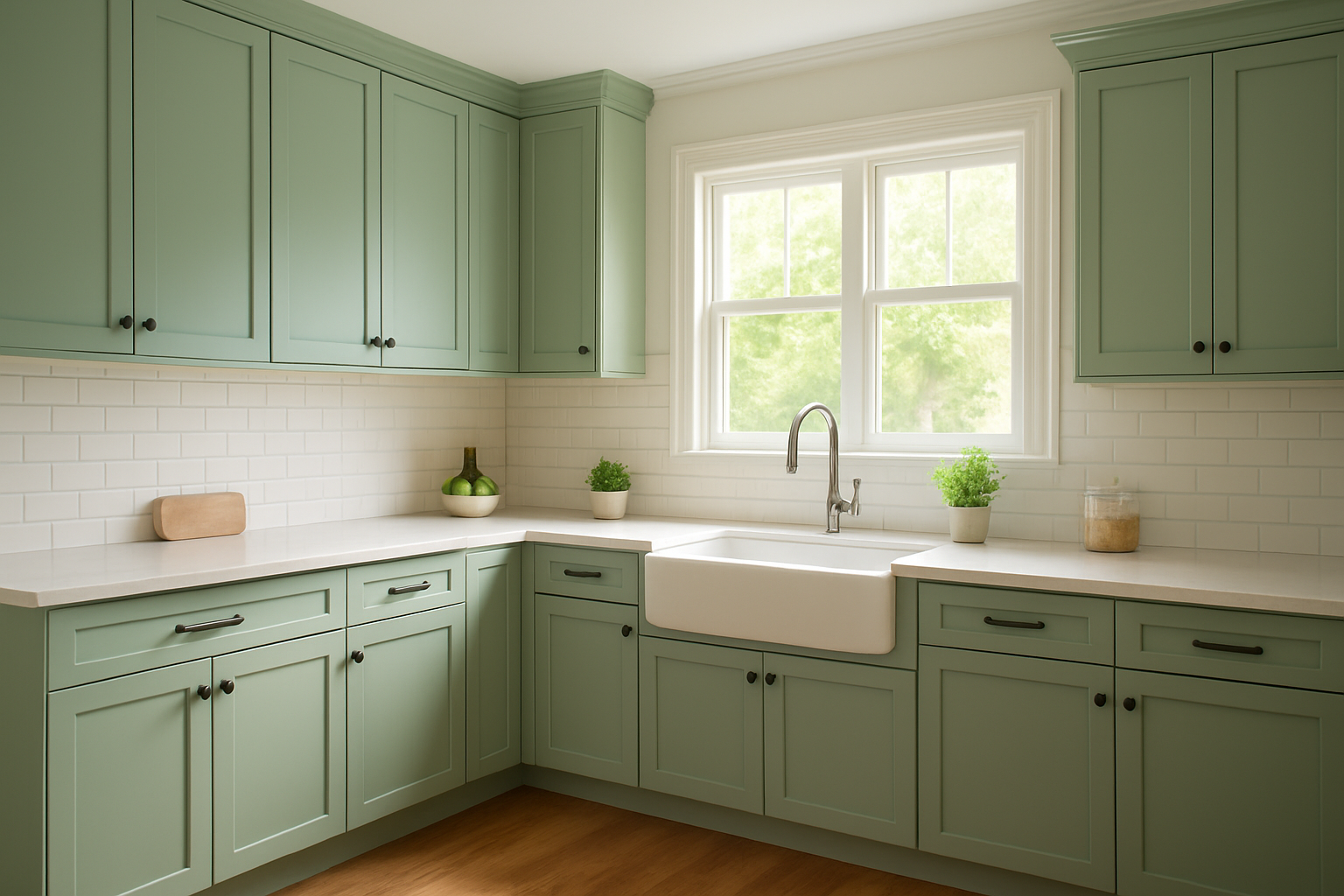
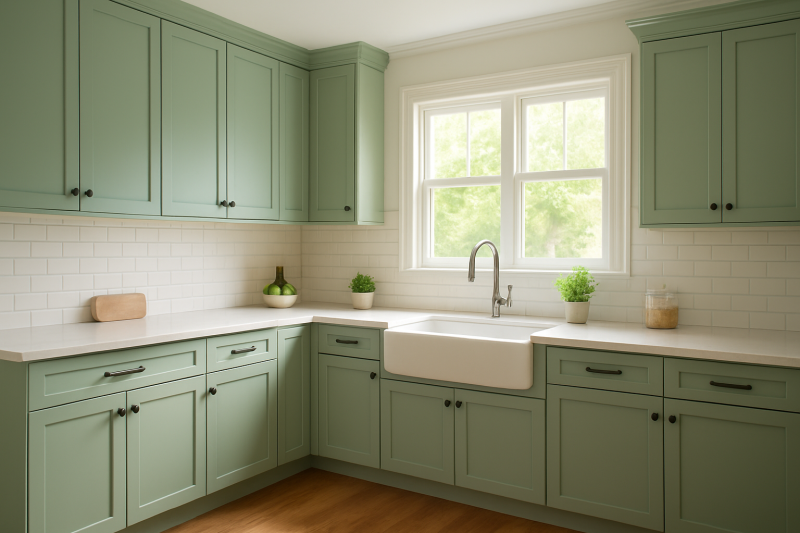
Shaker doors remain one of the most requested refaced cabinet styles for Cincinnati kitchens. See our kitchen refacing guide for costs and process.
Popular Refaced Cabinet Styles for Cincinnati Kitchens
Homeowners across Greater Cincinnati choose from several refaced cabinet styles depending on their home’s architecture, family lifestyle, and personal taste. Below are the options our team sees requested most often, along with what makes each one distinct.
Shaker Style Refaced Cabinets
Shaker style remains the most requested of all refaced cabinet styles, and it’s easy to see why. Originally inspired by the minimalist furniture of the Shaker religious community, this design features a recessed center panel framed by clean, flat rails. Consequently, it pairs well with almost any countertop, backsplash, or hardware finish, making it a safe yet stylish choice for resale value. If you’d like to compare shaker against other trending options, our breakdown of which cabinet styles are popular for refacing goes into more detail.
Flat-Panel (Slab) Style
Flat-panel, or slab-style, doors offer a smooth, uninterrupted surface with no raised or recessed detailing. This look suits homeowners chasing a minimalist, European-inspired kitchen. Because there are no grooves or panels to catch grease and crumbs, flat-panel doors are also easier to wipe clean, which matters for busy households. Many Cincinnati clients pair this style with matte or high-gloss laminate finishes for an especially modern effect. See examples in our contemporary refacing gallery.
Raised-Panel Traditional Style
Raised-panel doors bring depth and dimension with a center panel that sits slightly higher than the surrounding frame. This classic profile suits colonial, craftsman, and farmhouse-style homes throughout the region. In addition, raised-panel doors work beautifully with warmer wood tones and ornate hardware. For homeowners drawn to timeless character, our guide to classic cabinet designs that transform your kitchen highlights several raised-panel variations worth considering.
Glass-Front and Two-Tone Styles
Beyond the three core profiles, many homeowners now mix glass-front upper cabinets with solid lower doors, or pair two different colors across upper and lower cabinet runs. Specifically, two-tone kitchens often combine a darker island or lower cabinet shade with lighter upper cabinets to add visual balance. Glass fronts, meanwhile, work well for display-worthy dishware and open, airy kitchen feels.
| Style | Best For | Common Material |
|---|---|---|
| Shaker | Most kitchen styles | Wood veneer, RTF |
| Flat-Panel | Modern, minimalist kitchens | Laminate, thermofoil |
| Raised-Panel | Traditional, farmhouse homes | Solid wood, veneer |
| Glass-Front / Two-Tone | Eclectic, display-focused kitchens | Glass, mixed veneer |
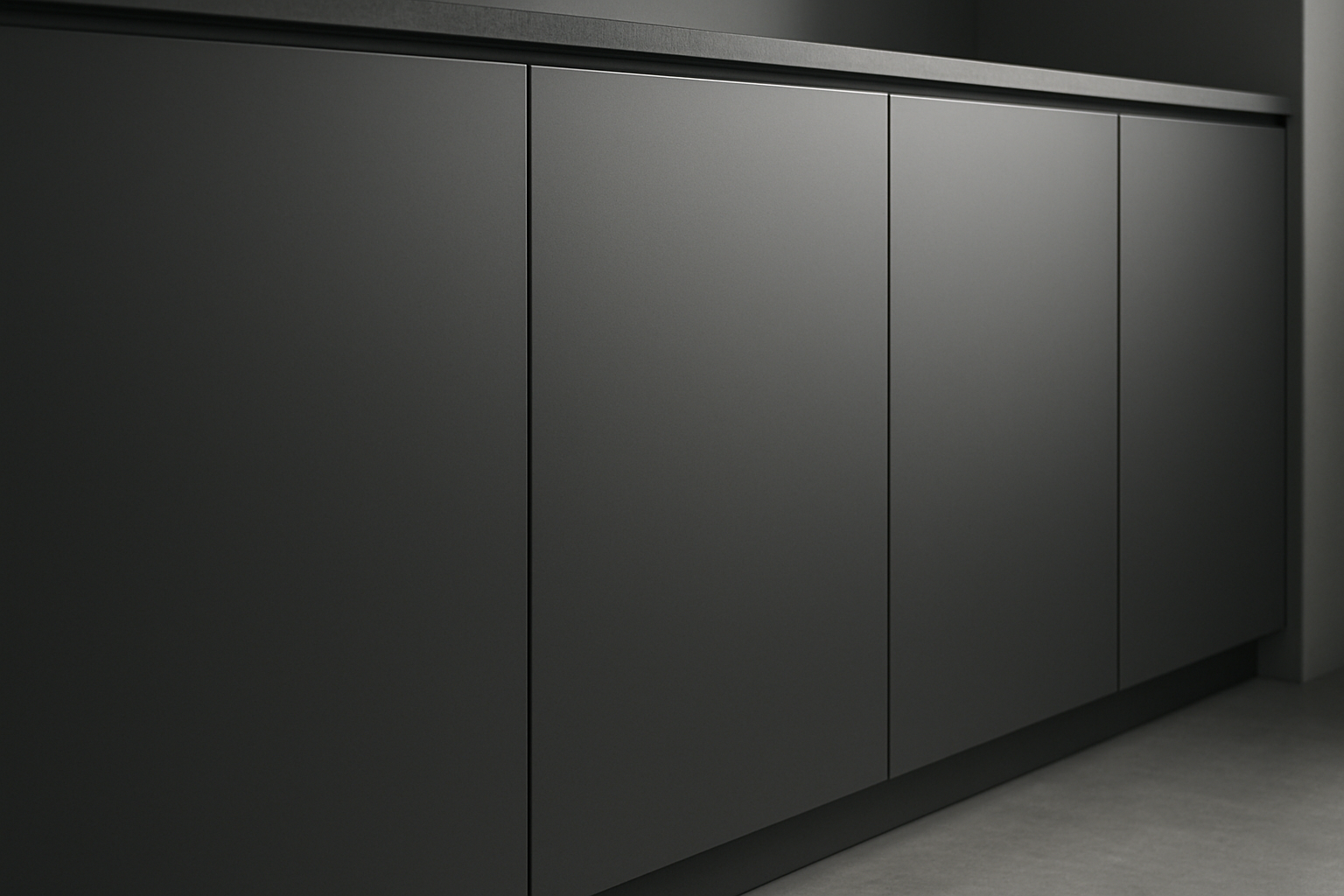
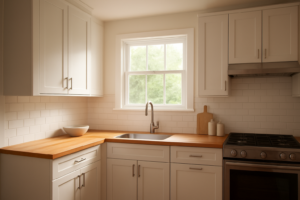
Flat-panel doors offer a smooth, minimalist alternative among today’s refaced cabinet styles.
How to Choose the Right Cabinet Refacing Style
Choosing among the many refaced cabinet styles depends on more than personal taste alone. Above all, consider your kitchen’s natural light, existing layout, and the overall architectural character of your home. A small, dim kitchen, for example, often benefits from lighter flat-panel or shaker doors that reflect available light. See examples in our contemporary cabinet refacing gallery for modern finish ideas.
Budget also plays a role, since some finishes and materials cost more than others. Similarly, think about long-term durability if you have a busy household with kids or pets. Our article on how to modernize your kitchen without a remodel offers additional guidance for narrowing down the right direction.
The Cabinet Refacing Process: Step by Step
Once you’ve settled on a style, the refacing process itself follows a fairly predictable sequence. Here’s what typically happens from the first phone call to the final walkthrough. For fast turnaround examples, see our fast kitchen renovations guide.
- Initial consultation and style selection: A specialist visits your home to assess your existing cabinet boxes, discuss your goals, and help you narrow down refaced cabinet styles that suit your kitchen’s layout and lighting.
- Precise measurement and material ordering: The team takes exact measurements of every cabinet opening, then orders custom veneer, laminate, and new doors or drawer fronts matched to your chosen style and finish.
- Surface preparation: Existing cabinet surfaces are cleaned, sanded, and prepped so the new veneer or laminate adheres securely and creates a seamless, long-lasting bond.
- Veneer and door installation: Skilled installers apply the new veneer to exposed cabinet boxes, then attach the new doors, drawer fronts, and matching end panels with precision hardware.
- Final hardware and quality inspection: Handles, hinges, and pulls are installed, and a final walkthrough confirms every door aligns properly and closes smoothly before the crew cleans up the workspace.
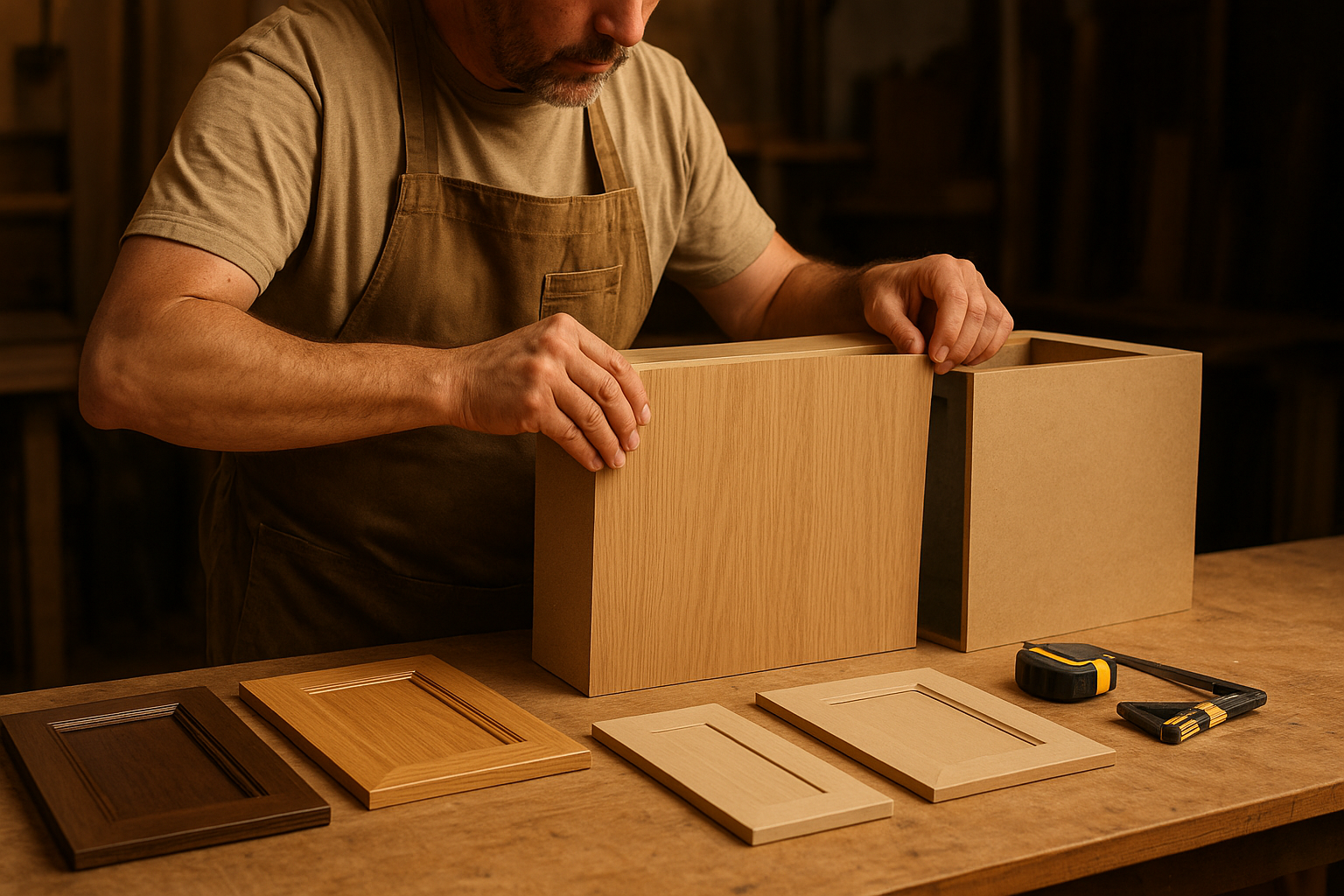
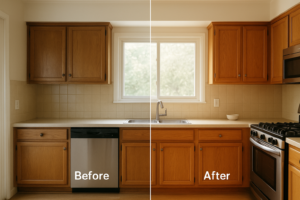
Careful surface preparation ensures the new veneer bonds securely to existing cabinet boxes.
Cost and Timeline for Refaced Kitchen Cabinets
Pricing for refaced cabinet projects varies based on kitchen size, chosen materials, and hardware upgrades. However, most homeowners find refacing considerably more affordable than gutting a kitchen entirely.
Timeline is another advantage. Because the cabinet boxes remain in place, most projects finish within one to two weeks rather than the months a full remodel can take. Timelines can shift slightly based on kitchen size and material availability. If you’d like a personalized estimate for your own kitchen, the team at KT Cabinet Refacing offers consultations tailored to Cincinnati homes. Explore recent quick transformations in our stylish cabinet facelifts gallery.
Modern vs Classic Refaced Cabinet Designs
Deciding between modern and classic refaced cabinet styles often comes down to how long you plan to stay in your home. Modern flat-panel and two-tone designs tend to appeal to buyers seeking a fresh, updated look, while classic raised-panel and shaker styles offer broader, timeless appeal.
In particular, many manufacturers now offer low-VOC and formaldehyde-free finishing options, which matter for indoor air quality. The Environmental Protection Agency sets emission standards for composite wood products used in many cabinet materials, so it’s worth asking your contractor which finishes meet these guidelines. For more inspiration on contemporary directions, our guide to cabinets for modern homes explores smart, current updates in greater depth.
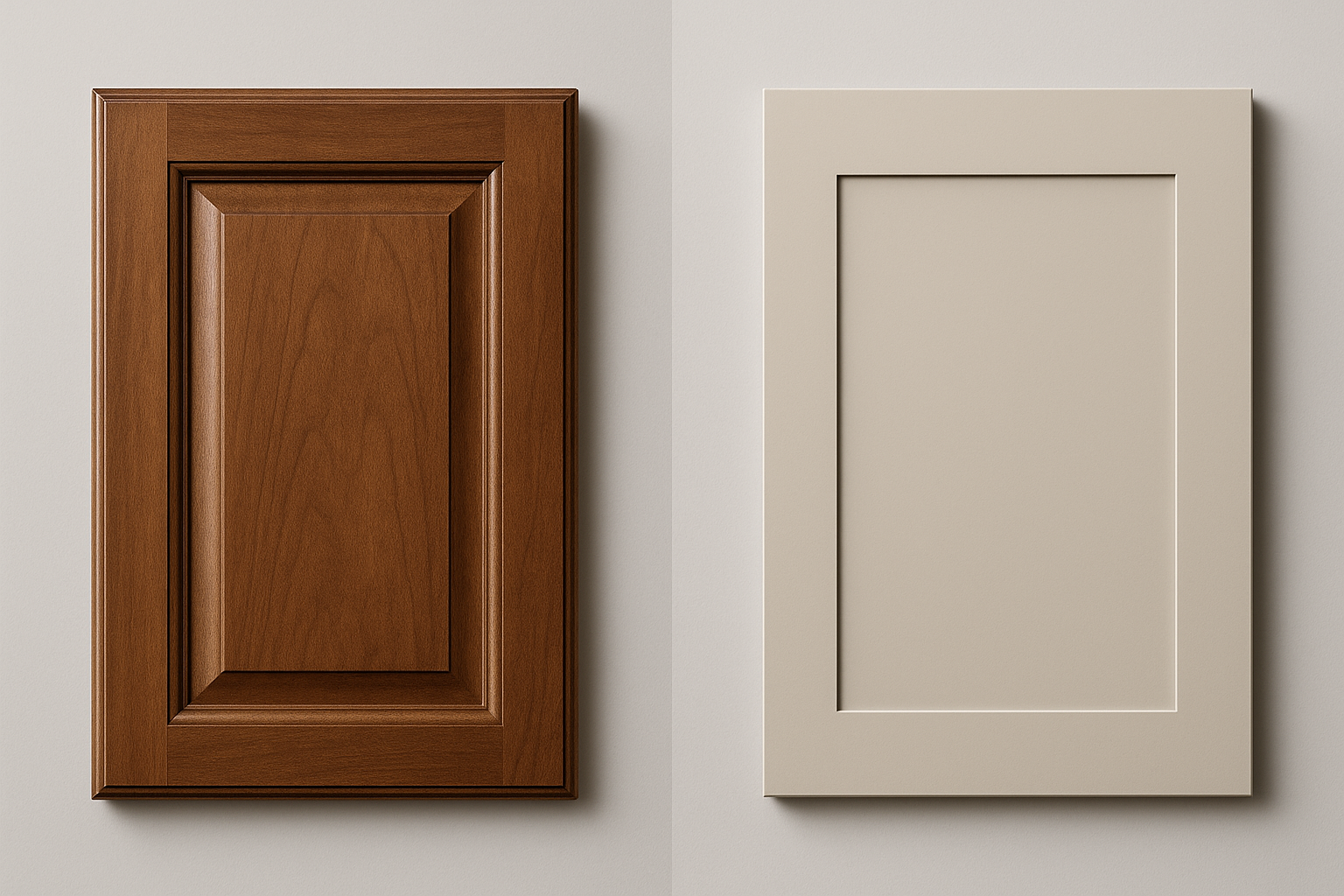
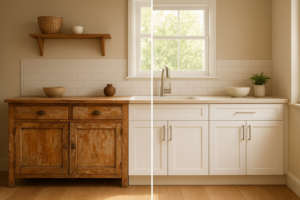
Classic raised-panel and modern flat-panel doors represent two ends of the design spectrum.
Frequently Asked Questions About Refaced Cabinet Styles
What are refaced cabinet styles?
Refaced cabinet styles are the various door, drawer front, and surface finish options—like shaker, flat-panel, and raised-panel—used to update existing cabinet boxes instead of replacing them entirely. Homeowners pick a style based on look, budget, and how the kitchen is used daily.
How much does cabinet refacing cost in Cincinnati?
Cabinet refacing typically costs 30 to 50 percent less than full cabinet replacement, though exact pricing depends on kitchen size and chosen materials. Most homeowners find it a more affordable path to a refreshed kitchen. For lower-cabinet specific pricing and options see our lower cabinet refacing guide.
How long does cabinet refacing take to complete?
Most refacing projects finish within one to two weeks, compared to six to eight weeks or longer for a full kitchen remodel. Timelines can shift slightly based on kitchen size and material availability.
What’s the difference between cabinet refacing and cabinet replacement?
Refacing keeps the existing cabinet boxes in place and updates only the doors, drawer fronts, and exposed surfaces. Replacement, on the other hand, removes the entire cabinet structure and installs new boxes from scratch.
Can I mix different refaced cabinet styles in one kitchen?
Yes, many homeowners combine styles, such as pairing glass-front upper cabinets with solid flat-panel lower doors. This approach works well when the finishes and hardware still feel cohesive.
What materials are used for refaced cabinet doors?
Common materials include wood veneer, rigid thermofoil (RTF), and laminate, each offering different price points and durability levels. Your contractor can recommend the best option based on your household’s daily use.
Is shaker style still popular for cabinet refacing?
Shaker style remains one of the most requested refaced cabinet styles because its simple, recessed-panel design suits nearly any kitchen aesthetic. Its popularity also helps protect resale value.
What common mistakes should I avoid when choosing a cabinet style?
A common mistake is choosing a style based on trends alone without considering the kitchen’s lighting, layout, or long-term durability needs. It also helps to test finish samples in your actual kitchen lighting before committing.
Do refaced cabinets hold up as well as new cabinets?
When installed correctly, refaced cabinets can perform just as well as new ones because the original boxes are typically still structurally sound. Quality veneer and proper installation matter more than whether cabinets are new or refaced.
Can cabinet refacing work with any kitchen layout?
Refacing works with most standard layouts, though kitchens with severely damaged or water-warped boxes may need partial replacement instead. A professional assessment can confirm whether your layout is a good fit.
What’s the best refaced cabinet style for a small kitchen?
Lighter flat-panel or shaker doors often work best in small kitchens because they reflect available light and avoid visually crowding the space. Glossy finishes can also help a compact kitchen feel larger.
How do I choose between modern and classic refaced cabinet styles?
Consider how long you plan to stay in your home and whether you prefer timeless appeal or a current, on-trend look. Classic styles like shaker tend to offer broader long-term resale appeal.
Does cabinet refacing include new hardware?
Most refacing packages include new handles, pulls, and hinges as part of the overall style update. Some homeowners choose to reuse existing hardware to save on costs.
Is DIY cabinet refacing a good idea?
DIY refacing is possible for simple projects, but professional installation typically ensures a tighter fit, better adhesion, and a longer-lasting finish. Given the visible nature of cabinets, many homeowners prefer professional results for such a prominent part of the home.
Final Thoughts on Choosing a Style
Choosing among today’s refaced cabinet styles doesn’t have to feel overwhelming. Whether you’re drawn to the clean lines of flat-panel doors, the timeless warmth of raised-panel designs, or the everyday versatility of shaker style, refacing offers a faster, more affordable path to a kitchen that feels brand new. Ultimately, the right choice comes down to your home’s architecture, your daily routine, and how long you plan to stay in your house. With careful planning and quality materials, refaced cabinets can deliver lasting value and a fresh look for years to come. KT Cabinet Refacing specialists compiled this guide; last updated 2026-08-12.