Upper cabinet refacing is a renovation method that replaces the doors, drawer fronts, and exposed veneer on your wall-mounted kitchen cabinets while leaving the existing cabinet boxes exactly where they are. For homeowners across Cincinnati, this approach solves a familiar problem: upper cabinets that still work fine but look tired, dated, or mismatched with the rest of a modern kitchen. Instead of tearing out cabinetry and starting from scratch, refacing preserves the structural framework while completely transforming what you actually see every day. As a result, homeowners save money, avoid weeks of disruption, and still walk away with a kitchen that looks freshly remodeled. This guide covers everything the competition leaves out — exact process steps, real cost ranges, material choices, contractor red flags, and maintenance tips — so you can decide with total confidence whether upper cabinet refacing is right for your home.
What Is Upper Cabinet Refacing?
Upper cabinet refacing is the process of updating the visible surfaces of wall-mounted kitchen cabinets — doors, drawer fronts, and exposed sides — without removing the underlying cabinet boxes. A thin veneer matching the desired material covers the box exteriors, and new doors complete the transformation.
Because the cabinet’s frame and mounting stay untouched, the wall structure supporting the cabinets remains undisturbed throughout the project. Contractors typically use wood veneer, rigid thermofoil, or laminate for the boxes, then pair those surfaces with solid wood or engineered wood doors. In addition, according to information from Wikipedia’s overview of kitchen cabinets, cabinetry design has evolved considerably, and modern refacing materials now closely replicate the look of custom cabinetry at a fraction of the price.
Since only the surfaces change, homeowners can select a completely different door style, finish, or hardware without altering the kitchen’s layout. That flexibility is one reason refacing has become such a popular alternative to a full renovation — and one reason it consistently outperforms a plain repaint job in terms of long-term value.
Why Homeowners Choose Cabinet Door Refacing for Upper Cabinets
Several practical reasons drive this choice. First, cabinet door refacing costs considerably less than tearing out and replacing cabinetry entirely, since the boxes, plumbing, and wall structure stay in place. Second, the timeline is much shorter — most projects wrap up in days rather than weeks. For homeowners wondering exactly how to update kitchen cabinets without full replacement, refacing offers a proven middle path between a simple repaint and a gut renovation.
Furthermore, refacing minimizes household disruption. Because contractors are not demolishing cabinet boxes or rerouting utilities, kitchens generally stay usable throughout most of the project. Homeowners curious whether this approach really is less disruptive than a full remodeling project often find the difference significant, especially in busy households where the kitchen sees daily use. In fact, for many families, this is also the easiest way to update cabinets without a full replacement ever undertaken.
Finally, refacing lets homeowners keep a layout they already like while simply refreshing the finish. This matters most for upper cabinets, which are highly visible and set the tone for the entire kitchen’s style.
Upper Cabinet Refacing vs. Full Cabinet Replacement
Because homeowners rarely compare these options side by side, confusion is common. Therefore, the table below breaks down the two paths so you can see exactly where upper cabinet refacing wins — and where full replacement might still make sense.
| Factor | Upper Cabinet Refacing | Full Replacement |
|---|---|---|
| Typical Timeline | 3–5 days | 2–6 weeks |
| Average Savings | 30–50% less than replacement | Baseline cost |
| Layout Changes | Not possible | Fully customizable |
| Landfill Waste | Minimal — boxes reused | Higher — boxes discarded |
| Best For | Sound boxes, dated finish | Water damage or layout changes |
In short, if your existing boxes are solid, upper cabinet refacing delivers nearly all the visual payoff of replacement at a fraction of the cost and disruption.
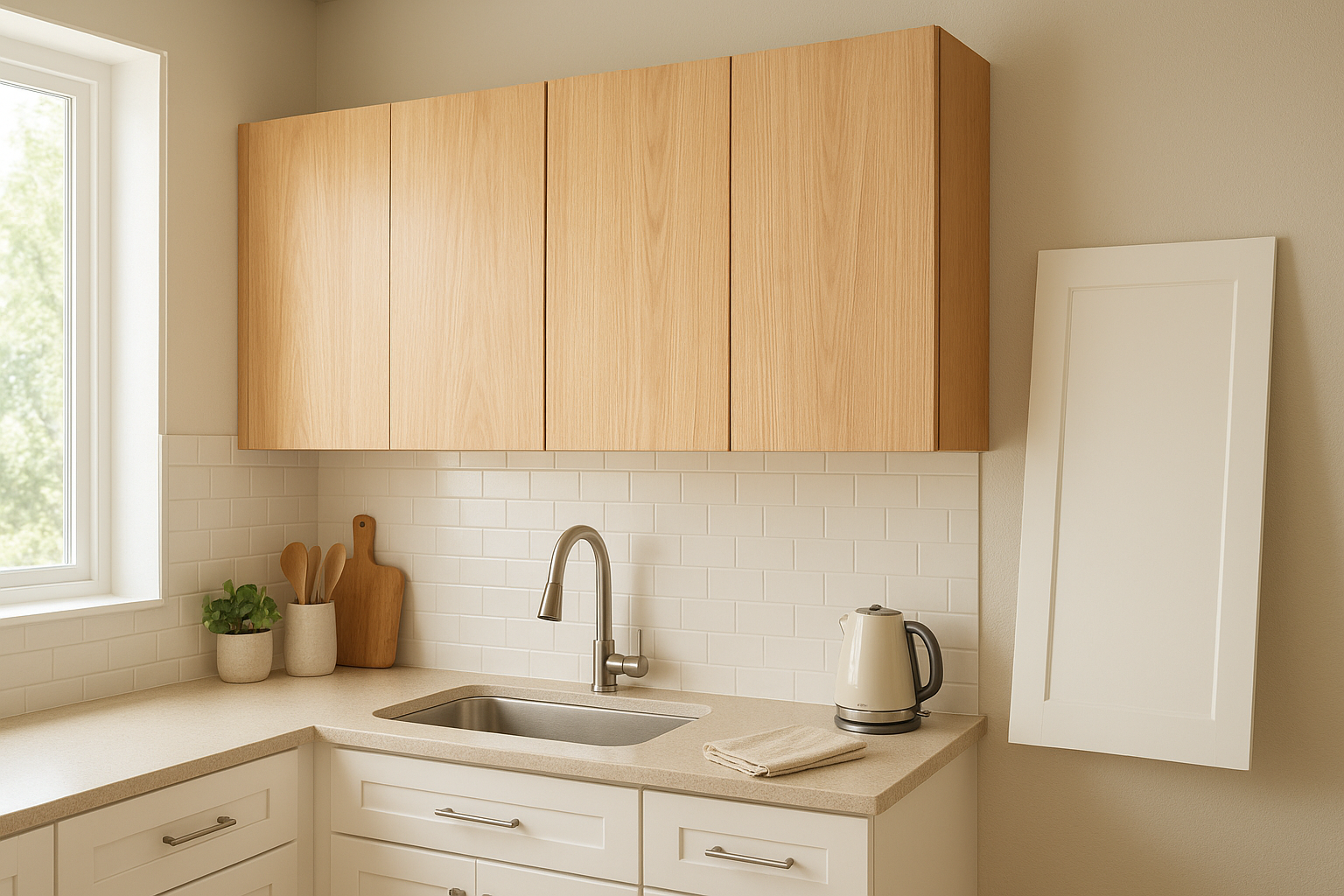
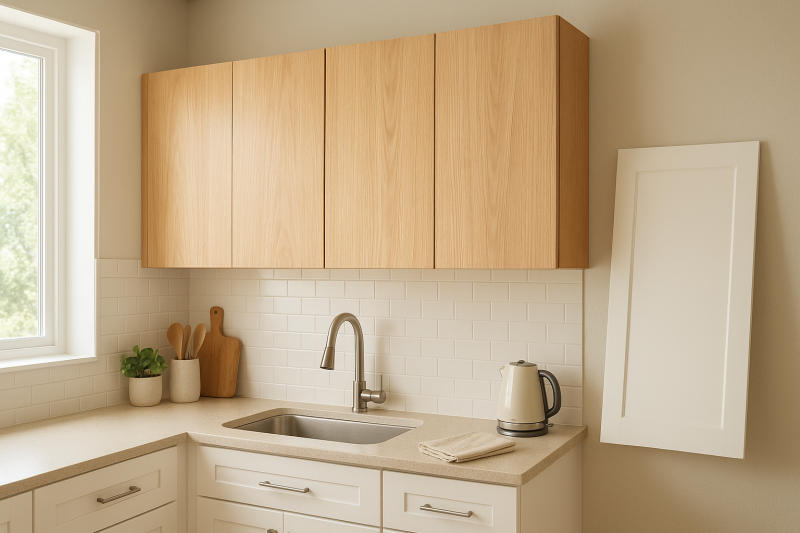
A kitchen mid-project during upper cabinet refacing, with new veneer panels ready for installation.
The Upper Cabinet Refacing Process: Step by Step
Understanding the process helps homeowners know exactly what to expect. Below is the typical sequence a contractor follows when refacing wall-mounted cabinets, from initial inspection through final hardware installation.
- Inspect the cabinet boxes. A contractor checks every box for water damage, warping, or loose joints before applying any new materials, since a stable foundation determines how long the new finish will last.
- Remove old doors and hardware. Existing doors, drawer fronts, and hinges come off carefully so the cabinet boxes underneath stay protected and ready for new surfaces.
- Apply new veneer. Matching veneer or laminate covers the exposed sides and face frames, creating a seamless finish that blends with the new doors.
- Install new doors and drawer fronts. Fresh doors in the chosen style and finish are hung and carefully aligned to the existing cabinet openings for a factory-fresh look.
- Add hardware and final touches. New handles, pulls, and soft-close hinges finish the look, and every cabinet door is tested for smooth, quiet operation before the crew leaves.
Consequently, most upper cabinet refacing projects are completed in three to five days, though larger kitchens with more upper cabinets — or custom glass-panel inserts — may take slightly longer.
Materials and Door Style Options for Upper Cabinet Refacing
Choosing the right materials matters just as much as the process itself. Rigid thermofoil (RTF), a vinyl coating heat-fused over a substrate, resists moisture well and suits budget-conscious projects. Wood veneer, by contrast, offers a genuine wood grain and can be stained to match existing trim. Laminate sits between the two, offering durability at a moderate price point.
Door styles vary just as widely. Shaker-style doors remain the most requested option nationwide because of their clean, versatile lines, while raised-panel doors suit traditional kitchens. Glass-panel inserts, meanwhile, are increasingly popular for upper cabinets specifically, since they add visual lightness at eye level. For guidance on matching materials to current design trends, the National Kitchen & Bath Association publishes helpful style resources worth reviewing before your consultation.
Ultimately, the best material and door style combination depends on your budget, your kitchen’s existing color palette, and how much daily wear the cabinets will see.
Upper Cabinet Refacing Cost in Cincinnati
Cost is often the deciding factor for homeowners comparing refacing to replacement. According to the Remodeling magazine Cost vs. Value report, a minor kitchen remodel typically recoups a strong percentage of its cost at resale, and cabinet refacing usually falls well below the price of a full renovation. In particular, refacing only the upper cabinets — rather than the entire kitchen — can further reduce the total investment.
Pricing depends on several factors: the number of cabinets, the door material selected, and hardware upgrades. Homeowners can review KT Cabinet Refacing’s project examples to get a sense of typical Cincinnati-area pricing before requesting a personalized quote. Because refacing avoids demolition labor and new box construction, savings compared to full replacement often reach 30 to 50 percent.
Specifically, expect thermofoil options to sit at the lower end of the price range, laminate in the middle, and solid wood veneer with custom door styles at the higher end. Requesting an itemized quote — rather than a flat estimate — helps you see exactly where your budget is going.
Upper Cabinets vs Lower Cabinets: Special Considerations
Wall cabinet refacing differs slightly from refacing base cabinets. Upper cabinets are lighter and hold less weight, so contractors focus more on visual precision than heavy-duty hardware. Since these cabinets sit at eye level, alignment and finish quality matter even more than with lower cabinets.
On the other hand, lower cabinets endure more daily wear from cooking, spills, and foot traffic. Homeowners wondering how cabinet refacing impacts kitchen functionality should note that upper cabinet refacing rarely affects storage capacity or shelf configuration, since only the exterior surfaces change. Similarly, many homeowners want to know how cabinet refacing can improve kitchen functionality even further, and the answer often lies in upgrades like soft-close hinges or pull-out shelving added during the same project.
As a result, many homeowners choose to reface upper and lower cabinets together for a cohesive look, though refacing upper cabinets alone remains a common and cost-effective starting point.
Benefits of Refacing Wall-Mounted Kitchen Cabinets
Beyond cost savings, refacing wall-mounted kitchen cabinets offers several practical advantages. Above all, it delivers a dramatic visual update in a short timeframe. In addition, it reduces landfill waste since existing cabinet boxes are reused rather than discarded. The EPA’s guidance on indoor air quality notes that choosing low-VOC finishes for cabinet surfaces can also improve indoor air quality during and after a project, which is worth discussing with a contractor.
Similarly, refacing allows homeowners to update door styles, add soft-close hinges, or introduce glass panel inserts, all without the cost of new boxes. These small upgrades often make a noticeable difference in everyday usability.
Signs It’s Time to Reface Your Upper Cabinets
Not sure whether now is the right moment? Several warning signs typically point toward upper cabinet refacing as the smart next step:
- Doors look faded, peeling, or visibly outdated compared to your countertops and backsplash.
- Hardware finishes clash with newer appliances or fixtures elsewhere in the kitchen.
- The cabinet boxes themselves are structurally sound with no water damage or warping.
- You like your current kitchen layout and simply want a visual refresh, not a redesign.
If most of these apply to your kitchen, upper cabinet refacing is very likely a strong fit for both your budget and your timeline.
How to Choose the Right Contractor for Upper Cabinet Refacing
Because refacing techniques differ from full cabinet installation, not every remodeling contractor has the right specialty. Therefore, ask specifically about upper cabinet refacing experience, not general cabinetry work. Request photos of completed projects, verify licensing and insurance, and confirm what warranty covers the veneer, doors, and hardware separately.
In addition, a trustworthy contractor should offer a written, itemized estimate rather than a vague lump sum. This transparency makes it far easier to compare quotes and understand exactly what you are paying for before work begins.
Common Mistakes to Avoid When Refacing Upper Cabinets
Even a straightforward upper cabinet refacing project can go wrong without careful planning. One common mistake is skipping a structural inspection, which can lead to veneer failing on damaged boxes. Another mistake is mismatching hardware finishes with the new door style, which undermines an otherwise cohesive design.
Homeowners should also avoid choosing a contractor without verifying experience specifically in refacing, since the techniques differ from full cabinet installation. Therefore, asking for examples of completed upper cabinet refacing projects before signing a contract is a smart precaution.
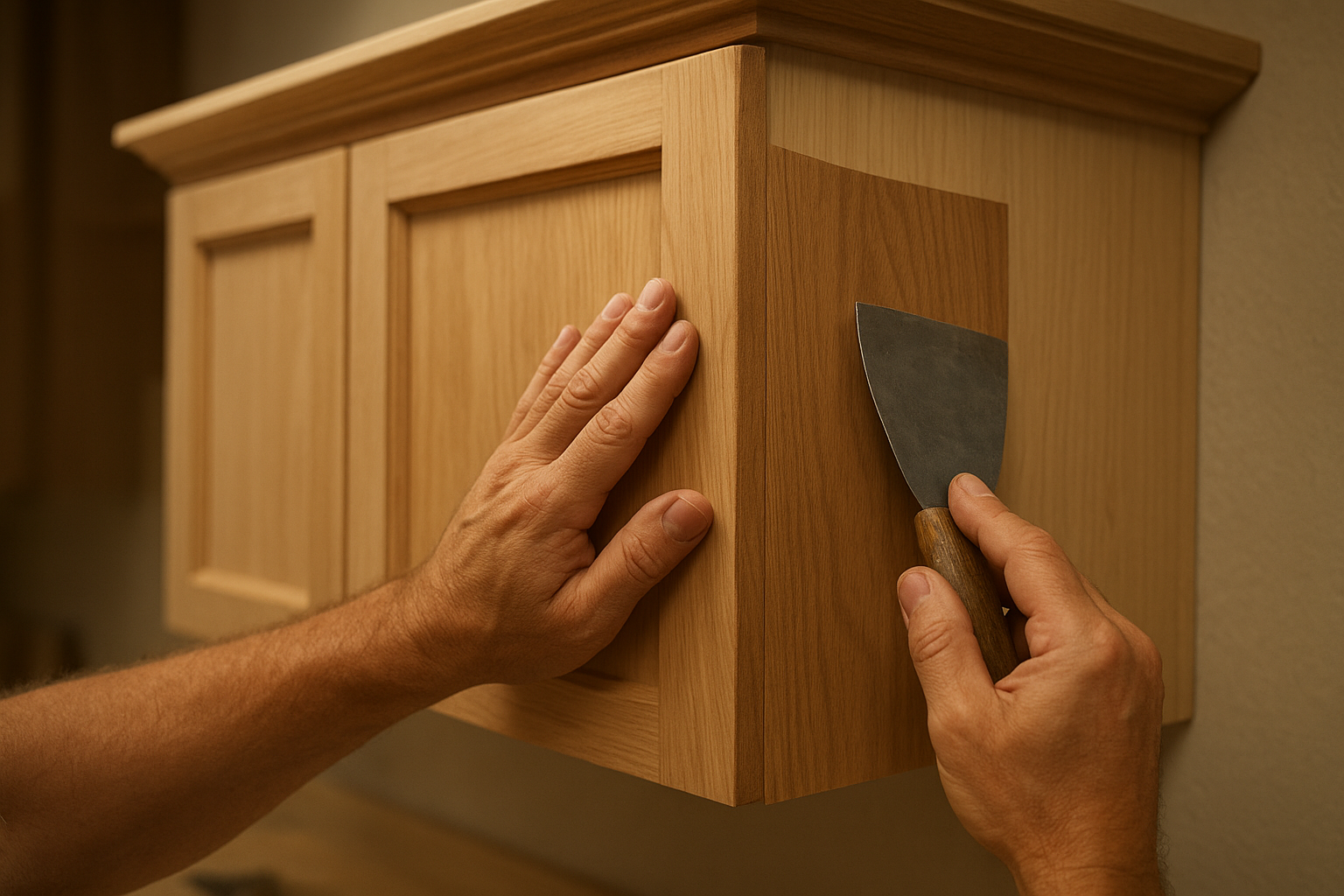
Precise veneer application is a key step in a successful upper cabinet refacing project.
Maintaining Your Refaced Upper Cabinets
Once your project is complete, a little routine care keeps refaced surfaces looking new for years. Wipe doors with a soft, damp cloth rather than abrasive cleaners, since harsh chemicals can dull veneer finishes over time. Similarly, tighten hinges and hardware periodically, as normal daily use can loosen screws gradually.
Above all, address any moisture exposure quickly — for example, near a stovetop or sink splash zone — to prevent long-term warping. With basic care, refaced upper cabinets typically perform just as reliably as brand-new cabinetry.
Is Upper Cabinet Refacing Worth It for Your Kitchen?
Whether refacing makes sense depends on the condition of your existing cabinet boxes and your overall goals. If the boxes are sound but the finish feels dated, refacing typically delivers excellent value. For a deeper look at the trade-offs, this breakdown of the pros and cons of cabinet refacing compares costs, timelines, and outcomes side by side.
However, if you’re still deciding between refacing and starting fresh, this detailed comparison of refacing versus full replacement walks through cost differences, resale value, and long-term durability considerations to help you decide with confidence.
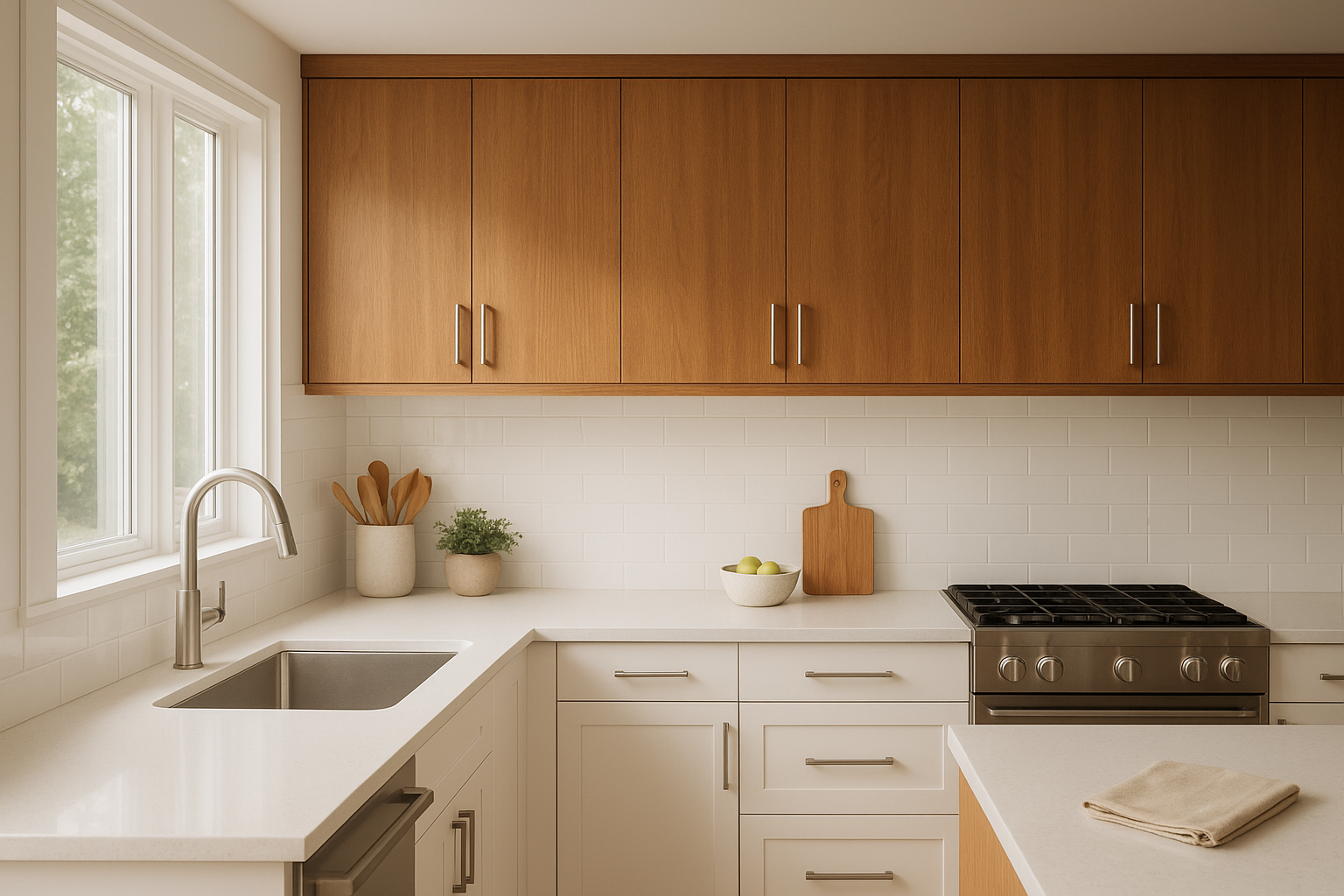
A finished kitchen after upper cabinet refacing, featuring warm wood tones and a modern finish.
Frequently Asked Questions About Upper Cabinet Refacing
What is upper cabinet refacing?
Upper cabinet refacing is the process of replacing cabinet doors, drawer fronts, and veneer surfaces on wall-mounted cabinets while keeping the existing boxes in place. It gives kitchens an updated look without the cost of full replacement.
How long does upper cabinet refacing take?
Most upper cabinet refacing projects take two to five days, depending on the number of cabinets and door style chosen. Homeowners can typically keep using their kitchen throughout much of the process.
How much does upper cabinet refacing cost?
Upper cabinet refacing generally costs less than full cabinet replacement, with pricing depending on materials, door style, and cabinet count. Many Cincinnati homeowners find refacing cost in Cincinnati roughly half of what a full remodel would require.
Is upper cabinet refacing as durable as new cabinets?
When done with quality veneers and hardware, refaced upper cabinets can perform as well as new cabinetry for many years. Durability depends largely on the condition of the existing cabinet boxes underneath.
Can any upper cabinet be refaced?
Most upper cabinets can be refaced as long as the existing boxes are structurally sound and free of water damage or warping. A contractor should inspect the boxes before starting the project.
What’s the difference between refacing and refinishing upper cabinets?
Refacing replaces doors, drawer fronts, and veneer, while refinishing simply repaints or restains existing surfaces without replacing anything. Refacing offers more design flexibility since new door styles and finishes become possible.
Do I need to reface both upper and lower cabinets together?
No, homeowners can reface only their upper cabinets if the lower cabinets are in better condition or a different budget applies. Many projects start with upper cabinets since they are the most visible.
What materials are used in upper cabinet refacing?
Common materials include wood veneer, rigid thermofoil, and laminate for cabinet boxes, paired with solid wood or engineered wood doors. The best choice depends on budget, style, and desired durability. Learn about sustainable kitchen options and material trade-offs when choosing finishes.
Will upper cabinet refacing match my kitchen’s existing style?
Yes, refacing materials come in a wide range of colors, finishes, and door styles that can be matched to existing lower cabinets or a new overall design. A design consultation helps confirm compatibility.
What are common mistakes homeowners make with upper cabinet refacing?
A common mistake is skipping a structural inspection of the cabinet boxes before refacing begins. Another is choosing hardware that does not match the new door style, which can throw off the finished look.
Is upper cabinet refacing less disruptive than remodeling?
Yes, upper cabinet refacing avoids tearing out cabinet boxes, removing drywall, or rerouting plumbing and electrical, which significantly reduces mess and downtime. Most kitchens remain usable throughout the project.
How do I know if upper cabinet refacing is right for me?
Upper cabinet refacing works well when cabinet boxes are structurally sound but the look feels outdated. If boxes are damaged or the layout needs to change, full replacement may be a better fit.
Final Thoughts
Upper cabinet refacing remains one of the most practical ways to modernize a kitchen without the cost, mess, and downtime of a full remodel. By updating doors, drawer fronts, and veneer while preserving the existing cabinet boxes, homeowners get a fresh look that fits their budget and timeline. Ultimately, whether you’re addressing outdated finishes or simply want a more cohesive kitchen design, upper cabinet refacing offers a dependable path to lasting results. For homeowners throughout Cincinnati, KT Cabinet Refacing provides the local craftsmanship and personalized guidance needed to make that transformation smooth and worthwhile. By KT Cabinet Refacing. Last updated: 2026-08-12.