Cabinet refacing is the fastest way to give a tired kitchen a brand-new look without tearing out cabinets, rerouting plumbing, or living through weeks of demolition dust. Instead of removing the entire cabinet system, a professional crew replaces the doors, drawer fronts, and exposed panels while your existing cabinet boxes stay exactly where they are. For homeowners across Cincinnati and beyond, this approach delivers a dramatic visual transformation at a fraction of the cost and time of a full kitchen remodel. However, cabinet refacing is not automatically the right fit for every kitchen, so understanding exactly how it works, what it costs, and when to avoid it will help you make a confident, informed decision.
Quick answer: Cabinet refacing replaces cabinet doors, drawer fronts, and surface panels while reusing your existing cabinet boxes. This guide on Cabinet Refacing Pros and Cons notes it typically costs 30% to 50% less than full replacement, takes just a few days instead of several weeks, and works best when your cabinet boxes are structurally sound. It is the wrong choice if you need a new layout or your boxes have water damage.
What Is Cabinet Refacing?
Cabinet refacing is a kitchen update method that covers your existing cabinet boxes with new veneer (a thin decorative surface layer) or laminate, then swaps out the doors and drawer fronts for new ones. In contrast to full replacement, the underlying frame, shelving, and cabinet interiors stay untouched. As a result, homeowners get a completely fresh appearance without disturbing the plumbing, flooring, or countertops connected to the old cabinet system.
This method works best when a kitchen’s layout already functions well but the finishes simply look dated. For a closer look at how this compares to a full gut renovation, see how refacing compares to remodeling in terms of disruption. If you’d like a broader overview of exactly what refacing includes and delivers, this guide to the benefits of cabinet refacing breaks it down room by room.
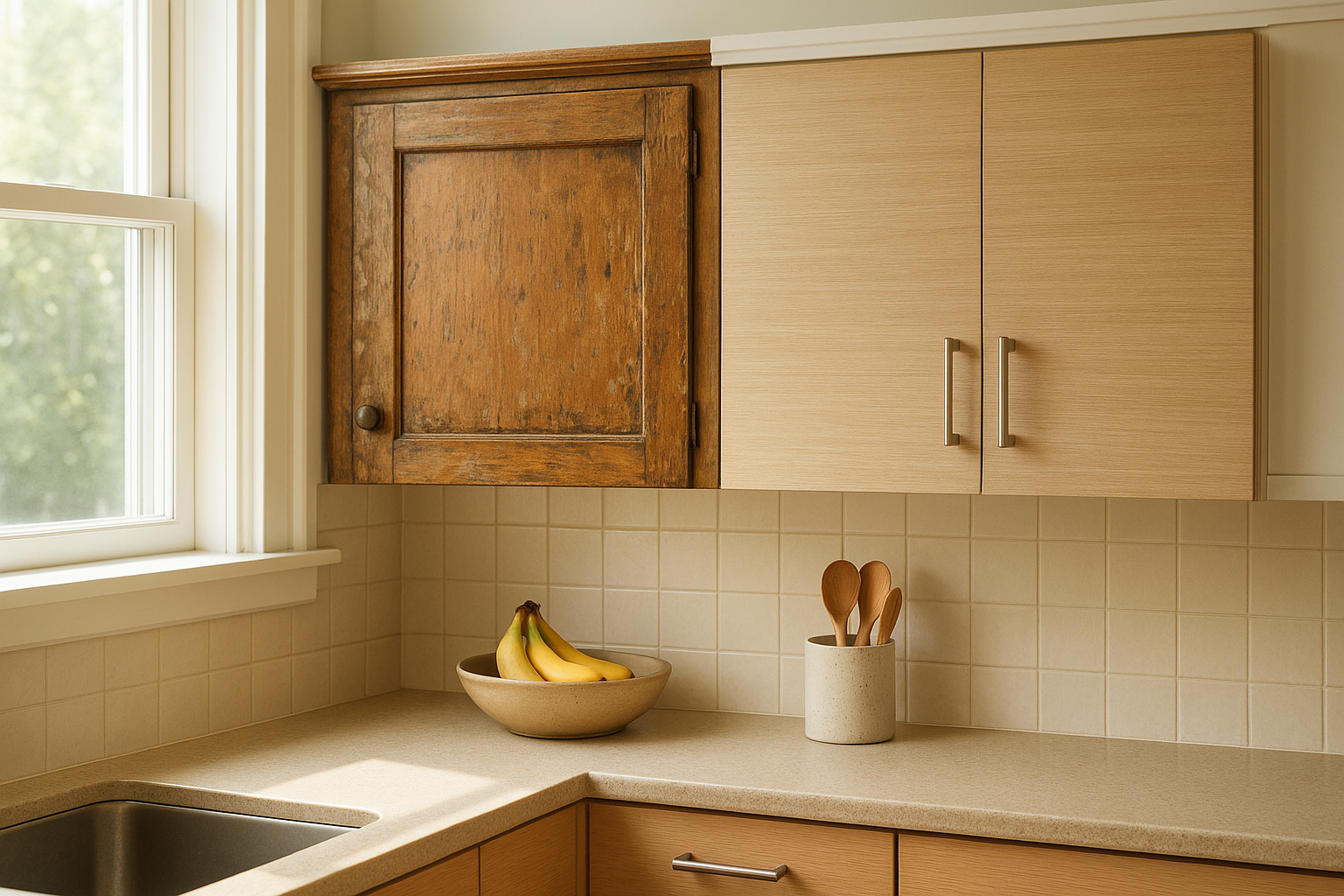
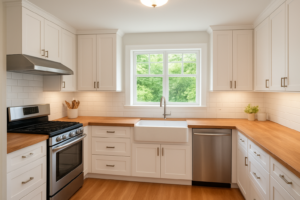
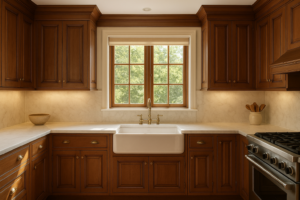
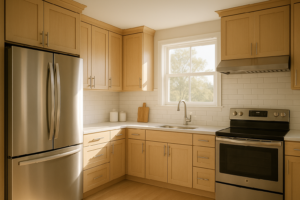
A side-by-side look highlights how dramatically cabinet refacing can transform an existing kitchen. For a deeper walkthrough, see our Cabinet Refacing vs Repainting: Which Is Better for Your Kitchen?.
Cabinet Refacing vs. Full Cabinet Replacement
Full cabinet replacement removes everything, including the boxes, and installs entirely new cabinetry from the studs out. This allows for layout changes, such as adding an island or reworking corner storage. However, it also means a longer timeline, a higher price tag, and far more disruption to daily life while the work is underway.
In contrast, refacing works within your kitchen’s current footprint. Therefore, it suits homeowners who love their layout but want a modern aesthetic. For a detailed cost and value breakdown, this complete comparison of refacing versus full replacement walks through both paths in depth.
| Factor | Cabinet Refacing | Full Replacement |
|---|---|---|
| Typical timeline | 2–5 days | 3–8 weeks |
| Average cost vs. replacement | 30–50% less | Full price |
| Layout changes possible | No | Yes |
| Household disruption | Low | High |
According to industry cost data compiled by Remodeling Magazine’s Cost vs. Value Report, minor kitchen updates tend to recoup a higher percentage of costs at resale than major overhauls, largely because they are less expensive upfront. Consequently, refacing offers an appealing middle ground for homeowners who want a return on investment without a six-figure renovation.
The Complete Cabinet Refacing Process: 5 Steps Explained
Understanding the process ahead of time helps you set realistic expectations for timeline and involvement. Below is the typical sequence a professional cabinet refacing crew follows from start to finish.
- Initial consultation and assessment: A specialist inspects the cabinet boxes for moisture damage, warping, or structural issues before recommending cabinet refacing as a suitable option for your kitchen.
- Material and style selection: Homeowners choose door styles, veneer finishes, and hardware from physical samples to match their desired kitchen look, color palette, and budget.
- Box preparation and surface prep: Technicians clean, sand, and prepare the existing cabinet boxes so new veneer and panels bond securely and look seamless once installed.
- Installing new doors and veneer: New doors, drawer fronts, and matching veneer panels are attached to the prepared boxes, along with soft-close hinges and updated hardware.
- Final walkthrough and cleanup: The installer checks alignment, adjusts hardware, and walks the homeowner through the finished kitchen before a thorough cleanup.
Notably, this process usually takes far less time than demolition-based remodeling. If you are curious about non-destructive ways to update cabinetry beyond a full reface, this guide on updating kitchen cabinets without full replacement covers additional options worth considering.
Cabinet Refacing Cost Breakdown: What You’ll Actually Pay
Cost is usually the deciding factor for homeowners comparing cabinet refacing to replacement. In general, most projects fall somewhere between $4,000 and $9,000 for an average-size kitchen, though larger kitchens with premium wood veneer or custom hardware can run higher. Specifically, expect these approximate ranges:
- Budget tier: Rigid thermofoil doors with laminate box panels, roughly $100–$150 per linear foot.
- Mid tier: Wood veneer boxes with semi-custom solid wood doors, roughly $150–$225 per linear foot.
- Premium tier: Custom wood species, upgraded hardware, and soft-close mechanisms, roughly $225–$300+ per linear foot.
In addition, a few variables consistently move the price: kitchen size, the number of drawer fronts versus full doors, hardware finish (brushed nickel, matte black, and brass all price differently), and whether hidden storage upgrades — like pull-out shelving — are added during the project. Above all, get a written, itemized estimate before signing anything so there are no surprises once work begins.
Door Styles, Materials, and Finishes for Cabinet Refacing
The material you choose determines both the look and the lifespan of your refaced kitchen. As with any cabinetry project, traditional cabinetry construction methods and materials directly influence how well a refaced surface holds up over time.
- Wood veneer: A thin, real-wood layer bonded to the existing box for an authentic grain and texture that matches solid wood doors.
- Rigid thermofoil (RTF): A durable vinyl layer heat-fused over an engineered wood door, prized for its smooth, easy-to-clean surface and lower price point.
- High-pressure laminate: A tough, moisture-resistant surface that resists scratches and works well in high-traffic kitchens.
- Solid wood doors: Full replacement doors and drawer fronts, often paired with veneer boxes for a fully custom look.
Similarly, hardware choice matters more than most homeowners expect. Swapping to soft-close hinges and matching pulls instantly makes refaced cabinets feel like an entirely new installation rather than a surface-level update.
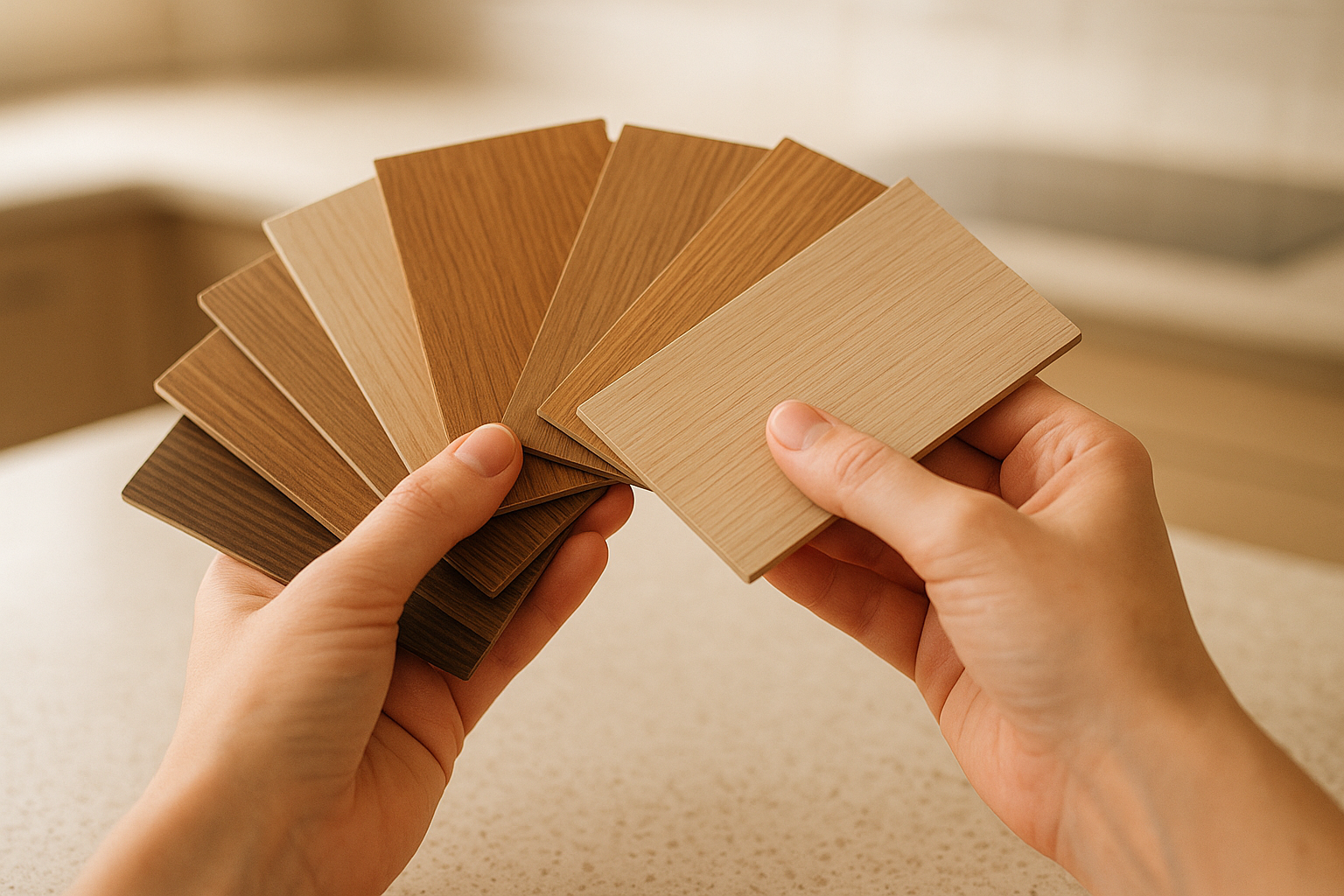
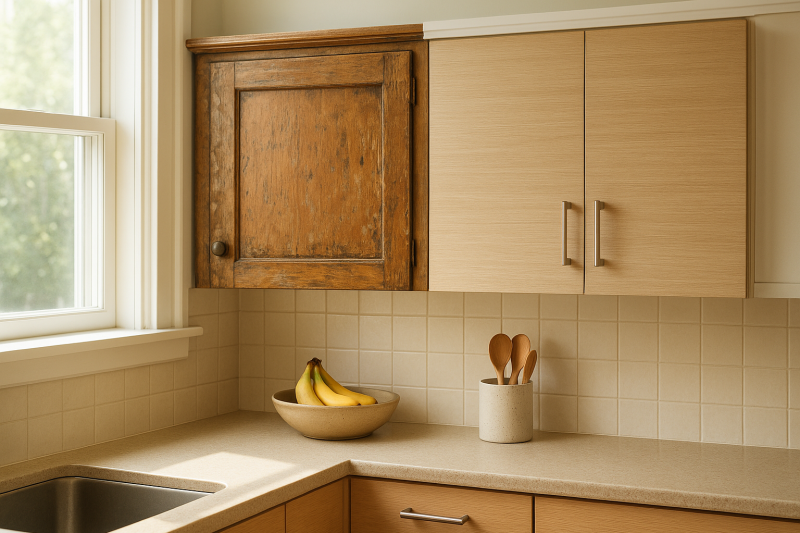
Choosing the right veneer or laminate is a key step in getting the most out of a cabinet refacing project.
Pros and Cons of Cabinet Refacing at a Glance
Before committing to any approach, it helps to weigh the pros and cons of cabinet refacing side by side. In particular, comparing these factors against your kitchen’s condition and your renovation goals guides a smarter decision. For a fuller rundown of upside, this page on the benefits of cabinet refacing is worth a read.
Advantages of Cabinet Refacing
- Costs typically 30% to 50% less than full replacement
- Project completion in days instead of weeks
- Less dust, noise, and disruption at home
- Keeps existing cabinet boxes out of landfills
- Wide range of door styles and finishes available
Disadvantages of Cabinet Refacing
- Doesn’t fix warped or water-damaged boxes
- Layout and cabinet configuration stay the same
- Interior storage features aren’t upgraded
- Not ideal for a total kitchen redesign
- Quality varies depending on installer skill
Consequently, the right choice depends heavily on your cabinets’ current condition. If the boxes are solid but the finishes feel outdated, refacing checks nearly every box. On the other hand, if you’re hoping to reconfigure your kitchen entirely, replacement may serve you better. For local service options, see our Cincinnati cabinet refacing services guide.
How Long Does Cabinet Refacing Last?
Refaced cabinets typically last 15 to 20 years when installed with quality materials and proper care. Lifespan depends heavily on daily use, moisture exposure near sinks and dishwashers, and the veneer or laminate chosen at the outset. For a deeper look at how the right materials and installation choices affect long-term performance, see how cabinet refacing improves kitchen function and durability.
To extend that lifespan, wipe spills quickly, avoid abrasive cleaners on laminate surfaces, and tighten hinges periodically. In short, refaced cabinets hold up remarkably well when the underlying boxes were sound to begin with.
Cabinet Refacing Mistakes to Avoid
Even a well-planned cabinet refacing project can go wrong if a few common mistakes slip through. Specifically, watch for these pitfalls:
- Refacing damaged boxes: Refacing only updates surfaces, so warped, swollen, or water-damaged boxes should be repaired or replaced first.
- Ignoring lead paint risks: If your home was built before 1978, renovation work may require lead-safe practices, per EPA lead renovation guidelines.
- Hiring based on price alone: The cheapest bid often means thinner veneer, weaker adhesives, or rushed installation.
- Skipping a written warranty: Always confirm what is covered and for how long before work begins.
- Mismatching hardware finishes: Inconsistent hinges or pulls can undercut an otherwise flawless refacing job.
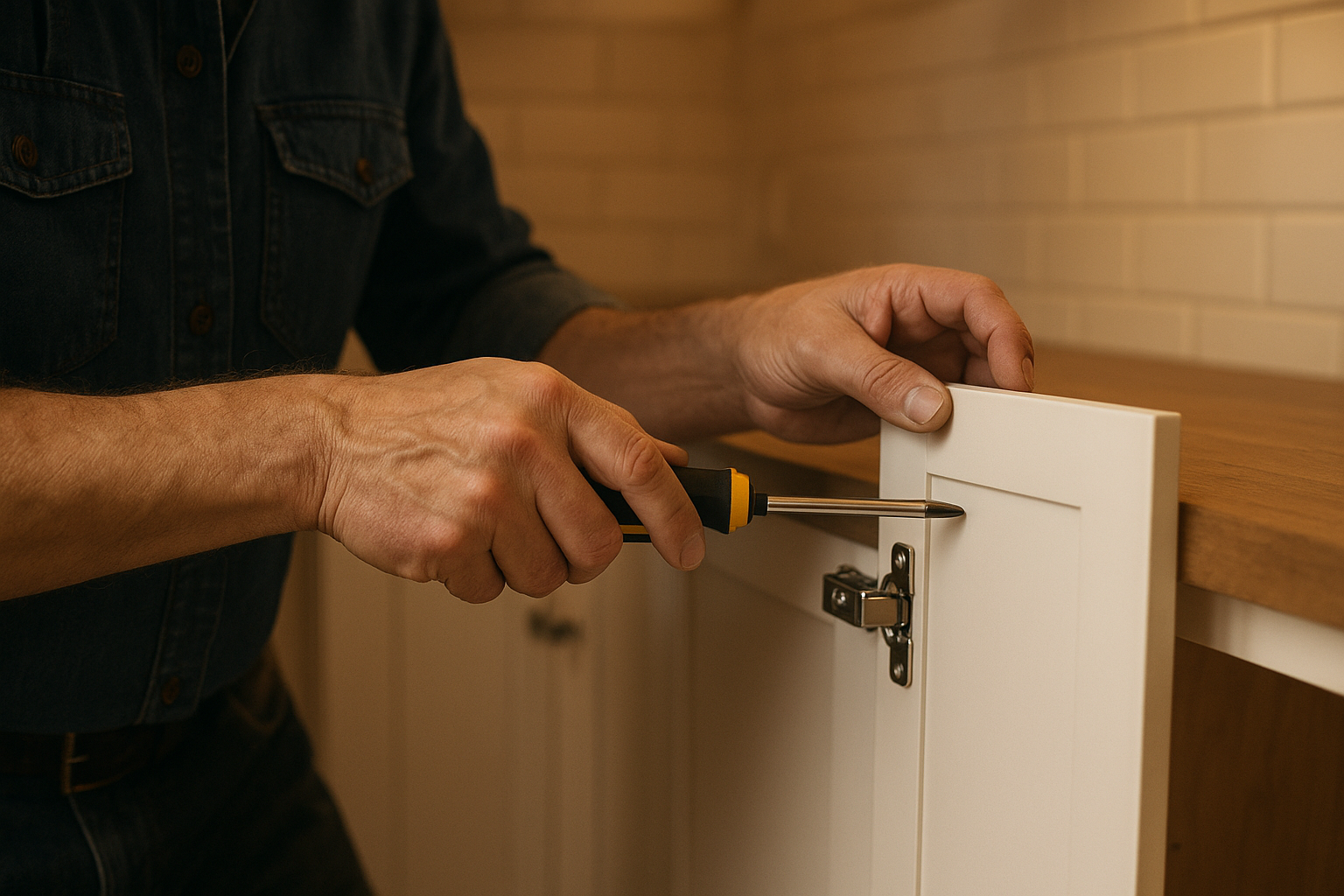
Professional installation helps ensure the pros of cabinet refacing outweigh any potential drawbacks.
Is Cabinet Refacing Worth It for Your Kitchen?
Ultimately, the decision hinges on your cabinets’ condition and your renovation goals. If the boxes are sturdy and you simply want an updated appearance, cabinet refacing likely makes sense. You can learn more about whether cabinet refacing is a good investment for your specific home before moving forward.
Furthermore, working with an experienced local team reduces the risk of installation issues that shorten a refaced kitchen’s lifespan. For homeowners in the Cincinnati area, ktcabinetrefacing.com provides localized guidance based on regional home styles and typical cabinet conditions found throughout the region.
Choosing a Professional Cabinet Refacing Company
To understand what a qualified crew brings to the table, review these top benefits of hiring a professional cabinet refacer. In particular, look for the following before signing a contract:
- Proof of licensing and liability insurance
- A portfolio of real before-and-after cabinet refacing projects
- Physical door and veneer samples you can touch and compare
- A written warranty covering materials and labor
- A detailed, itemized estimate with no vague allowances
Above all, a trustworthy company will walk you through every step before work begins. If you are ready to see what cabinet refacing could look like in your own kitchen, schedule a free in-home consultation to get a firsthand estimate.
Frequently Asked Questions About Cabinet Refacing
What is cabinet refacing?
Cabinet refacing is the process of replacing cabinet doors, drawer fronts, and exposed panels while keeping the existing cabinet boxes in place. It updates a kitchen’s look without the cost and mess of tearing out the entire cabinet system.
What are the pros and cons of cabinet refacing?
The pros and cons of cabinet refacing come down to savings versus flexibility. Refacing typically costs less and takes less time than replacement, but it does not fix structural problems or allow major layout changes.
How long does cabinet refacing take?
Most cabinet refacing projects take between two and five days, compared to several weeks for a full cabinet replacement. Timelines vary based on kitchen size and materials selected.
How much does cabinet refacing cost?
Cabinet refacing generally costs 30% to 50% less than full cabinet replacement, with most projects landing between $4,000 and $9,000. The exact price depends on kitchen size, door style, and veneer material chosen.
Is cabinet refacing cheaper than replacing cabinets?
Yes, in most cases cabinet refacing is significantly cheaper than full replacement because the existing cabinet boxes are reused. Labor and material costs are lower since only visible surfaces are updated.
Can you reface cabinets yourself?
Some homeowners attempt DIY refacing, but achieving a professional, seamless finish usually requires specialized tools and veneer experience. Hiring a professional reduces the risk of uneven surfaces or poor adhesion.
What materials are used in cabinet refacing?
Common refacing materials include wood veneer, rigid thermofoil, and laminate for cabinet boxes, paired with new solid wood or engineered doors. Each material offers different durability and price points.
Does cabinet refacing increase home value?
Cabinet refacing can boost a home’s visual appeal and support resale value, particularly in kitchens with outdated finishes. However, it typically returns less resale value than a full kitchen remodel with layout changes. For a deeper walkthrough, see our Does Cabinet Refacing Increase Home Value? The Complete ROI Guide.
What is the biggest mistake homeowners make with cabinet refacing?
The most common mistake is refacing cabinet boxes that are already water-damaged or structurally weak. Refacing only updates surfaces, so underlying damage should be repaired first.
How long do refaced cabinets last?
Refaced cabinets typically last 15 to 20 years when installed with quality materials and proper care. Lifespan depends on daily use, moisture exposure, and the veneer or laminate chosen.
When should you avoid cabinet refacing?
Refacing should be avoided when cabinet boxes are warped, water-damaged, or when the kitchen layout itself needs to change. In those cases, full replacement is usually the more reliable option.
Is cabinet refacing worth it?
Cabinet refacing is worth it for homeowners who like their kitchen layout but want an updated look at a lower cost. It is less worthwhile if the cabinets have structural issues or the space needs reconfiguring.
What is the difference between refacing and painting cabinets?
Painting only changes the color of existing surfaces, while refacing replaces doors and applies new veneer to boxes for a more complete transformation. Refacing generally lasts longer and looks more like new cabinetry than a paint job.
Does cabinet refacing work on both framed and frameless cabinets?
Yes, cabinet refacing works on both framed and frameless cabinet boxes, though the door style and veneer application differ slightly between the two construction types. A specialist will confirm compatibility during the initial assessment.
Does cabinet refacing come with a warranty?
Reputable cabinet refacing companies typically offer a written warranty covering materials and workmanship, often ranging from five years to a limited lifetime warranty depending on the products used.
Final Thoughts on Cabinet Refacing
Weighing the pros and cons of cabinet refacing ultimately comes down to your cabinets’ condition, your budget, and how much change you want in your kitchen’s layout. When boxes are sound and the goal is a fresh, modern look, cabinet refacing delivers strong value with minimal disruption and a timeline measured in days rather than weeks. However, when structural issues or layout changes are involved, full replacement may serve you better in the long run.
In summary, taking time to assess your specific kitchen — rather than assuming one approach fits every home — leads to a far more satisfying result. If you’re weighing your options, exploring the resources on cabinet refacing versus remodeling above can help clarify which path fits your Cincinnati home best.