Kitchen cabinet resurfacing is the fastest way to give a tired kitchen a completely new look without the cost, mess, or downtime of a full remodel. Rather than demolishing cabinet boxes and starting from scratch, this approach updates only what you see and touch every day — doors, drawer fronts, and exposed end panels — while the structural framework underneath stays exactly where it is. For homeowners across Cincinnati weighing a gut renovation against a lighter refresh, kitchen cabinet resurfacing typically delivers most of the visual transformation of a full remodel at a fraction of the cost. Below, you will find everything you need: what the process involves, how it compares to refacing and refinishing, real cost ranges, material options, and how to know if it is the right fit for your home.
Quick answer: Kitchen cabinet resurfacing replaces only the visible surfaces of existing cabinets — doors, drawer fronts, and exposed panels — while keeping the original cabinet boxes fully intact. Most projects finish in two to five days and cost 30% to 50% less than full cabinet replacement, which makes it one of the most efficient kitchen updates available today.
What Is Kitchen Cabinet Resurfacing?
Kitchen cabinet resurfacing is the process of updating the exterior appearance of cabinets without removing or rebuilding the boxes underneath. Specifically, it involves applying new veneer (a thin layer of real wood or laminate bonded to the surface) or laminate to exposed frames and end panels, then swapping out doors and drawer fronts for a fresh style. As a result, homeowners get a kitchen that looks brand new while the cabinet infrastructure — the part doing the actual structural work — stays exactly in place.
Because the boxes remain untouched, plumbing, electrical wiring, and the overall layout stay the same. In addition, this method avoids the demolition mess that comes with a full gut renovation, which is exactly why it has become such a popular option among Cincinnati homeowners who want a meaningful visual upgrade without months of construction disruption.
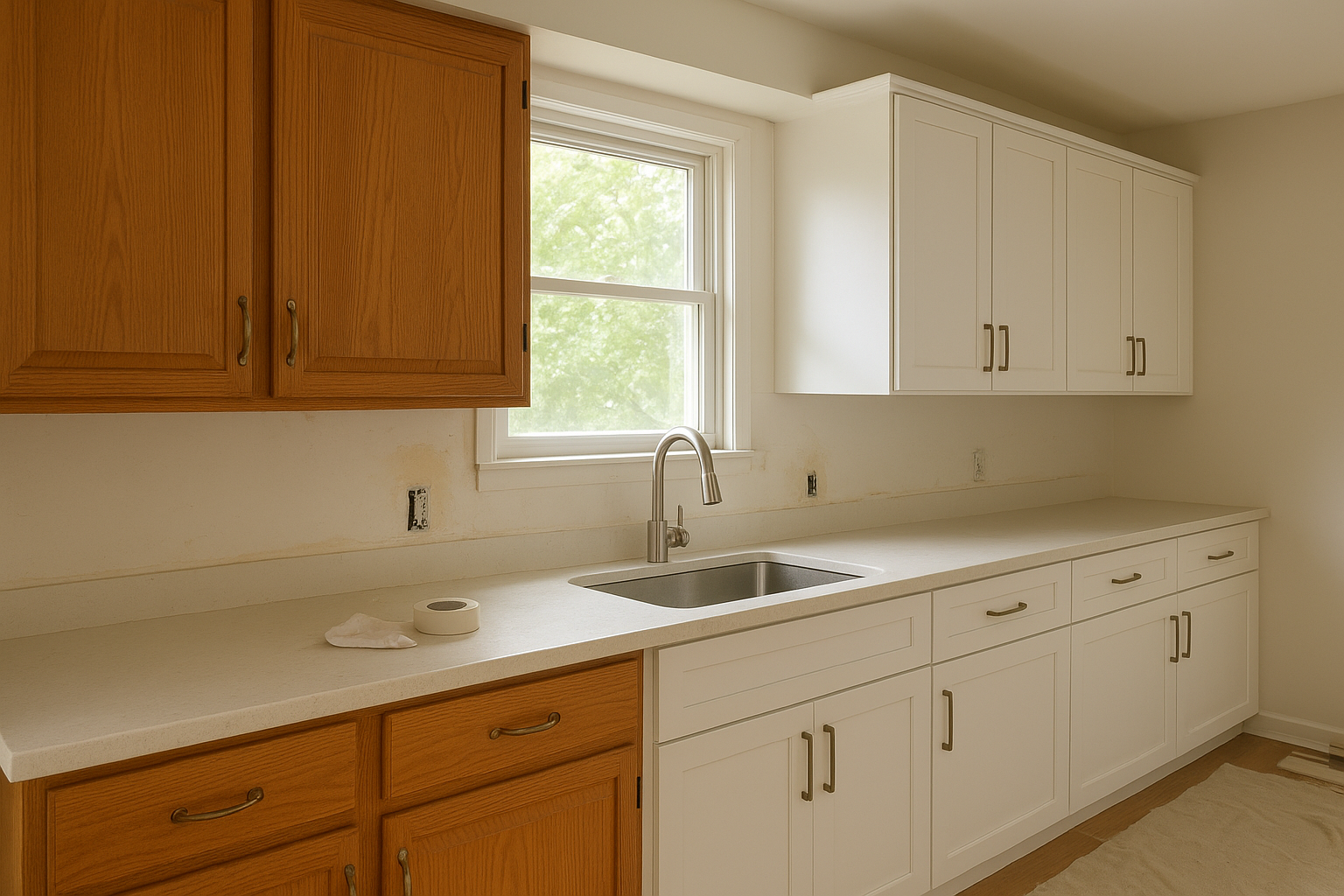
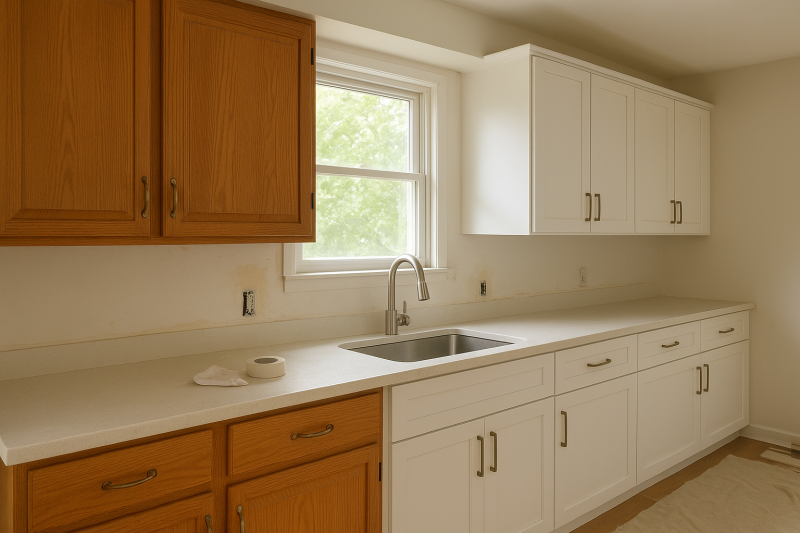
A side-by-side look at kitchen cabinet resurfacing in progress, moving from dated oak to a clean, modern finish.
Cabinet Resurfacing vs. Refacing vs. Refinishing vs. Replacement
These four terms get mixed up constantly, and understandably so — they overlap in meaning but differ in scope. Below is a side-by-side breakdown so you can see exactly where kitchen cabinet resurfacing fits among the alternatives before you commit to a direction. For a deeper dive, this guide on how cabinet refacing differs from resurfacing walks through the terminology in more detail.
| Method | What Changes | Typical Cost vs. Replacement | Timeline |
|---|---|---|---|
| Resurfacing | New veneer/laminate on boxes, new doors and drawer fronts | 30%–50% less | 2–5 days |
| Refacing | Nearly identical to resurfacing; often used interchangeably | 30%–50% less | 2–5 days |
| Refinishing | Sanding and repainting/staining existing doors, no new materials | 50%–70% less | 3–7 days |
| Full Replacement | Entire cabinet boxes, doors, and hardware removed and rebuilt | Baseline (100%) | 3–8 weeks |
What Is Cabinet Refinishing?
Refinishing means stripping, sanding, and repainting or staining the existing doors and frames without adding any new material. It is the least expensive option; however, it only works well when the underlying wood is in good shape and you are happy with the current door style and layout of your cabinets.
What Is Cabinet Refacing?
Refacing is essentially the same process as kitchen cabinet resurfacing — new veneer or laminate goes on the boxes, and new doors and drawer fronts replace the old ones. In the trade, “resurfacing” and “refacing” are used almost interchangeably, though some contractors reserve “refacing” specifically for projects that also include new door hardware and molding upgrades.
When Full Replacement Makes More Sense
Sometimes a kitchen genuinely needs a new layout, deeper storage, or an entirely different footprint. In that case, resurfacing will not solve the underlying issue, and full replacement becomes the more sensible route. For everyday cosmetic fatigue, though, resurfacing is generally the smarter first option to explore before committing to a larger project. For more ideas on lighter-touch updates, see this guide on updating kitchen cabinets without full replacement, and browse these seven budget-friendly fixes for outdated cabinets for additional low-cost options.
The Kitchen Cabinet Resurfacing Process: A Step-by-Step Overview
Understanding the process helps set expectations before work begins. Above all, a professional approach follows a consistent sequence to ensure a clean, lasting finish from start to completion.
- Assess cabinet condition: A technician inspects the cabinet boxes for structural soundness, checking for water damage, warping, or loose joints before recommending resurfacing over replacement.
- Select materials and door style: Homeowners choose new veneer, laminate, or thermofoil finishes along with a door style and hardware that match their design preferences and overall budget.
- Remove doors and prepare surfaces: Existing doors and drawer fronts are removed, and remaining cabinet surfaces are cleaned, sanded, and prepped so new material adheres properly and evenly.
- Apply new veneer or laminate: Skilled installers apply matching veneer or laminate to exposed cabinet frames and end panels, ensuring seams stay tight and edges are sealed cleanly.
- Install new doors and drawer fronts: Freshly manufactured doors and drawer fronts are hung and aligned, replacing the outdated originals with the homeowner’s chosen style and finish.
- Add hardware and final inspection: New hinges, pulls, and knobs are installed, and the entire kitchen is inspected for alignment, finish quality, and smooth operation before the crew leaves.
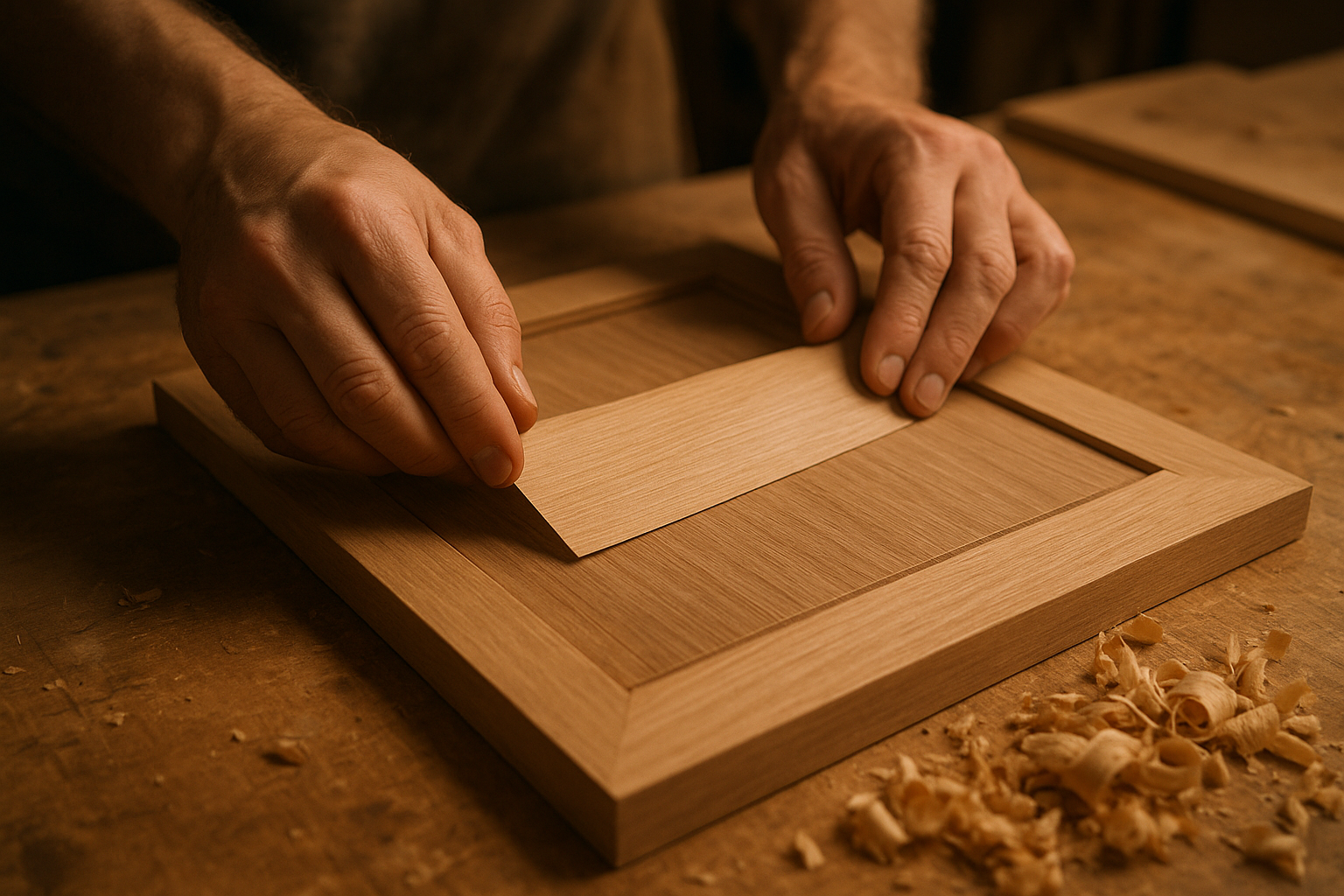
Careful veneer application is a key step in achieving a smooth, factory-quality finish.
How Much Does Kitchen Cabinet Resurfacing Cost?
Cost varies based on kitchen size, material selection, and door style. Generally speaking, resurfacing runs noticeably lower than full replacement because labor and materials are limited to surfaces rather than entire cabinet units. Homeowners working with a fixed budget often find resurfacing lets them allocate savings toward countertops, hardware, or lighting instead.
| Cost Component | Typical Range |
|---|---|
| New doors and drawer fronts | $100–$300 per door |
| Veneer or laminate application | $30–$70 per linear foot |
| New hardware (hinges, pulls, knobs) | $5–$25 per piece |
| Whole-kitchen resurfacing project | 30%–50% less than full replacement |
Furthermore, finish choice affects price. Real wood veneer tends to cost more than laminate or thermofoil but offers a richer, more traditional appearance. Therefore, it helps to get a detailed quote that breaks down materials, labor, and hardware before committing to a project. According to the Remodeling Cost vs. Value Report, minor kitchen updates typically recoup a strong share of their cost at resale, making a lighter-touch project like resurfacing an efficient investment for many homeowners.
Benefits of Resurfacing Your Kitchen Cabinets
Homeowners choose cabinet resurfacing for several practical reasons. Specifically, it offers a strong combination of speed, savings, and visual transformation that a full remodel cannot always match.
- Lower cost: Reusing cabinet boxes significantly reduces material and labor expenses compared with full replacement.
- Faster timeline: Most projects wrap up in days, not weeks, minimizing kitchen downtime. For a deeper walkthrough, see our Kitchen Design Consultation Guide for Cincinnati Homes.
- Less waste: Keeping the existing structure in place reduces demolition debris sent to landfills.
- Design flexibility: New door styles, colors, and hardware allow for a completely updated look.
- Preserved layout: Plumbing and electrical work stay untouched, avoiding costly rerouting.
For inspiration on style choices, browse these classic cabinet designs that transform a kitchen, or explore practical ideas for a modernized kitchen without a full remodel.
Materials Used in Kitchen Cabinet Resurfacing
Material choice shapes both the look and the longevity of a resurfacing project. Consequently, it pays to understand the trade-offs before signing a contract.
Real Wood Veneer
Real wood veneer is a thin slice of actual hardwood bonded to the cabinet surface. It offers the richest, most authentic look and can be stained or painted like solid wood. However, it costs more than synthetic alternatives and requires careful sealing to resist moisture.
High-Pressure Laminate
Laminate is a durable, budget-friendly surface material available in nearly unlimited colors and patterns. It resists scratches and moisture well, making it a practical choice for busy households, though it lacks the depth of real wood grain.
Rigid Thermofoil
Thermofoil is a vinyl material heat-molded over a substrate, producing a smooth, seamless finish that is easy to clean. It performs well in most kitchens but can be sensitive to prolonged heat exposure near ovens and cooktops.
Signs It Is Time to Reface or Resurface Your Cabinets
Certain signals suggest a kitchen is ready for an update. In particular, watch for peeling laminate, faded or dated finishes, loose hinges, or doors that no longer close flush. Similarly, if your kitchen’s boxes are still solid but the style feels outdated, resurfacing is likely the more efficient path forward.
On the other hand, if cabinets show swelling, soft spots, or mold from water exposure, a deeper repair or replacement may be needed first. According to general guidance from the Wikipedia entry on kitchen cabinets, cabinet materials and construction quality vary widely, which is why a professional assessment matters before choosing an approach.
Is Kitchen Cabinet Resurfacing Right for Your Kitchen?
Before scheduling a project, it helps to run through a quick self-check. If your cabinet boxes are solid, your layout works well, and you simply want a new look, resurfacing is almost always the right call. This detailed breakdown of whether cabinet resurfacing is a good option for outdated kitchens walks through the exact criteria a professional uses to make that call, so you can go into a consultation informed.
Choosing the Right Cabinet Resurfacing Team in Cincinnati
Selecting a qualified team matters as much as the materials used. A skilled installer prevents common issues like misaligned doors, weak adhesion, or mismatched finishes. Locally, KT Cabinet Refacing serves homeowners throughout the greater Cincinnati area with a streamlined process built around minimizing downtime in one of the busiest rooms in the home.
When comparing options, ask about material quality, warranty coverage, and examples of completed kitchens. Also, note that finishes should meet indoor air quality considerations; the EPA’s guidance on volatile organic compounds is a useful reference when discussing finish options with a contractor. If you are ready to compare quotes, you can also reach out to a local specialist, review this guide on the best way to achieve a kitchen cabinet makeover, or check out this ongoing kitchen makeover opportunity for additional inspiration.
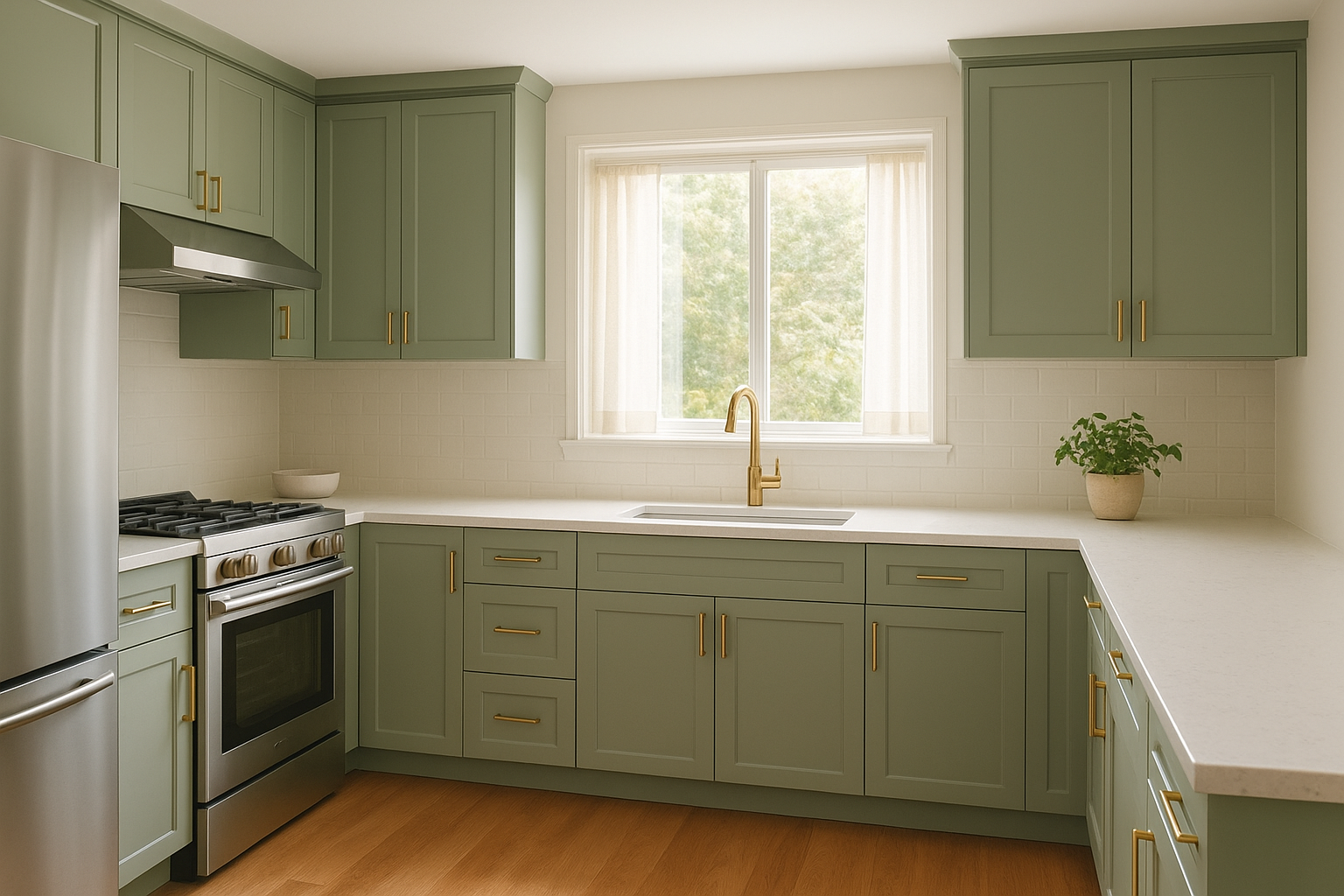
A finished kitchen after cabinet resurfacing, combining a fresh color palette with updated hardware.
Common Mistakes to Avoid When Resurfacing Cabinets
Even a great material choice can fail if the process is rushed. Above all, skipping surface preparation is the most frequent cause of peeling laminate or uneven veneer down the road. Similarly, choosing a contractor based on price alone, without checking craftsmanship or warranty terms, often leads to disappointing results.
In addition, mismatched door sizing and poor color matching between veneer and factory-made doors are easy to spot after installation. Therefore, always ask to see completed projects and request material samples before work begins.
Frequently Asked Questions About Kitchen Cabinet Resurfacing
What is kitchen cabinet resurfacing?
Kitchen cabinet resurfacing is a process that replaces the visible surfaces of existing cabinets, such as doors, drawer fronts, and end panels, while keeping the original cabinet boxes intact. It gives kitchens a new look without the cost or mess of full replacement.
How long does kitchen cabinet resurfacing take?
Most projects take between two and five days, depending on kitchen size and material choices. A full cabinet replacement, by contrast, can take several weeks.
How much does cabinet resurfacing cost compared to full replacement?
Cabinet resurfacing typically costs 30% to 50% less than replacing cabinets entirely, since the existing boxes are reused. For detailed budgeting and options, see our cabinet refacing guide. Exact pricing depends on cabinet count, door style, and finish materials.
Is resurfaced cabinetry as durable as new cabinets?
Yes, when done professionally with quality veneer or laminate materials, resurfaced cabinets can be just as durable as new ones. The structural boxes often outlast the surface finishes anyway.
What is the difference between cabinet resurfacing and cabinet refacing?
The terms are often used interchangeably in the industry. Both describe updating cabinet exteriors with new veneer, laminate, or doors while leaving the cabinet frame in place.
What is the difference between resurfacing and refinishing?
Refinishing sands and repaints or restains the existing doors without adding new material, while resurfacing adds fresh veneer, laminate, and brand-new doors. Refinishing costs less but offers fewer style options than resurfacing.
Can any kitchen cabinets be resurfaced?
Most solid wood or plywood cabinet boxes are good candidates, as long as they are structurally sound. Cabinets with water damage or particleboard deterioration may need repair first.
What materials are commonly used in kitchen cabinet resurfacing?
Common materials include real wood veneer, high-pressure laminate, and rigid thermofoil for doors and panels. Each option offers a different balance of cost, durability, and appearance.
Will resurfacing change my kitchen’s layout?
No, resurfacing does not alter your kitchen’s layout since the existing cabinet boxes stay in place. It simply refreshes the look of the doors, drawers, and visible surfaces.
What common mistakes should homeowners avoid?
A common mistake is choosing a contractor based on price alone without checking craftsmanship or material quality. Skipping proper surface preparation is another frequent cause of peeling or uneven finishes.
How do I choose a cabinet resurfacing contractor?
Look for a specialist with local experience, clear pricing, and examples of completed projects. Asking about warranty coverage and material options also helps ensure lasting results.
Does kitchen cabinet resurfacing increase home value?
Updated cabinets can make a kitchen more appealing to buyers and contribute to overall home value. While resurfacing may not return as much as a full remodel, it offers a strong value-to-cost ratio.
Can I resurface cabinets myself, or should I hire a professional?
DIY kits exist, but achieving a smooth, factory-like finish usually requires professional tools and experience. Hiring a specialist reduces the risk of uneven veneer or misaligned doors.
How do I maintain cabinets after resurfacing?
Wipe surfaces with a soft cloth and mild cleaner, and avoid abrasive scrubbers that can scratch the finish. Regular gentle cleaning keeps resurfaced cabinets looking new for years.
Final Thoughts
In summary, kitchen cabinet resurfacing offers a practical middle ground between living with outdated cabinets and committing to a full remodel. It preserves your kitchen’s layout, shortens the project timeline, and typically costs far less than replacement, all while delivering a genuinely fresh look. Above all, the right result depends on choosing quality materials and an experienced team who understands how to prepare and finish surfaces correctly. For homeowners throughout the Cincinnati area considering this option, KT Cabinet Refacing provides the local expertise needed to turn a tired kitchen into one that feels current, functional, and built to last. Add an author byline and a clear "Last updated" date on the page to strengthen E-E-A-T and local trust.