Refacing kitchen cabinets cost is the number one question Cincinnati homeowners ask before starting any kitchen update, and for good reason. A full kitchen remodel can drain a budget fast, while refacing gives you a dramatic visual change for a fraction of the price. In this guide, you will find exact price ranges by kitchen size and material, a full breakdown of what drives labor costs, a side-by-side comparison against replacement and refinishing, and practical tips for keeping your project under budget. By the end, you will know precisely what to expect to pay and how to avoid the hidden costs that catch many homeowners off guard.
Quick answer: Refacing kitchen cabinets cost typically falls between $4,000 and $14,000 for a full kitchen, or roughly $75 to $300 per linear foot depending on door material and finish. Most Cincinnati homeowners spend between $5,500 and $9,500 for a mid-size kitchen with quality laminate or wood-veneer doors. Below, you will find the exact numbers broken down by kitchen size, material, and location so you can budget with confidence.
What Is Refacing Kitchen Cabinets Cost, Exactly?
Refacing kitchen cabinets cost refers to the total price of updating the exterior surfaces of existing cabinet boxes rather than tearing them out and rebuilding from scratch. Specifically, this includes new door fronts, drawer faces, matching veneer for exposed box surfaces, and fresh hardware. Because the underlying carpentry — called the “cabinet box,” or the fixed frame that holds shelves and drawers in place — stays exactly where it is, both labor and material needs shrink considerably.
As a result, the price tends to land far below a full replacement. According to industry cost data compiled by Remodeling Magazine’s Cost vs. Value report, a minor kitchen remodel averages well over $25,000 nationally, while refacing routinely comes in at a fraction of that figure. That gap explains exactly why so many homeowners explore refacing before considering a gut renovation.
National Averages vs. Cincinnati Pricing for Cabinet Refacing
Nationally, cabinet refacing costs vary widely because labor rates and material availability differ by region. In contrast, Cincinnati homeowners generally see more moderate pricing than buyers in coastal metro areas. The table below breaks down typical ranges by kitchen size, based on standard 10-foot ceiling heights and average cabinet configurations.
| Kitchen Size | Approx. Linear Feet | Low-End Cost | High-End Cost |
|---|---|---|---|
| Small (8–10 ft) | 10 ft | $3,000 | $5,500 |
| Medium (10–15 ft) | 15 ft | $5,500 | $9,000 |
| Large (15–25 ft) | 20–25 ft | $9,000 | $14,000 |
| Kitchen with island | +5–8 ft | +$1,500 | +$3,500 |
Cost per Linear Foot by Door Material
Because most contractors quote per linear foot, understanding material pricing tiers makes it much easier to estimate your own project. Laminate and thermofoil doors generally run $75 to $120 per linear foot. Wood veneer options fall between $120 and $200 per linear foot. Meanwhile, custom-milled or raised-panel wood doors can reach $200 to $300 or more per linear foot, largely due to the extra labor involved in fitting and finishing.
What Drives the Cost to Reface Kitchen Cabinets?
Several variables shape the final invoice for any refacing project. Understanding them ahead of time helps you set realistic expectations and avoid surprises once work begins.
Cabinet Door Materials and Styles
Laminate and thermofoil doors are the most budget-friendly choice, while solid wood veneers cost more but offer a richer, longer-lasting look. Specifically, raised-panel or custom-milled styles add labor time, which raises the total price. In contrast, simple flat-panel doors keep costs on the lower end.
Kitchen Size and Layout
Because pricing is often quoted per linear foot, a larger kitchen with more cabinet runs naturally costs more to reface. Similarly, kitchens with unusual angles, islands, or built-in pantries may require extra custom fitting, which can add to labor hours.
Local Labor Rates in Cincinnati
Labor rates vary by region, and Cincinnati’s pricing tends to be more moderate than coastal metro areas. As a result, homeowners here often see better value per square foot compared to national averages. If you would like a locally grounded estimate, the team at KT Cabinet Refacing provides project quotes tailored to Cincinnati-area homes.
Hardware, Accessories, and Soft-Close Upgrades
New hinges, pulls, and knobs are often quoted separately from door and veneer pricing. Upgrading to soft-close hinges or full-extension drawer glides typically adds $15 to $40 per cabinet. In addition, pull-out shelving or lazy Susan inserts can add several hundred dollars to the final total, so it is worth deciding upfront which upgrades matter most to you.
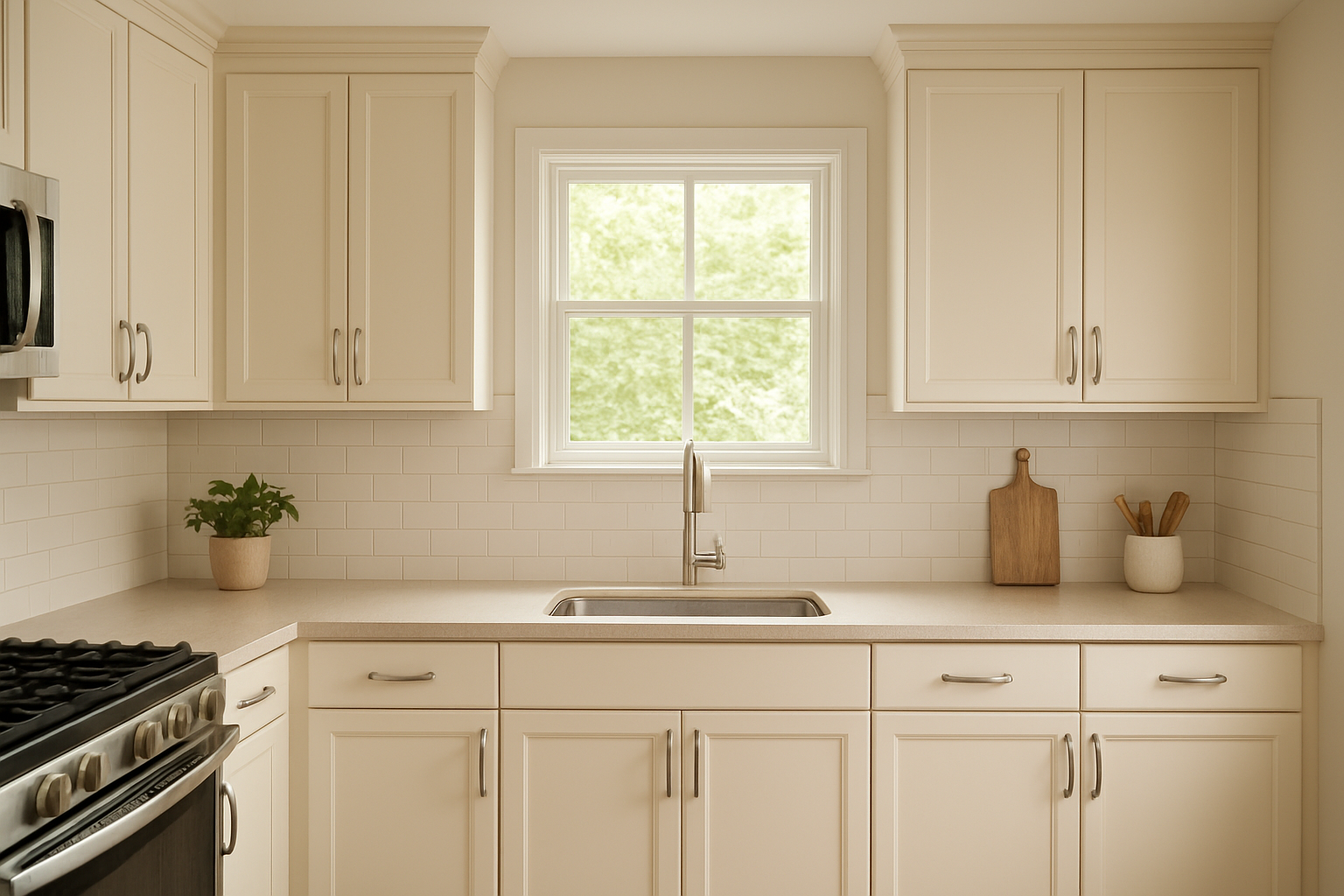
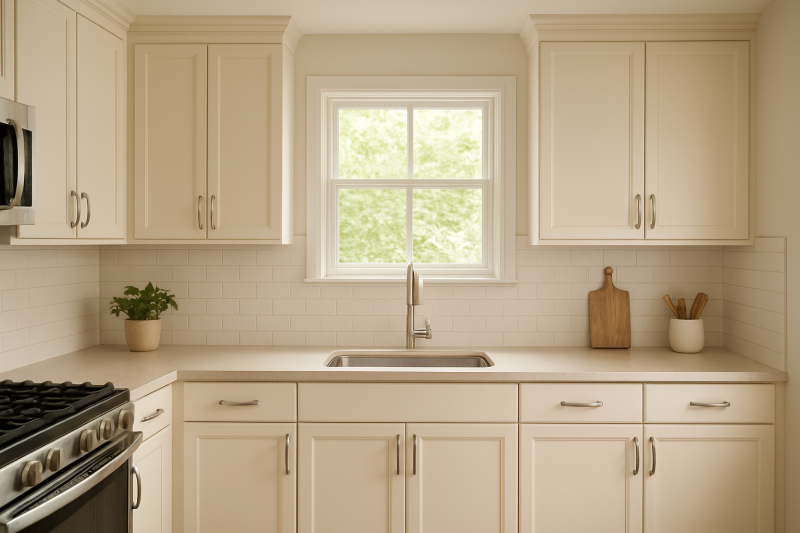
A finished kitchen after refacing, illustrating the visual impact tied to refacing kitchen cabinets cost.
Average Cost to Reface Kitchen Cabinets by Project Size
For a typical 10-foot by 12-foot kitchen, expect a total between $4,000 and $8,000 using mid-range materials. Larger kitchens with premium wood veneers can reach $10,000 to $12,000. In comparison, a full cabinet replacement in the same space commonly starts near $15,000 and climbs quickly with custom cabinetry.
It is worth noting that these figures cover materials, labor, and hardware, but not structural repairs. If cabinet boxes have water damage or warping, additional repair costs may apply before refacing can begin. For a deeper comparison of refacing against other refresh options, see this guide on updating kitchen cabinets without full replacement.
Cost by Number of Cabinet Doors and Drawers
Some contractors price projects by door and drawer count rather than linear footage, which can make comparing quotes tricky. As a general rule, a kitchen with 10 to 15 doors and drawers runs $3,500 to $6,000. A kitchen with 20 to 25 pieces typically lands between $6,500 and $10,000. Above 30 pieces, expect $10,500 or more, especially with premium finishes.
Refacing vs. Resurfacing: Are They the Same Thing?
Many homeowners use “refacing” and “resurfacing” interchangeably, but they are not always identical processes, and pricing can shift depending on which one a contractor actually performs. In particular, some companies use “resurfacing” to describe a lighter treatment that only addresses door faces, while true refacing replaces veneer on every visible box surface too. Consequently, it pays to ask exactly what is included before comparing two quotes side by side. For a full explanation of the terminology and how it affects your invoice, see this breakdown of how refacing differs from resurfacing.
DIY Cabinet Refacing vs. Hiring a Professional
DIY veneer and door kits are available for around $1,500 to $3,000 in materials alone, which sounds appealing at first glance. However, achieving a professional, seamless finish requires precise measuring, careful cutting, and proper adhesive application — skills that take most first-time DIYers considerably longer than expected. In addition, mistakes on expensive veneer sheets often mean buying replacement material, which can erase any upfront savings.
On the other hand, professional installation includes warranties, consistent finish quality, and a much faster timeline. If you are weighing your full range of options before deciding, this overview of kitchen remodeling alternatives that save time and money compares several paths side by side.
How Cabinet Refacing Works: A Step-by-Step Process
Understanding the process helps explain why refacing kitchen cabinets cost stays lower than replacement. Here is the typical sequence a professional crew follows:
- Consultation and measurement: A refacing specialist visits your Cincinnati home to measure every cabinet box, check for water damage, and assess whether your layout is ready for new surfaces.
- Material selection and written estimate: You choose door styles, veneer colors, and hardware finishes, then receive a detailed, itemized price breakdown before any work begins.
- Surface preparation: The crew cleans, sands, and repairs cabinet boxes so the new veneer and doors bond securely and last for years without peeling.
- Veneer and door installation: Skilled craftsmen custom-fit new veneer panels, doors, and drawer fronts to your exact cabinet boxes for a seamless, factory-finished appearance.
- Hardware installation and final walkthrough: New hinges, pulls, and soft-close mechanisms are installed, followed by a thorough quality check alongside the homeowner before completion.
Most projects finish within three to five business days, which is considerably faster than the multi-week timeline of a full remodel. If minimizing disruption matters to your household, this comparison of cabinet refacing versus full remodeling disruption offers more detail.
Refacing vs. Replacing: Which Costs Less?
Refacing almost always costs less than full replacement because the cabinet boxes remain untouched. Therefore, you save on demolition, new box construction, and the labor required to reinstall an entirely new cabinet system. However, replacement makes more sense when boxes are structurally compromised or when you want to change the kitchen layout entirely. If you are still exploring what a full best way to achieve a full kitchen cabinet makeover looks like, that guide covers every option available today.
For a side-by-side breakdown of when each approach fits best, this resource on refacing versus replacing cabinets walks through specific scenarios. Similarly, homeowners weighing a lighter-touch update often compare refacing to refinishing, which is covered later in this guide.
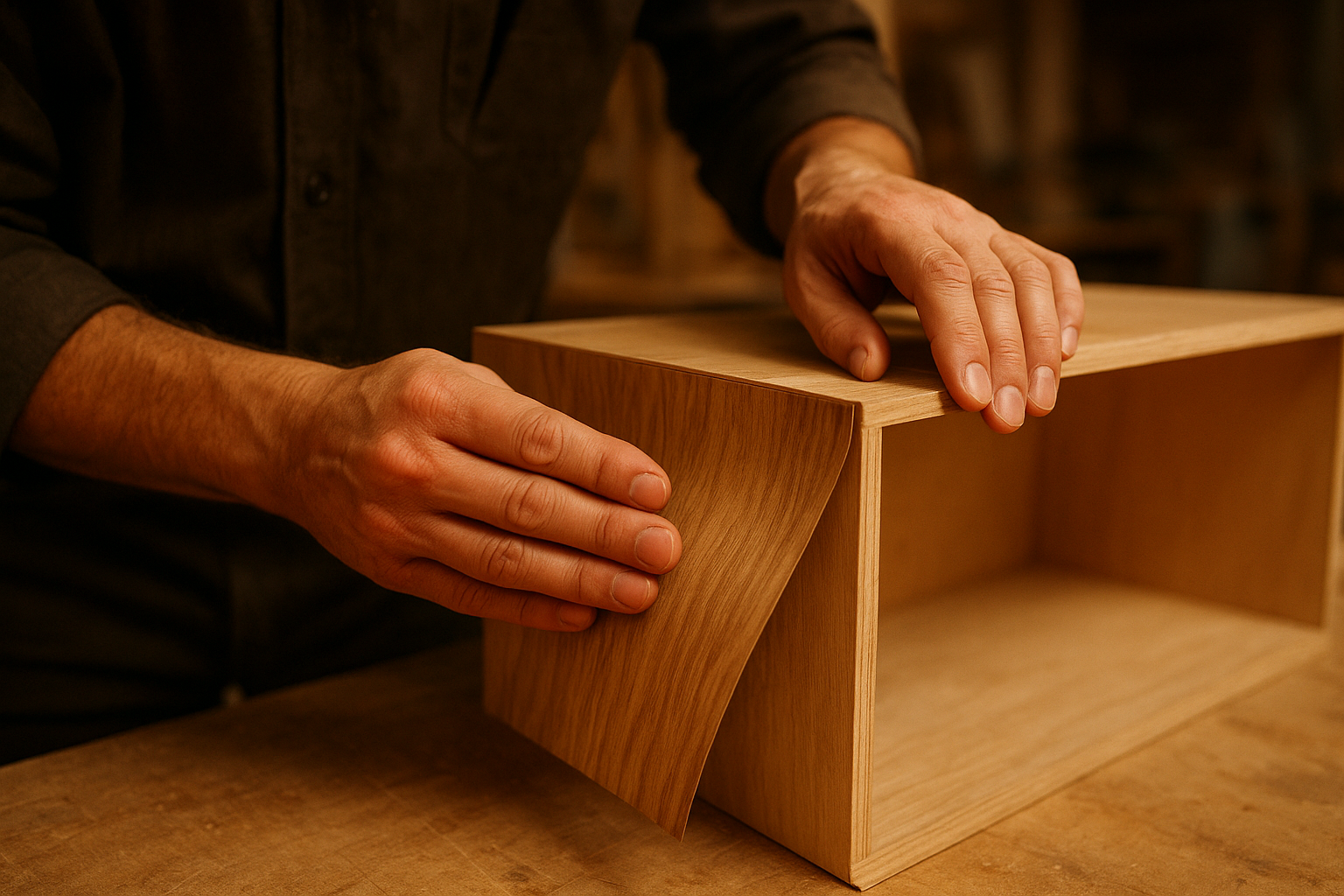
Skilled veneer application is a key labor cost within any refacing kitchen cabinets cost estimate.
Hidden and Additional Costs to Budget For
Beyond the base refacing quote, a few extra line items commonly surprise homeowners. First, structural repairs for warped or water-damaged boxes can add several hundred dollars. Next, disposal fees for old doors and hardware sometimes appear as a separate charge. Above all, if your countertops or backsplash need updating to match new cabinet finishes, that work is priced independently from refacing itself.
Finally, homes built before 1978 may require lead-safe work practices if original paint is disturbed during prep, which can add modest testing and containment costs. Asking for a fully itemized estimate upfront is the simplest way to avoid these surprises later.
Ways to Lower Your Kitchen Cabinet Refacing Cost
There are several practical ways to manage your budget without sacrificing quality. Consider the following approaches before your project starts.
- Choose laminate or thermofoil doors instead of solid wood veneers.
- Keep existing hardware placement to avoid extra drilling and repair work.
- Bundle refacing with minor repairs during the same visit to save on labor trips.
- Ask for a detailed written estimate so pricing stays predictable from start to finish.
- Reuse existing cabinet configurations rather than reconfiguring the layout, which avoids costly carpentry changes.
- Compare several smaller, budget-friendly fixes before committing to a full-kitchen project — this list of seven budget-friendly fixes for outdated cabinets is a good starting point.
In addition, older homes built before 1978 may have lead-based paint on original cabinets, which can affect prep costs. The EPA’s Renovation, Repair, and Painting Program outlines safe handling requirements that a qualified contractor should follow. For a broader roadmap of the entire update process, this complete guide to updating your kitchen cabinets is worth reviewing alongside your budget.
Refacing vs. Refinishing: Cost Comparison
Refinishing involves sanding and repainting or staining the existing doors, while refacing replaces the door fronts and veneer entirely. As a result, refinishing usually costs less upfront, often between $1,500 and $4,000, but it cannot change door style or fix deeper surface flaws. Refacing costs more but delivers a more complete transformation with new hardware and updated styling.
For homeowners still deciding between the two, the complete Cincinnati guide to refinishing kitchen cabinets covers pricing and process side by side. Meanwhile, this refinishing versus refacing kitchen cabinets comparison dives even deeper into which option suits different budgets. According to the general overview of kitchen cabinetry on Wikipedia, cabinet materials and construction methods vary widely, which explains much of the price spread between refinishing, refacing, and full replacement.
Financing Options for Cabinet Refacing Projects
Many refacing companies, including local Cincinnati specialists, offer financing plans or structured payment schedules so homeowners can spread costs over several months. Common options include in-house company financing, promotional zero-percent plans for qualified buyers, personal loans, and home equity lines of credit for larger projects. Consequently, it is worth asking about every available option during your initial consultation, since terms and approval requirements vary significantly between lenders.
Does Cabinet Refacing Increase Home Value?
Updated cabinets can improve buyer perception and support a stronger asking price, especially in competitive markets. Furthermore, the National Association of Realtors’ Remodeling Impact Report consistently ranks kitchen updates among the projects buyers notice most during a showing. That said, return on investment varies by neighborhood, overall kitchen condition, and how well the new finish matches current design trends in your area.
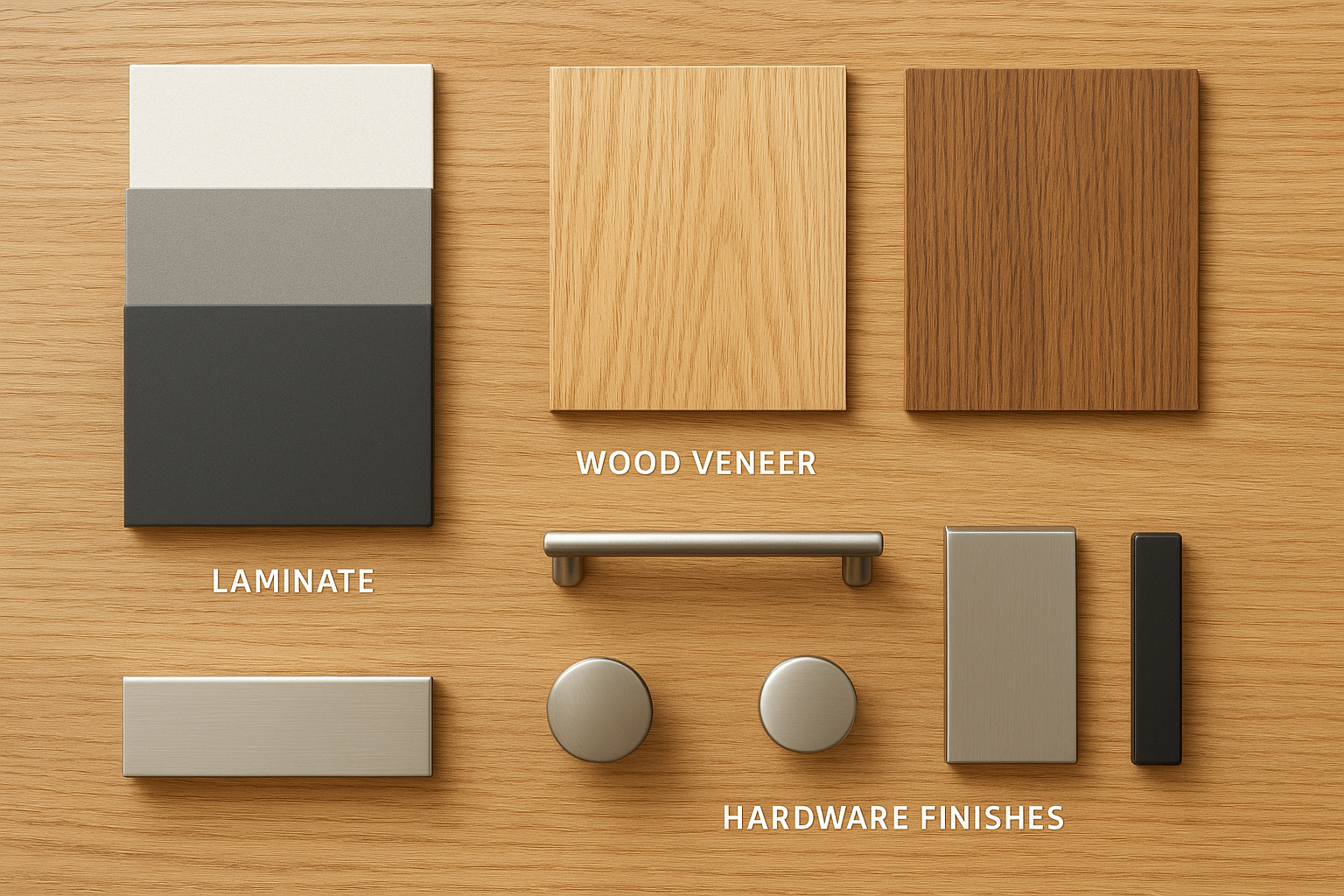
Comparing material samples helps homeowners understand what drives refacing kitchen cabinets cost.
Frequently Asked Questions About Refacing Kitchen Cabinets Cost
How much does refacing kitchen cabinets cost on average?
Refacing kitchen cabinets cost typically ranges from $4,000 to $10,000 for an average-sized kitchen, or roughly $75 to $300 per linear foot depending on material. The exact figure depends on door material, box condition, and hardware choices.
Is cabinet refacing cheaper than full cabinet replacement?
Yes, refacing usually costs 30 to 50 percent less than replacing cabinets entirely. Because the existing cabinet boxes stay in place, you save on materials, demolition, and labor.
What factors influence the cost to reface kitchen cabinets?
Door material, finish type, kitchen size, and hardware all affect pricing. Custom wood veneers cost more than laminate, while a larger kitchen naturally requires more materials and labor hours.
How long does a cabinet refacing project take?
Most refacing projects finish within three to five days for an average kitchen. This is significantly faster than a full remodel, which can take several weeks.
Can refacing work on any type of cabinet box?
Refacing works best when the existing cabinet boxes are structurally sound and properly sized. If boxes are warped, water-damaged, or poorly configured, replacement may be the better option.
What is the difference between refacing and refinishing cabinets?
Refinishing involves sanding and repainting or staining existing doors, while refacing replaces door fronts and veneers with entirely new surfaces. Refacing generally costs more than refinishing but delivers a more dramatic transformation.
Does refacing kitchen cabinets increase home value?
Updated cabinets can improve buyer perception and support a stronger asking price, especially in competitive markets. However, return on investment varies by neighborhood and overall kitchen condition.
What are common mistakes homeowners make when budgeting for refacing?
A common mistake is underestimating hardware and accessory costs, such as new hinges, pulls, and soft-close mechanisms. Skipping a written estimate before work begins can also lead to unexpected charges.
Do I need to empty my kitchen during refacing?
You typically only need to clear out the contents of the cabinets being refaced, not the entire kitchen. Most homeowners can still use their kitchen for basic tasks during the project.
Are there financing options for cabinet refacing?
Many refacing companies, including local Cincinnati specialists, offer financing plans or payment schedules. It is worth asking about options during your initial consultation.
How does kitchen size affect refacing kitchen cabinets cost?
Larger kitchens require more veneer material, doors, and labor hours, which raises the total price. Pricing is often quoted per linear foot, so measuring your cabinet run gives a clearer estimate.
What materials are most affordable for cabinet refacing?
Laminate and thermofoil finishes tend to be the most budget-friendly refacing materials. Wood veneers cost more but offer a richer, more traditional appearance.
How much does it cost to reface cabinets in a small kitchen versus a large kitchen?
A small kitchen of 8 to 10 linear feet usually costs $3,000 to $5,500 to reface, while a large kitchen of 15 to 25 linear feet can run $9,000 to $14,000. Islands and extra cabinet runs add further to either total.
Can I reface my kitchen cabinets myself to save money?
DIY kits can lower material costs to around $1,500 to $3,000, but achieving a professional finish takes precision and practice. Mistakes on veneer sheets often require costly replacement material, which can offset the intended savings.
Final Thoughts on Refacing Kitchen Cabinets Cost
Ultimately, refacing kitchen cabinets cost offers a middle ground between a quick cosmetic fix and a full-scale remodel. It delivers a genuinely updated look, holds up to daily use, and typically finishes in days rather than weeks. Because pricing depends on materials, kitchen size, and local labor rates, getting a detailed, written estimate is the best way to plan your budget accurately. Whether you are comparing refacing to refinishing or weighing it against full replacement, understanding these cost factors puts you in a stronger position to choose the right path for your Cincinnati kitchen.