Cabinet refacing is the fastest, most budget-friendly way for Cincinnati homeowners to transform an outdated kitchen without tearing it down to the studs. Instead of ripping out cabinet boxes and starting from zero, cabinet refacing resurfaces what’s already there — new doors, new drawer fronts, new veneer, and new hardware — so the kitchen looks brand new while the layout, plumbing, and electrical stay exactly where they are. Below, you’ll find the complete picture: what cabinet refacing actually involves, how the process unfolds, what it costs, and how to decide whether it’s the right move for your home.
Quick answer: Cabinet refacing replaces cabinet doors, drawer fronts, and hardware while applying new veneer to the existing boxes. It typically costs 30–50% less than full replacement, takes days instead of weeks, and delivers a completely refreshed kitchen look with far less mess.
What Is Cabinet Refacing?
Cabinet refacing is a kitchen renovation method that updates the visible surfaces of your cabinetry — doors, drawer fronts, end panels, and hardware — while keeping the original cabinet boxes firmly in place. Because the boxes stay put, there’s no demolition, no structural rebuilding, and none of the plumbing or electrical disruption that comes with a full remodel.
In practice, a specialist first applies a matching veneer to every visible cabinet surface, then installs new doors and drawer fronts in the style and finish you’ve chosen. Consequently, the frames look factory-new even though nothing was torn out. This is different from cabinet refinishing, which simply repaints or restains the existing doors without replacing them — refacing goes several steps further and delivers a more dramatic transformation.
If your cabinet boxes are structurally sound but the style feels stuck in another decade, cabinet refacing is generally the smarter — and far less expensive — path forward. For homeowners still weighing their options, this breakdown of how to update kitchen cabinets without full replacement walks through the decision in more detail.
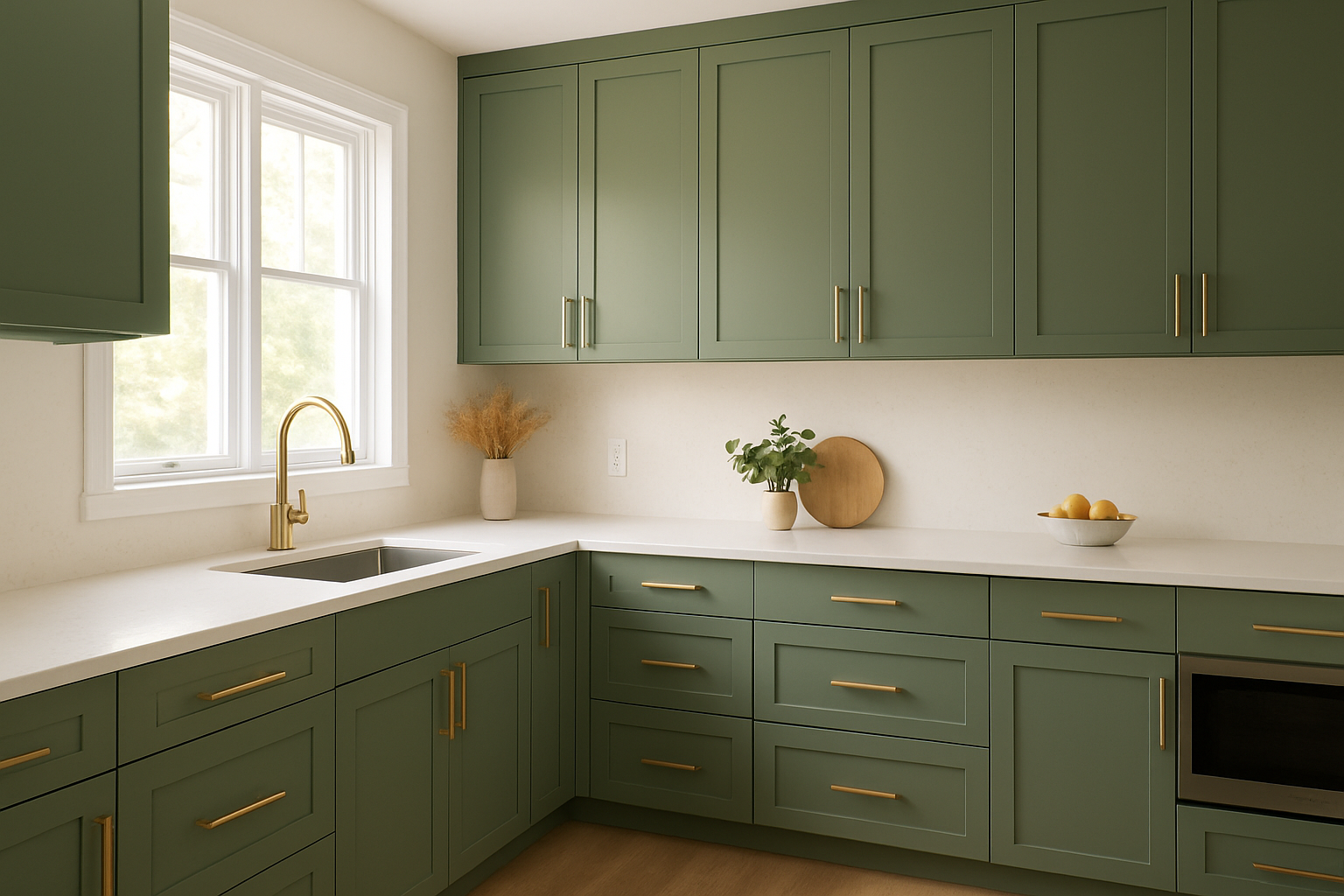
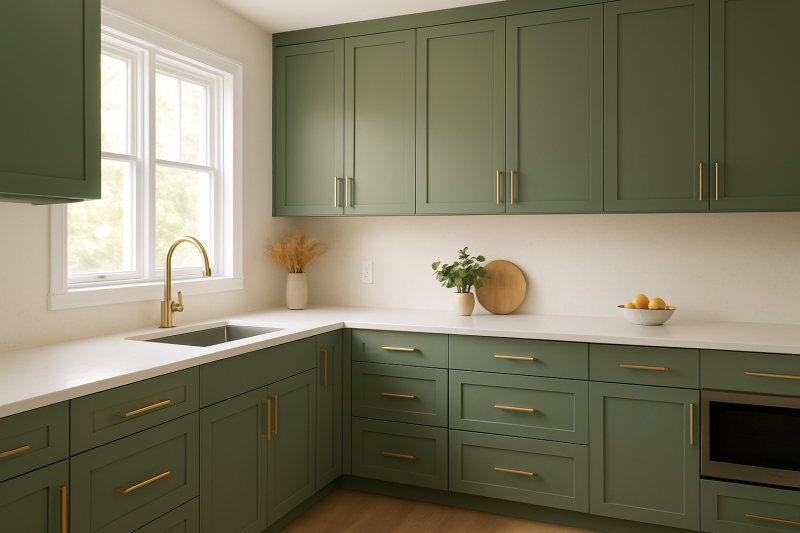
A completed cabinet refacing project featuring sage green flat-panel doors and warm brass hardware.
Why Cincinnati Homeowners Choose Cabinet Refacing Over a Full Remodel
Across greater Cincinnati, plenty of kitchens haven’t been touched since the ’90s — yet the cabinet boxes underneath are often still perfectly sound. As a result, more homeowners are choosing to reface rather than replace, since a full teardown wastes usable material and adds unnecessary cost.
Above all, refacing appeals to families who want real change without living through months of construction. Because the layout never changes, most kitchens stay functional throughout the majority of the project — a critical advantage in the room your household relies on every single day. In fact, homeowners frequently ask whether cabinet refacing is less disruptive than remodeling, and the short answer is almost always yes.
Furthermore, refacing sidesteps the permitting headaches, dust barriers, and extended timelines that come with gut renovations. For a wider look at the advantages homeowners report after refacing, see this rundown of the benefits of cabinet refacing. And for readers who simply want a broader starting point, this guide to modernizing a kitchen without a full remodel outlines several practical entry points.
How the Cabinet Refacing Process Works, Step by Step
The cabinet refacing process follows a consistent, predictable sequence regardless of your kitchen’s size or the style you choose. Here’s exactly what to expect from first consultation to final walkthrough.
- Assess the existing cabinets. A specialist inspects your current cabinet boxes to confirm they’re structurally sound and suitable for resurfacing before any work begins.
- Select door styles and finishes. You choose door profiles, colors, and veneer finishes that reflect the look you want — from sleek and modern to warm and traditional.
- Apply matching veneer to the boxes. Technicians apply new veneer to every visible surface of the existing frames so they blend seamlessly with the new doors and drawers.
- Install new doors, drawer fronts, and hardware. New doors, soft-close hinges, and slim pulls go on next, instantly modernizing both the look and everyday function of the kitchen.
- Complete a final walkthrough. The team fine-tunes alignment, checks every hinge and pull, and cleans the workspace before handing the finished kitchen back to you.
Because this process skips demolition entirely, most cabinet refacing projects wrap up in a matter of days rather than weeks — a point we’ll expand on in the cost and timeline section below.
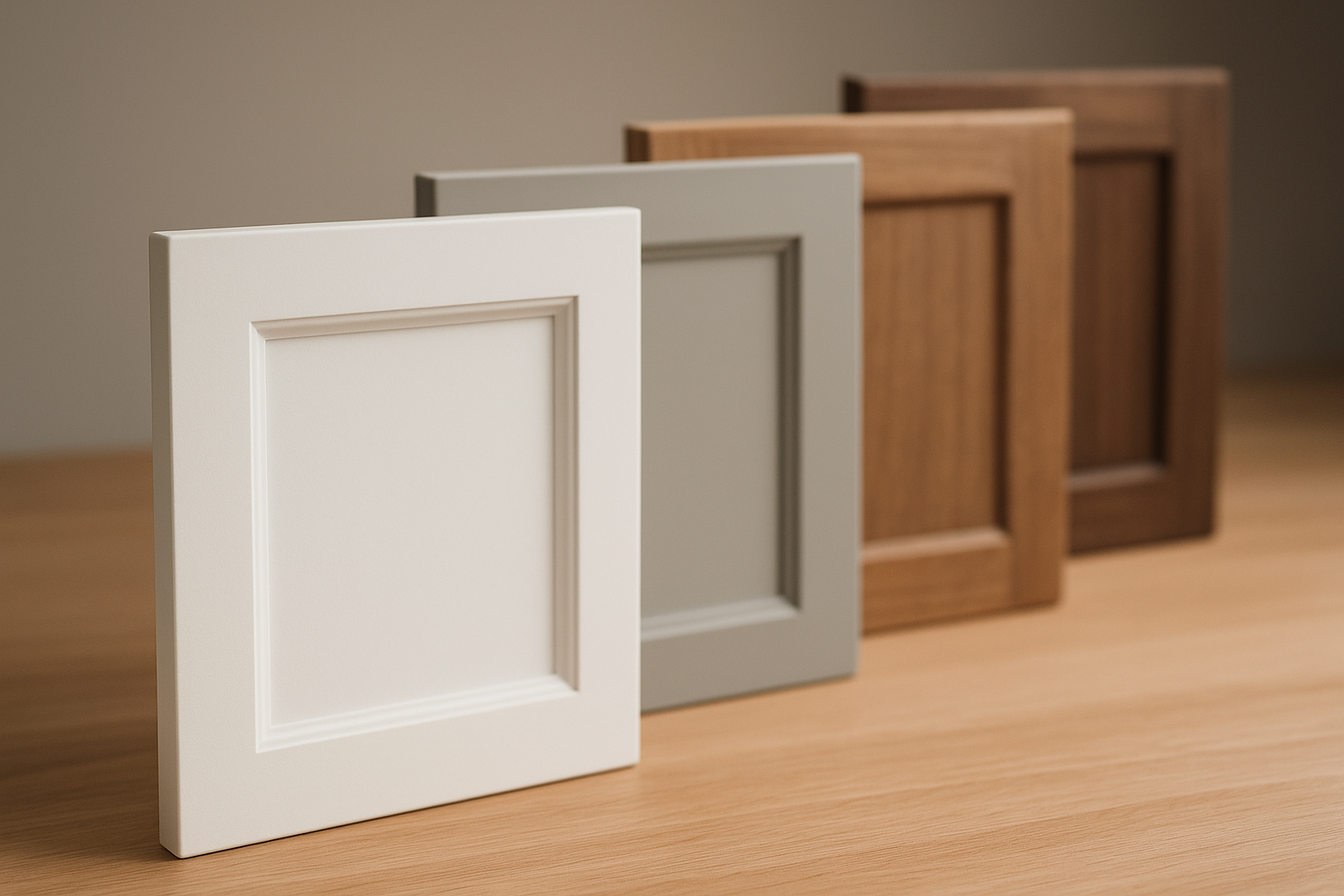
Choosing a finish sample is typically the first tangible step of a cabinet refacing project. For a deeper walkthrough, see our Local Cabinet Refacer Cincinnati: Complete Hiring Guide.
Cabinet Refacing Cost vs. Full Cabinet Replacement
Budget is usually the deciding factor between cabinet refacing and a full remodel. Generally speaking, refacing costs 30 to 50 percent less than replacing cabinets entirely, largely because the existing boxes stay in place and labor-intensive demolition is never part of the job.
In terms of timing, most cabinet refacing projects wrap up within a few days to about a week. In contrast, a complete kitchen renovation can stretch several weeks or longer, especially once plumbing or layout changes enter the picture. According to industry estimates from the National Kitchen and Bath Association, average kitchen renovation costs have climbed steadily in recent years, which makes refacing an increasingly attractive middle ground between a cosmetic refresh and a full gut renovation.
Specifically, three variables drive most of the cost difference:
- Kitchen size: More linear feet of cabinetry means more doors, drawer fronts, and veneer to install.
- Door style and material: Solid wood and custom profiles cost more than standard slab or shaker doors.
- Hardware and accessories: Soft-close hinges, pull-out shelving, and premium pulls add incremental cost but improve daily function.
For a side-by-side look at how different upgrades stack up financially, this comparison of cabinet styles for modern homes helps clarify which updates deliver the most visual impact per dollar spent.
How Cabinet Refacing Improves Kitchen Function and Durability
Cabinet refacing isn’t purely cosmetic. Because new hardware, soft-close hinges, and updated drawer glides are installed alongside the new surfaces, everyday function improves right along with appearance. Doors close quietly, drawers glide smoothly, and hinges no longer sag from years of use.
Similarly, quality refacing materials — such as rigid thermofoil or genuine wood veneer — are engineered to withstand daily moisture, heat, and handling in a working kitchen. With proper care, refaced cabinets can last just as long as newly built cabinetry, without the waste of discarding boxes that were never actually broken. For a deeper dive into this topic, see how cabinet refacing improves kitchen function and durability.
In addition, because the underlying cabinet box construction (often solid plywood or particleboard framing, as described on Wikipedia’s overview of kitchen cabinetry) rarely wears out before the surface finish does, refacing addresses the part of the cabinet that actually shows its age.
Achieving Modern Kitchen Aesthetics Through Cabinet Refacing
One of the biggest reasons homeowners choose cabinet refacing is that it delivers a fully modern kitchen aesthetic without replacing anything structural. In practice, this means flat or slightly recessed door profiles, neutral or muted color palettes, and hardware that complements rather than competes with the overall look.
Several design elements consistently appear in kitchens refaced with a contemporary style in mind:
- Simplified door profiles: Slab or thin-shaker doors reduce visual noise.
- Two-tone cabinetry: Pairing a light upper cabinet with a darker lower cabinet adds depth without overwhelming a space.
- Functional hardware: Soft-close hinges and slim pulls support both form and daily use.
- Natural materials: Wood grain veneers and stone-look surfaces add warmth to otherwise minimal spaces.
Meanwhile, matte finishes continue to outpace high-gloss options in popularity, largely because they hide fingerprints and daily wear more effectively. Warm neutrals, sage green, and matte navy remain leading color choices, especially when paired with brushed metal or matte black hardware for contrast. Homeowners exploring specific looks may find it helpful to review current cabinet style trends for 2025, or compare classic cabinet designs against more contemporary alternatives before deciding on a direction.
Common Mistakes to Avoid When Refacing Cabinets
Even well-planned cabinet refacing projects can miss the mark if a few common pitfalls go unnoticed. Above all, avoid choosing finishes based solely on current trends without considering long-term durability — what looks fresh today should still look good in ten years.
Similarly, skipping hardware planning is a frequent error. Small details like handle placement and hinge quality significantly affect how “finished” a kitchen ultimately feels once the project wraps up.
Finally, many homeowners underestimate how color and lighting interact. Therefore, it helps to view finish samples under your kitchen’s actual lighting conditions — both daylight and evening — before finalizing any decision.
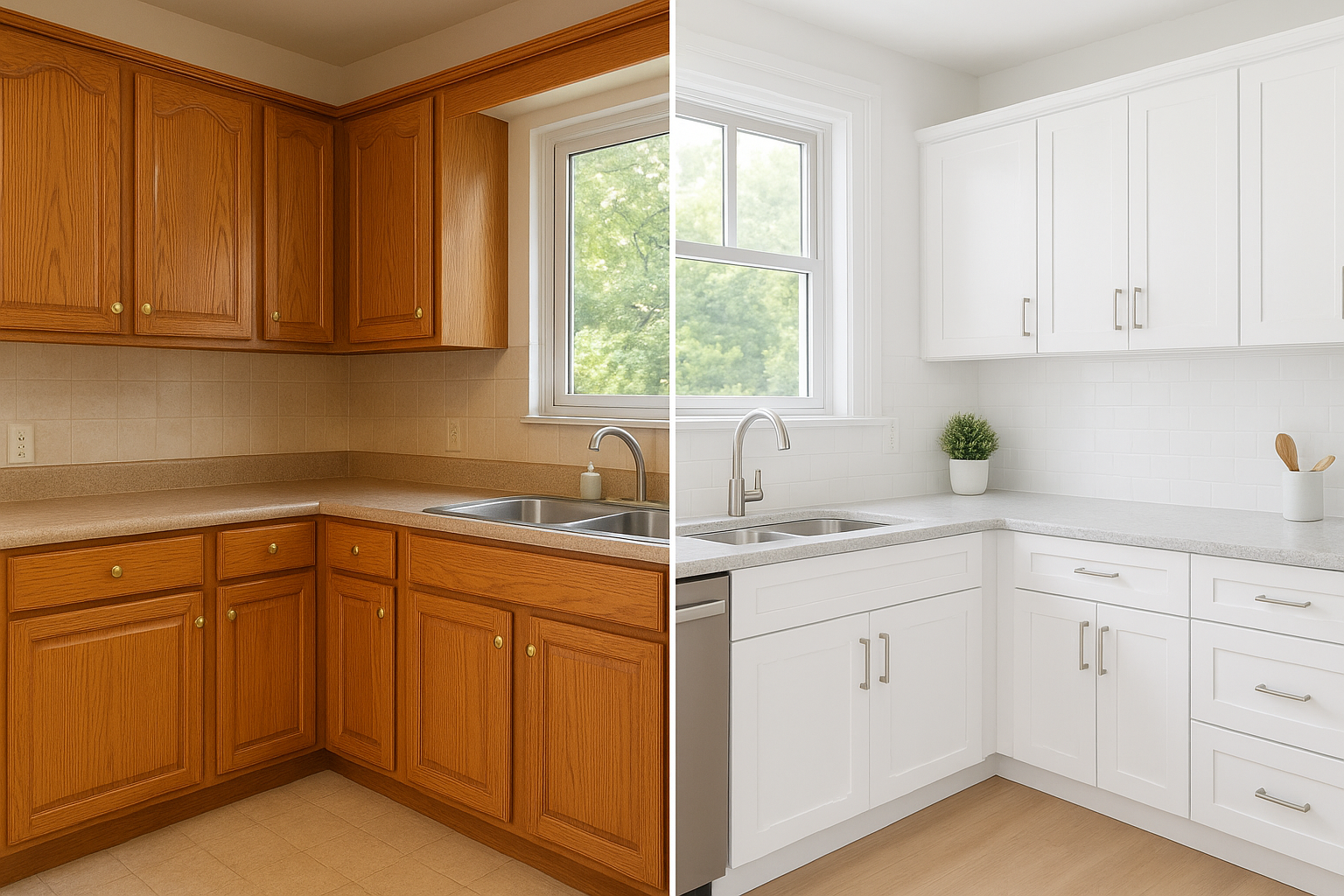
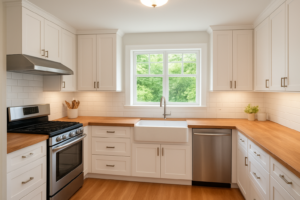
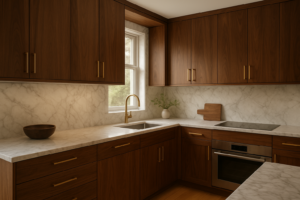
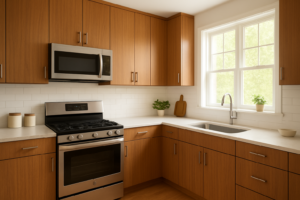
A side-by-side view highlights just how much cabinet refacing can transform a dated kitchen.
Cabinet Refacing vs. Cabinet Replacement: How to Decide
If your existing cabinet boxes are structurally sound and your kitchen layout still works for your household, cabinet refacing is usually the smarter, faster, and less expensive choice. Replacement, on the other hand, makes more sense when the layout itself needs to change — for example, if you’re adding an island, moving appliances, or reconfiguring the footprint entirely.
Consequently, the decision often comes down to a simple question: is it the layout that bothers you, or the look? If it’s purely the look — outdated doors, tired hardware, or a color scheme that no longer fits your home — refacing solves that problem for a fraction of the cost.
Getting Started With Cabinet Refacing in the Greater Cincinnati Area
Homeowners ready to move forward typically begin with a consultation to review their current cabinets, discuss goals, and explore finish samples in person. KT Cabinet Refacing, based in Cincinnati, Ohio, works directly with local homeowners to plan cabinet refacing projects around their budget and daily routines.
Because the team focuses specifically on refacing rather than general remodeling, projects tend to move efficiently from consultation to completion. Homeowners interested in seeing the full range of options can visit ktcabinetrefacing.com or explore available cabinet refacing services and finishes to learn more about the process.
For additional inspiration or a fun way to explore design ideas before committing, some homeowners also check out this kitchen makeover sweepstakes and DIY guide.
Frequently Asked Questions About Cabinet Refacing
What is cabinet refacing?
Cabinet refacing is a renovation method that replaces cabinet doors, drawer fronts, and hardware while applying new veneer to the existing cabinet boxes. It delivers a fully updated look without the demolition required by full cabinet replacement.
How much does cabinet refacing cost compared to a full remodel?
Cabinet refacing typically costs 30 to 50 percent less than a full cabinet replacement remodel, since the existing boxes stay in place. Exact pricing depends on kitchen size, door style, and finish selections.
How long does cabinet refacing take?
Most cabinet refacing projects are completed in a few days to about a week, compared to several weeks for a gut renovation. This shorter timeline means far less disruption to daily kitchen use.
Is cabinet refacing durable enough for daily kitchen use?
Yes. Quality refacing materials, such as rigid thermofoil or wood veneer, are built to withstand daily moisture, heat, and handling. With proper care, refaced cabinets can last as long as newly built cabinetry.
Can cabinet refacing achieve a truly modern kitchen aesthetic?
Absolutely. Cabinet refacing can fully achieve a modern kitchen aesthetic by updating door styles, applying new veneer finishes, and swapping hardware. Because the boxes are simply resurfaced, the visible result looks completely new.
What cabinet door styles are available with refacing?
Flat-panel slab doors, thin shaker profiles, and handle-less designs are among the most common choices. These styles emphasize clean geometry, though traditional raised-panel doors remain available for homeowners who prefer a warmer, classic look.
Do I need to replace cabinet boxes to get a modern look?
No. In most cases, existing cabinet boxes remain structurally sound and only need a new surface. Refacing resurfaces the boxes and replaces doors and drawer fronts, which is enough to transform the look entirely.
What’s the difference between cabinet refacing and cabinet refinishing?
Refinishing repaints or restains the existing doors without replacing them, while refacing replaces the doors and drawer fronts entirely and applies new veneer to the boxes. As a result, refacing produces a more dramatic, longer-lasting transformation.
Is cabinet refacing a DIY project, or should I hire a professional?
While small hardware swaps are DIY-friendly, full cabinet refacing requires precise measurements, seamless veneer application, and door alignment that’s difficult to achieve without professional tools and experience. Hiring a specialist typically produces a cleaner, longer-lasting result.
Do I need a permit for cabinet refacing?
Generally, no. Because cabinet refacing doesn’t alter plumbing, electrical, or the kitchen’s structural layout, most municipalities don’t require a permit. However, it’s always worth confirming with your local building department if you’re uncertain.
What warranty comes with cabinet refacing?
Warranty coverage varies by provider, but reputable cabinet refacing companies typically back their materials and workmanship for several years. Always ask for warranty terms in writing before a project begins.
Does cabinet refacing increase home value?
Updated kitchens are consistently among the top value-adding home improvements, according to renovation industry reports. Refacing offers a budget-friendly way to achieve that visual upgrade, and buyers often respond positively to a fresh kitchen appearance.
Is cabinet refacing environmentally friendly?
Yes. Because refacing reuses the existing cabinet boxes instead of sending them to a landfill, it generates significantly less construction waste than full replacement — a point supported by the EPA’s waste reduction guidance.
What maintenance do refaced cabinets require?
Refaced cabinets generally need only routine wiping with a mild cleaner to stay looking new. Avoiding abrasive cleaners helps preserve the finish over the long term.
How do I decide between refacing and replacing cabinets?
If your existing cabinet boxes are structurally sound and the layout still works for your kitchen, refacing is usually the smarter choice. Replacement makes more sense only when the layout itself needs to change.
Who should I hire for cabinet refacing in Cincinnati?
Homeowners in the Cincinnati area often work with local specialists like KT Cabinet Refacing, who focus specifically on refacing rather than general remodeling. Choosing a specialist helps ensure precise measurements and consistent finish quality throughout the project.
Final Thoughts on Cabinet Refacing
Ultimately, cabinet refacing puts a completely updated kitchen within reach for most homeowners, regardless of their current cabinet condition. By focusing on durable finishes, thoughtful hardware, and a process that respects your daily routine, refacing delivers a kitchen that looks every bit as fresh as one built entirely from scratch — without the cost, waste, or downtime of a full remodel.
For Cincinnati homeowners weighing their options, cabinet refacing remains one of the most practical, proven ways to transform a kitchen’s look while keeping the layout you already know and use every day. In the end, the right combination of materials, style, and a trusted local team creates a kitchen that feels both current and genuinely livable for years to come.