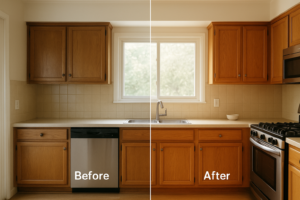
To refinish kitchen cabinets is, hands down, one of the fastest and most budget-friendly ways for Cincinnati homeowners to transform a tired kitchen without the dust, cost, and disruption of a full remodel. Because the cabinet boxes stay exactly where they are, a refinishing project can turn dull, dated wood into a fresh, modern surface in a matter of days rather than weeks. In this guide, we’ll walk through exactly what it means to refinish kitchen cabinets, how the process works from start to finish, what it realistically costs in the Cincinnati area, and when a refacing upgrade might actually serve you better in the long run. Whether you’re staring at chipped paint, sun-faded stain, or simply a color you’re tired of, understanding every option available is the first step toward a kitchen you’ll genuinely enjoy again.
QUICK ANSWER
To refinish kitchen cabinets, you clean, sand, repair, and apply new paint, stain, or a protective topcoat directly onto the existing cabinet surfaces — no new boxes, no new layout. It’s a lower-cost alternative to a full remodel, though cabinet refacing with new veneer and doors typically holds up longer and solves problems paint alone can’t fix.
What Does It Mean to Refinish Kitchen Cabinets?
To refinish kitchen cabinets means stripping away the old finish and applying a fresh coat of paint, stain, or sealant directly onto the existing wood or surface material. Unlike a remodel, the cabinet boxes, doors, and layout all stay exactly the same — only the visible surface changes. That’s precisely why refinishing appeals to homeowners who like their kitchen’s footprint and storage but can’t stand its outdated color or worn-out sheen.
According to Wikipedia’s overview of cabinetry, cabinet surfaces are typically built from solid wood, veneer, or engineered materials, and each one reacts differently to refinishing products. For example, solid wood accepts stain and paint readily, while laminate and thermofoil often resist adhesion entirely. As a result, those slicker materials are usually much better candidates for refacing instead of a traditional refinish.
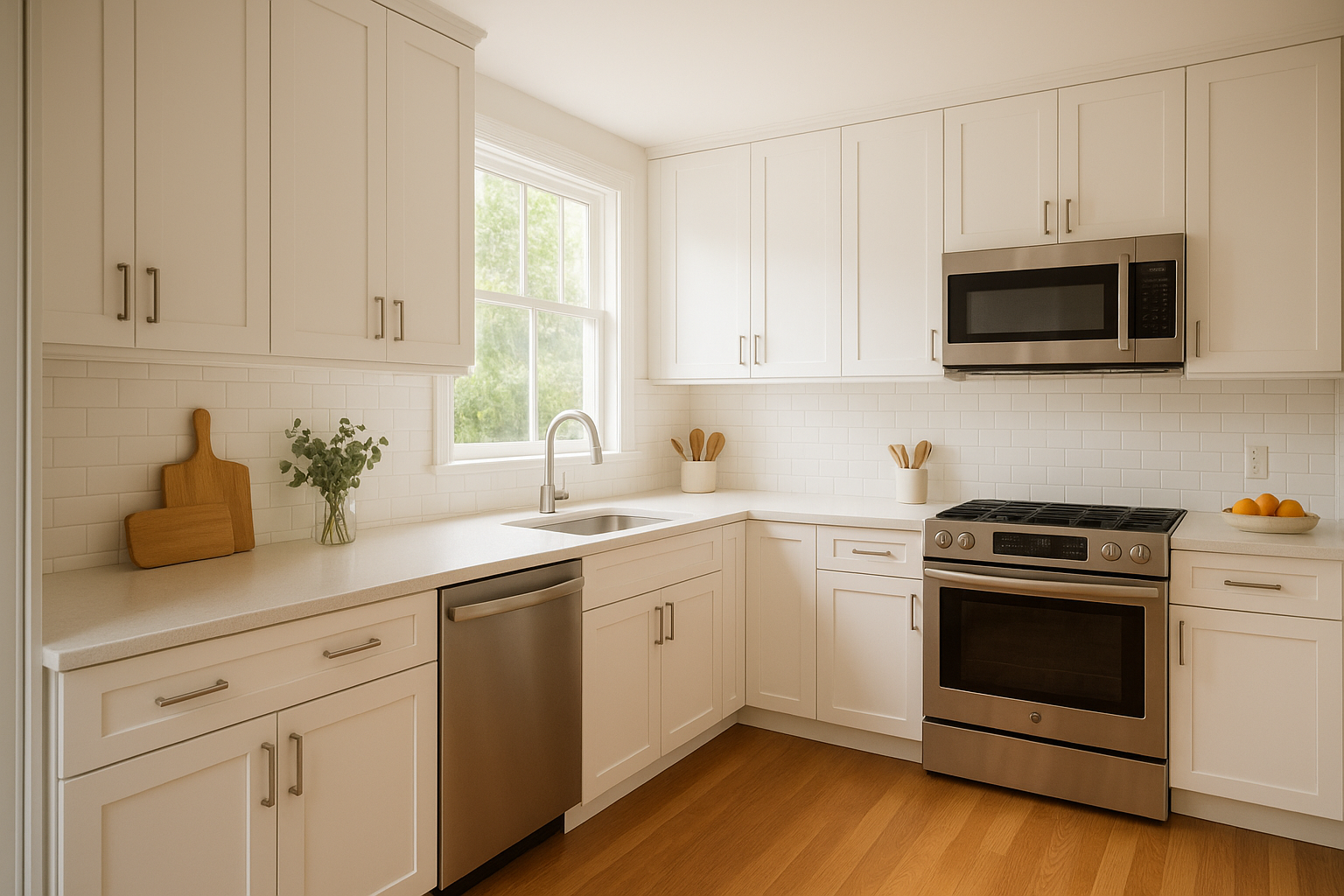
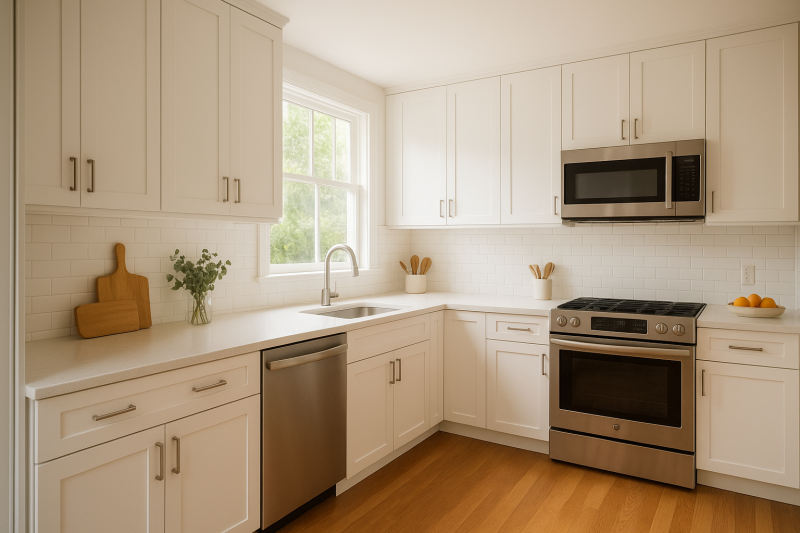
A freshly completed project to refinish kitchen cabinets can brighten an entire kitchen in just days.
Refinish, Reface, or Replace: Which Option Fits Your Kitchen?
Before you start any project, it helps to compare the three most common cabinet upgrade paths side by side. Each option affects cost, timeline, and durability differently, so the right choice really depends on your cabinets’ current condition and your long-term goals for the space.
As the table shows, refinishing and refacing both offer a much faster path than a full replacement. Consequently, most homeowners looking to modernize their kitchen without a full remodel start by weighing these two lighter-touch options first. Similarly, many find that browsing easy ways to update kitchen cabinets without a full remodel helps narrow down which upgrade actually matches their budget.
Signs It’s Time to Update Your Cabinet Finish
Several warning signs suggest your cabinets are overdue for a refresh. In particular, watch for these common indicators:
- Peeling, chipping, or discolored paint around handles and edges
- A dated wood tone or finish that clashes with newer countertops or flooring
- Sticky or dull surfaces that no longer clean up with regular wiping
- Doors and drawer fronts that feel outdated compared to current cabinet styles
- Visible water rings, swelling, or warping near the sink and dishwasher
If you’re unsure which upgrade path fits your situation, this resource on updating kitchen cabinets without full replacement breaks the decision down in more detail.
How to Refinish Kitchen Cabinets: Step-by-Step Process
Refinishing follows a fairly consistent process, whether it’s tackled as a DIY weekend project or handled by an experienced crew. Below is the general sequence most projects follow from start to finish.
- Assess and clean cabinet surfaces. Inspect every cabinet for grease buildup, water damage, and loose joints, then wash all surfaces with a degreasing cleaner so the new finish will bond properly instead of sliding right off.
- Remove doors, drawers, and hardware. Take off all doors, drawer fronts, hinges, and knobs, and label each piece so it returns to its exact original location once the finish has cured.
- Sand and repair surfaces. Sand every surface with fine-grit sandpaper to remove the old sheen, fill dents or scratches with wood filler, then wipe away all dust thoroughly before priming anything.
- Apply primer and finish coats. Apply a bonding primer first, let it cure fully, then add two thin, even coats of enamel or hybrid paint, sanding lightly between coats for a smooth, factory-like result.
- Reinstall hardware and inspect the final finish. Once the final coat has cured completely, reattach hinges, doors, and hardware, then inspect each cabinet closely for drips, streaks, or missed spots before calling it done.
Tools and Materials You’ll Need
Above all, gathering the right supplies before you begin prevents mid-project trips to the hardware store. A typical DIY setup includes a degreasing cleaner, 120- and 220-grit sandpaper or a sanding sponge, wood filler, painter’s tape, a bonding primer, cabinet-grade enamel or hybrid acrylic paint, a foam roller, an angled brush for edges, and drop cloths. In addition, a labeling system — masking tape and a marker work fine — keeps every door and hinge matched to its original cabinet.
How Cincinnati’s Climate Affects Drying and Curing Time
Humidity plays a bigger role than most homeowners expect. During Cincinnati’s humid summer months, paint can take noticeably longer to cure fully, while cold, dry winter air can cause some enamels to dry too fast and show brush marks. Therefore, it’s smart to run a dehumidifier or crack a window with a fan running during the curing window, and to always check the product label’s recommended temperature and humidity range before you start.
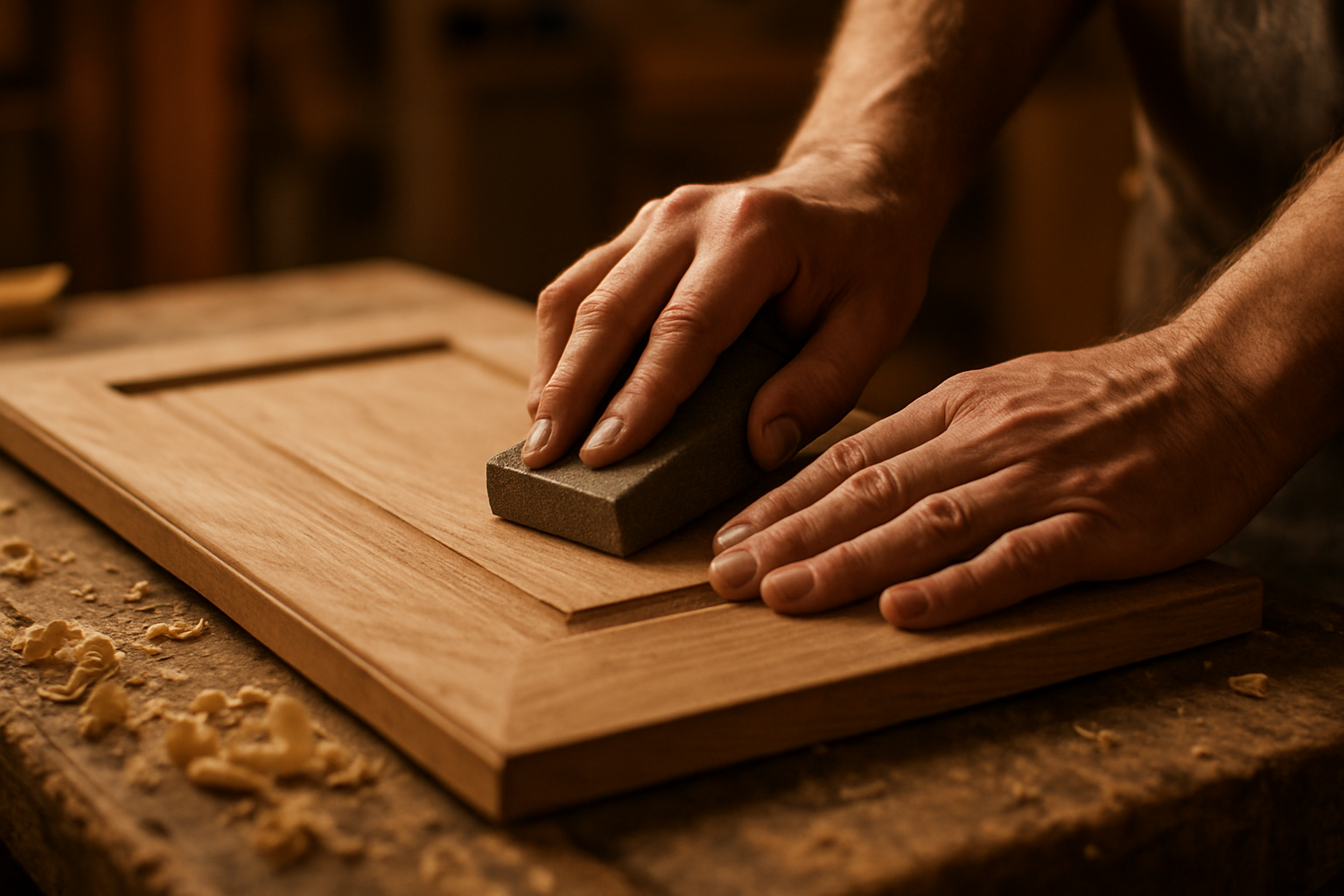
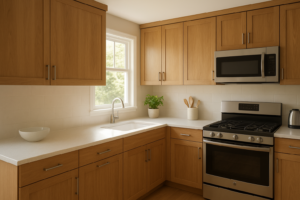
Proper sanding is one of the most important steps when preparing to refinish kitchen cabinets.
The U.S. Environmental Protection Agency notes that many traditional paints release volatile organic compounds, or VOCs that can affect indoor air quality. As a result, choosing a low-VOC enamel is worth considering for kitchens, since ventilation is often limited there during colder months when windows stay shut.
A Note on Lead Paint in Older Cincinnati Homes
If your home was built before 1978, sanding old cabinet paint can release lead dust — a serious health hazard, particularly for children and pregnant women. Consequently, the EPA recommends testing suspect paint and following lead-safe renovation and repainting practices before any sanding begins. This is one detail many national refinishing guides skip entirely, yet it’s essential for a huge share of Cincinnati’s older housing stock.
How Much Does It Cost to Refinish Kitchen Cabinets?
Cost is usually the deciding factor between refinishing, refacing, and full replacement. On average, refinishing a full kitchen’s worth of cabinets runs between $1,500 and $4,000, depending on cabinet count, wood type, and finish quality. Refacing typically costs more upfront, but it includes new door fronts and veneer, which tend to hold up considerably longer than a simple coat of paint.
For context, the National Association of Realtors’ Remodeling Impact Report consistently shows that kitchen-focused upgrades recover a strong share of their cost at resale, often outperforming larger structural projects. In other words, a modest cabinet upgrade can offer a better return than many homeowners expect.
DIY Cost vs. Professional Cost
Generally, a DIY refinish saves on labor but costs you time, weekends, and the risk of a redo if something goes wrong. A DIY kit — primer, paint, sandpaper, and supplies — often runs $200 to $600 for an average kitchen. Hiring a professional, meanwhile, typically costs $1,500 to $4,000 total, but you get sprayed-on, factory-smooth results, proper prep work, and a warranty on the finish. Ultimately, the right choice depends on how much you value your own time versus a guaranteed, durable result.
DIY vs. Professional: Which Should You Choose?
A motivated homeowner with patience and the right tools can absolutely refinish kitchen cabinets over a long weekend. However, professionals typically deliver a smoother, more durable finish because they use spray equipment, commercial-grade primers, and controlled drying environments that are hard to replicate in a garage. In addition, a pro can catch structural issues — like a warped door or a loose hinge mortise — before they turn into a bigger problem down the road.
Questions to Ask Before Hiring a Cabinet Refinishing Professional
- What brand and type of finish do you use, and is it rated for kitchen durability?
- Do you remove doors and hardware, or spray everything in place?
- What warranty or guarantee comes with the finished project?
- How do you handle older homes that may have lead-based paint?
- Can you show before-and-after photos from similar Cincinnati-area kitchens?
Why Many Cincinnati Homeowners Choose Refacing Over Refinishing
While refinishing works well on solid wood cabinets in decent shape, refacing solves problems that paint simply cannot fix. Warped doors, outdated door styles, and damaged laminate surfaces all respond far better to new veneer and replacement doors than to another coat of finish.
KT Cabinet Refacing serves homeowners throughout the greater Cincinnati area with a process built specifically around this middle-ground upgrade. Instead of tearing out entire cabinet boxes, the team updates door styles, applies new veneer, and refreshes hardware, delivering a modern look with far less downtime than a full renovation. You can learn more about the approach directly at ktcabinetrefacing.com. If you’re weighing which upgrade will actually deliver the transformation you want, this overview of the best way to achieve a full kitchen cabinet makeover is worth reading before you commit.
For homeowners still weighing their options, this comparison of classic cabinet designs that transform a kitchen shows just how far a refacing project can go beyond a basic paint refresh. Likewise, if resurfacing feels like the better fit for your outdated boxes, this guide on whether cabinet resurfacing is a good option for outdated kitchens lays out the tradeoffs clearly.
Popular Cabinet Styles for a Refreshed Kitchen Look
Style trends shift over time, and many homeowners use a refinishing or refacing project as a chance to modernize their door style along with the color. Shaker-style doors remain a top choice thanks to their clean lines and timeless look. Two-tone kitchens, where upper and lower cabinets differ in color, have also grown noticeably more popular across Cincinnati neighborhoods over the past few years.
Matte finishes are increasingly preferred over glossy sheens because they hide fingerprints and everyday wear far more effectively. If you’re curious which options are trending locally, this guide on popular cabinet styles for refacing breaks down current favorites in more detail. Meanwhile, if your goal is simply to refresh your kitchen without a full remodel, pairing a new door style with updated hardware often delivers the biggest visual impact for the smallest budget.
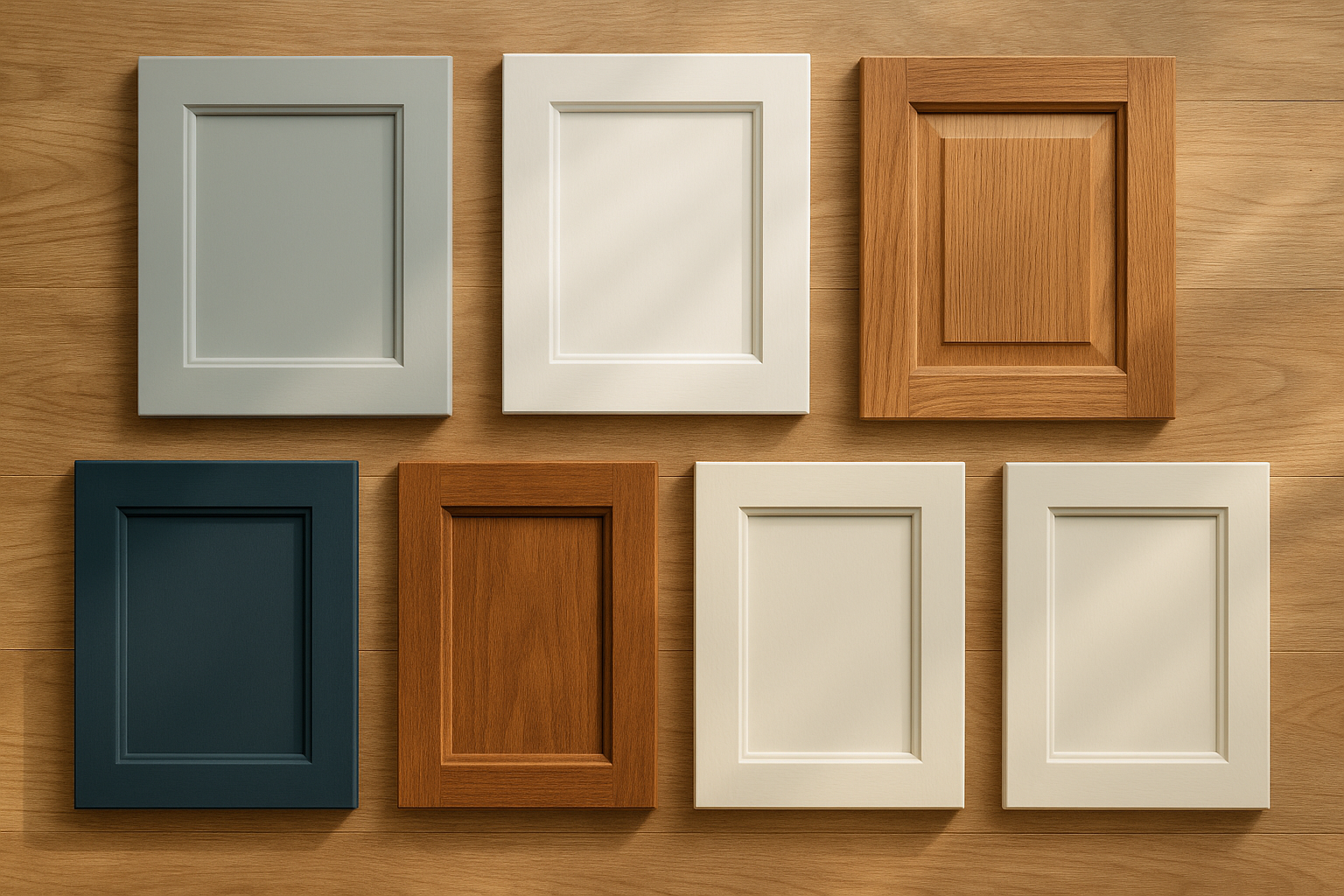
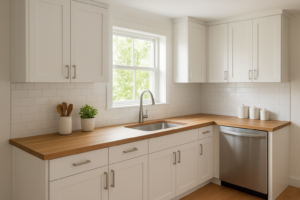
Comparing finish samples side by side helps homeowners choose the right look before committing.
Common Mistakes to Avoid When You Refinish Kitchen Cabinets
Even a straightforward refinishing project can go wrong without the right preparation. Skipping the sanding step is one of the most frequent mistakes, since paint won’t adhere properly to a glossy, unprepped surface. Similarly, rushing dry time between coats often leads to tackiness and an uneven final finish that shows every fingerprint.
Another common issue is choosing a low-durability paint that isn’t rated for kitchen use, which can peel within months near sinks and stovetops. Furthermore, forgetting to remove hardware before painting often results in messy overspray and paint-clogged hinges that never move smoothly again. Finally, working in a poorly ventilated space or ignoring cure-time recommendations can leave a soft finish that dents or scuffs almost immediately.
If you’d rather explore a hands-on alternative before deciding, check out this kitchen makeover sweepstakes and DIY guide for extra inspiration and planning tips.
Caring for Your Cabinets After You Refinish Them
Once the project is finished, a little routine care goes a long way toward protecting your investment. Specifically, wipe up grease and spills promptly with a soft, damp cloth rather than an abrasive scrub pad, which can dull the sheen over time. In addition, avoid hanging damp dish towels directly on freshly finished doors, since trapped moisture can soften even a fully cured coat. Above all, wait the full recommended cure time — often two to four weeks — before scrubbing surfaces aggressively or placing heavy items directly against painted edges.
Frequently Asked Questions About Refinishing Kitchen Cabinets
What does it mean to refinish kitchen cabinets?
To refinish kitchen cabinets means stripping, sanding, and applying a new stain, paint, or protective coat to the existing surfaces. It updates the look without replacing the cabinet boxes or doors themselves. Learn about refinishing vs refacing.
How long does it take to refinish kitchen cabinets?
A DIY project typically takes 3 to 7 days, including drying time between coats. Professional refacing, which includes new veneers or doors, is often completed in 2 to 5 days.
How much does it cost to refinish kitchen cabinets in Cincinnati?
Costs generally range from $1,500 to $4,000 for an average kitchen. Refacing tends to run higher but delivers more durable, longer-lasting results.
What’s the difference between refinishing and refacing cabinets?
Refinishing applies new stain or paint to existing surfaces, while refacing replaces door fronts and adds new veneer to the cabinet boxes. Refacing generally offers a more complete, longer-lasting transformation.
Can I refinish laminate or thermofoil cabinets?
Laminate and thermofoil are difficult to refinish because paint and stain don’t adhere well to them. Refacing with new veneer or doors is usually a more reliable solution.
Do I need to remove cabinet doors before refinishing?
Yes, removing doors and drawer fronts allows for even sanding and a smoother finish coat. It also prevents paint from bridging hinges and hardware.
What type of paint or finish works best for kitchen cabinets?
A bonding primer followed by a low-VOC enamel or hybrid acrylic paint holds up best against daily kitchen wear. These finishes resist moisture, grease, and scuffing better than standard wall paint.
How long will a refinished cabinet finish last?
A properly refinished surface can last 5 to 10 years with normal use. Refaced cabinets with new veneer often last even longer since the underlying material is replaced, not just coated.
Is refacing better than refinishing for older cabinets?
For cabinets with warped doors, water damage, or outdated styles, refacing is usually the better choice. It addresses structural wear that simple refinishing cannot fix.
What are common mistakes homeowners make when refinishing cabinets?
Skipping proper sanding and cleaning is the most common mistake, leading to peeling finishes. Rushing dry time and using low-quality paint are also frequent issues.
Can I refinish cabinets myself, or should I hire a professional?
A motivated homeowner can refinish cabinets as a weekend DIY project with the right tools. Professionals, however, typically deliver a smoother, more durable finish and can handle repairs along the way.
Does refinishing kitchen cabinets increase home value?
Updated cabinets can make a kitchen more appealing to buyers and support a stronger resale impression. Industry cost-versus-value data consistently shows kitchen updates return a strong percentage of project cost.
What cabinet styles are popular after refinishing or refacing?
Shaker-style doors, matte painted finishes, and two-tone kitchens are currently among the most requested styles. Warm wood tones paired with simple hardware are also trending locally.
Is refinishing kitchen cabinets a good option before selling a home?
Yes, refinishing or refacing cabinets is one of the most cost-effective ways to boost a kitchen’s appeal before listing a home. It offers a fast, budget-friendly upgrade compared to full replacement.
Do I need to worry about lead paint when refinishing older cabinets?
If your home was built before 1978, sanding old cabinet paint may release lead dust. Testing the paint first and following EPA lead-safe renovation guidelines protects your family during the project.
What’s the best time of year to refinish kitchen cabinets in Cincinnati?
Spring and fall generally offer the most stable humidity and temperature for curing paint properly. Summer humidity can slow drying, while dry winter air sometimes causes brush marks in fast-drying enamels.
Can I change cabinet color drastically when refinishing, such as from dark wood to white?
Yes, a bonding primer designed for dramatic color changes allows dark wood tones to be covered completely with white or light paint. However, extra primer coats are usually needed to fully block the original color from showing through.
Final Thoughts on Refinishing Your Kitchen Cabinets
Ultimately, deciding to refinish kitchen cabinets can be one of the smartest, most budget-friendly moves for updating a tired kitchen. It’s fast, far less disruptive than a full renovation, and it can dramatically change the feel of your home for a fraction of the cost of new cabinetry. However, for cabinets with structural wear, laminate surfaces, or outdated door styles, refacing often delivers a more durable and complete result in roughly the same amount of time.
Whichever path fits your kitchen, taking the time to compare refinishing, refacing, and replacement will help you invest wisely and avoid a redo down the road. If you’re in the greater Cincinnati area and want a team experienced in both approaches, KT Cabinet Refacing can walk you through the options and help you plan a project that fits your style, timeline, and budget from day one.