By Kitchen Transformations Cabinet Refacing. Last updated: 2026-07-28. Classic cabinet designs combine time-honored joinery, warm wood tones, and refined detailing to create kitchens that never fall out of fashion. Unlike trend-driven looks that fade within a few years, these enduring styles rely on proportion, craftsmanship, and materials that only grow more beautiful with age. Whether you are renovating a century-old home or simply want a kitchen that feels grounded and welcoming, understanding what defines classic cabinetry is the first step toward getting the result right.
In fact, according to the National Kitchen and Bath Association, traditional and transitional kitchen styles consistently rank among the most requested design categories among American homeowners. That popularity is not an accident. Classic cabinet designs are engineered to balance visual warmth with everyday practicality, which is exactly why they have outlasted so many passing trends.
What Are Classic Cabinet Designs?
Classic cabinet designs refer to kitchen cabinetry rooted in historical European and American woodworking traditions. They are defined by raised or recessed panel doors, decorative molding, rich wood tones, and hardware with ornate or period-appropriate detailing. Together, these elements produce a kitchen that feels intentional, layered, and personal, rather than mass-produced.
“Classic” is really an umbrella term. Underneath it sit related sub-styles such as Colonial, Victorian, French Country, and farmhouse cabinetry, each borrowing the same underlying principle: symmetry and proportion first, ornamentation second. This idea traces back to classical architecture, where balanced proportions were considered the foundation of lasting beauty. Cabinetmakers simply translated that same logic into wood and hardware.
Furthermore, classic cabinet styles are not limited to formal or oversized kitchens. With the right proportions and finishes, they translate beautifully into everyday family spaces, older homes, and even compact urban kitchens. Specifically, the key is choosing the right combination of door profile, finish, and hardware to suit the scale of your space, rather than forcing an oversized profile into a small room.
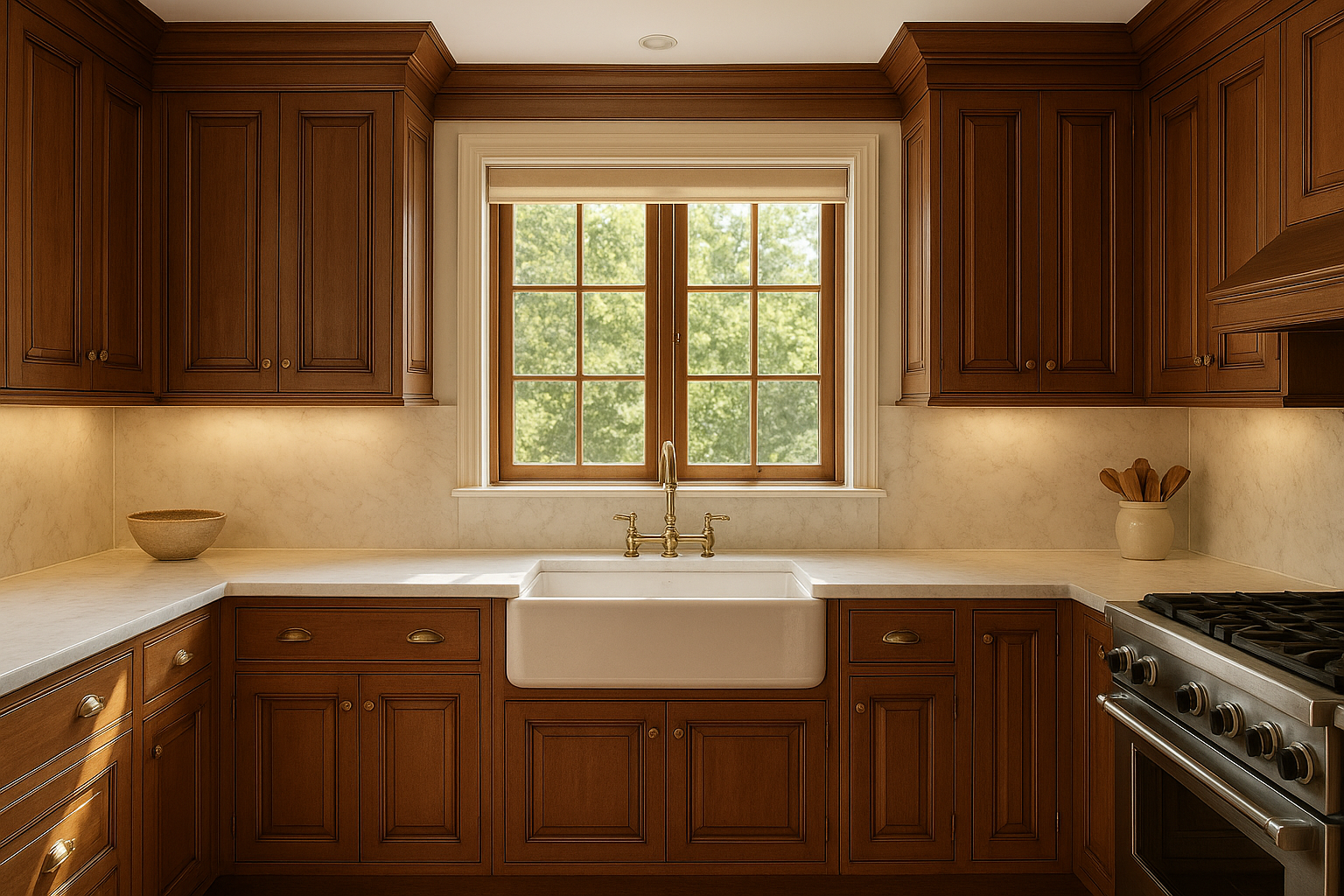
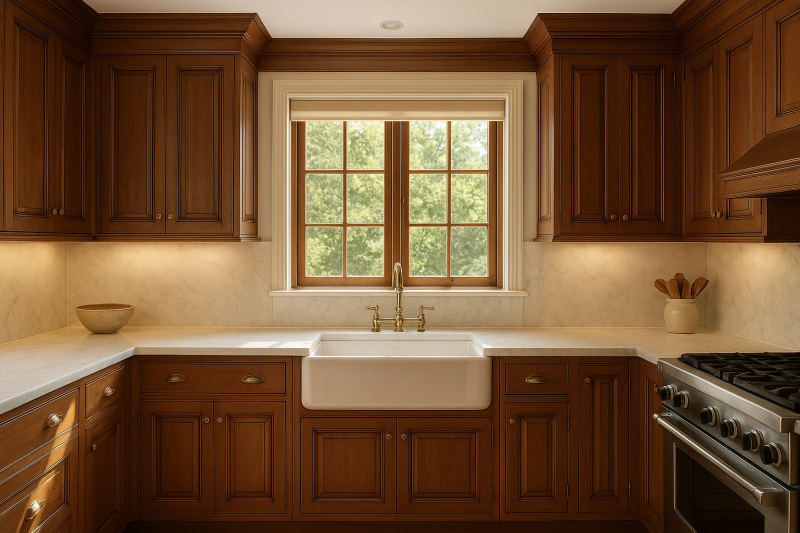
Classic cabinet designs featuring raised panel cherry wood doors, crown molding, and warm brass hardware create an enduringly elegant kitchen aesthetic.
Classic vs. Modern vs. Transitional Cabinet Styles
Before committing to classic cabinet designs, it helps to see exactly how they compare against the other two dominant kitchen categories. In contrast to modern kitchen styles, classic cabinetry favors depth, dimension, and decorative history over flat, minimal surfaces.
| Feature | Classic | Modern | Transitional |
|---|---|---|---|
| Door profile | Raised panel, cathedral arch | Flat slab | Shaker or simple recessed |
| Hardware | Ornate knobs, cup pulls | Minimal or hidden pulls | Streamlined bar pulls |
| Color palette | Warm stains, creams | Bold neutrals, matte black | Soft grays and whites |
| Best suited for | Colonial, Victorian, farmhouse homes | Contemporary builds | Any home style |
The Most Popular Traditional Door Styles
Door profile is arguably the single most defining feature of any cabinet style. For classic designs, a handful of profiles stand out above the rest, especially when considering cabinet styles for refacing.
Raised Panel Doors
Raised panel doors are perhaps the most iconic element of traditional cabinet design. The center panel is elevated above the surrounding frame, creating depth and shadow that give the door a sculptural quality. This style pairs especially well with formal dining kitchens and colonial or Victorian-era homes.
Shaker Style Doors
Shaker-style doors feature a flat recessed center panel within a simple frame. Originally developed by the Shaker religious community in the 18th century, this design is celebrated for clean lines and honest craftsmanship. Today, Shaker doors bridge the gap between classic and transitional kitchens, making them one of the most versatile choices available.
Beadboard and Cathedral Arch Profiles
Beadboard doors, featuring vertical grooved panels, add cottage or farmhouse character to classic kitchens. Cathedral arch doors, with their graceful curved tops, bring a more formal, almost ecclesiastical elegance. Both styles reinforce a commitment to traditional detail.
Inset and Mullion Glass-Front Doors
Inset doors sit flush within the cabinet frame rather than overlaying it, a construction method associated with high-end custom furniture and historic homes. Meanwhile, mullion glass-front doors — small windowpanes divided by thin wood strips — add lightness and display space for heirloom china. Both options are frequently overlooked, yet they deliver some of the most authentic classic cabinet designs available today.
Choosing Wood Species and Finishes for a Timeless Look
The material and finish you choose will define the warmth and character of your kitchen for decades. Consequently, this decision deserves careful thought, not a quick pick from a sample chip.
| Wood Species | Grain Character | Best For |
|---|---|---|
| Cherry | Smooth, deepens with age | Formal traditional kitchens |
| Maple | Fine, consistent | Painted or glazed finishes |
| Oak | Pronounced, rustic | Farmhouse and country styles |
| Hickory | Dramatic natural variation | Rustic-traditional blends |
In terms of finish, warm stains like honey, chestnut, and espresso remain perennial classics. However, painted finishes — particularly warm whites, creamy off-whites, and deep navy — have surged in popularity recently. These painted options offer a fresh take on classic style while still honoring the traditional forms that make these cabinets so enduring.
Quick Fact: According to Houzz’s Kitchen Trends Study, white and off-white remain the most popular cabinet colors in kitchen renovations, accounting for over 40 percent of all new and remodeled kitchens surveyed. This data underscores just how enduring classic light-finish cabinet aesthetics truly are.
Hardware That Completes the Classic Look
Hardware is the jewelry of your kitchen. For classic cabinet designs, the right hardware reinforces every other design decision you have made. Specifically, finishes like brushed brass, oil-rubbed bronze, and antique nickel complement warm wood tones and painted surfaces alike.
Cup pulls and bin pulls are especially well-suited to traditional drawer fronts. Decorative knobs with faceted or ornate detailing add a period-appropriate touch to doors. Above all, consistency matters. Mixing too many hardware finishes can undermine the cohesive, intentional feeling that defines a truly classic kitchen.
As a general sizing rule, knobs work best on doors while pulls suit longer drawer fronts. In particular, larger drawers look best with pulls sized proportionally to their width, so avoid using a single small pull on an oversized drawer front.
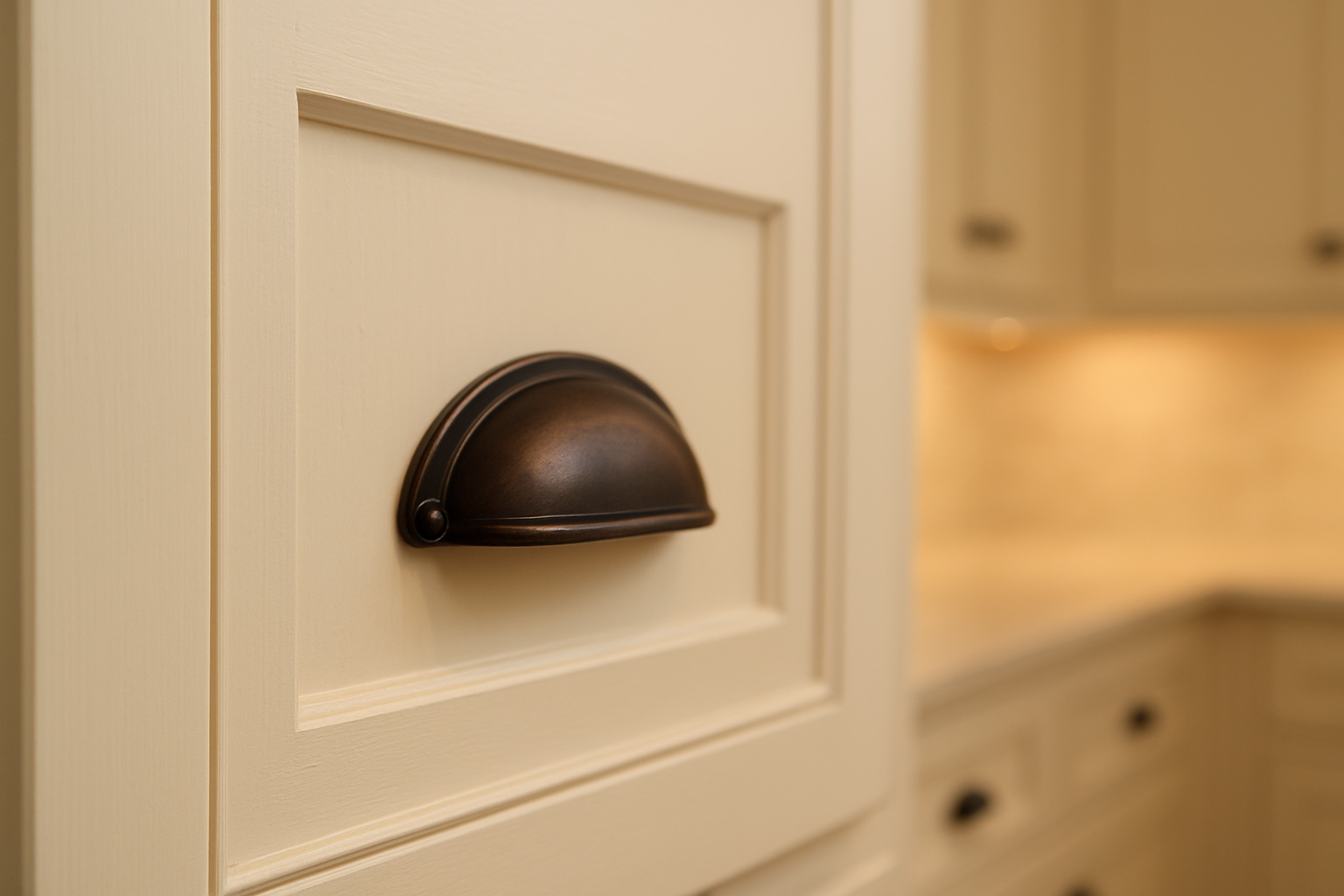
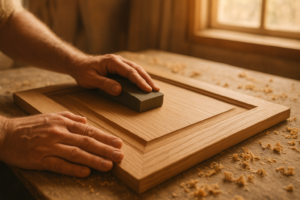
A Shaker-style cabinet door in warm white with oil-rubbed bronze hardware demonstrates how classic details elevate everyday kitchen design.
How Much Do Classic Cabinet Designs Cost?
Budget is often the deciding factor between full replacement and refacing. Therefore, understanding typical price ranges helps you plan realistically before requesting quotes.
- Full custom replacement: Typically the most expensive route, since it involves new cabinet boxes, doors, and installation labor throughout the kitchen.
- Semi-custom replacement: A mid-range option offering more door style and finish choices than stock cabinetry, at a moderate premium.
- Professional refacing: Generally 40 to 60 percent less than full replacement, since existing cabinet boxes are preserved and only visible surfaces are updated.
Several factors influence the final number: wood species selected, door style complexity, hardware finish, and the total linear footage of cabinetry in your kitchen. In particular, ornate raised panel doors in cherry will always cost more than a simple painted Shaker profile in maple.
How to Achieve Classic Cabinet Designs Through Refacing
One of the most cost-effective ways to bring classic cabinet designs into your kitchen is through professional cabinet refacing. Rather than tearing out your existing cabinet boxes, refacing replaces only the visible surfaces — doors, drawer fronts, and veneer — while keeping the structural framework intact. As a result, you get a dramatic transformation at a fraction of the cost of a full replacement.
Step-by-Step: Refreshing Your Kitchen with Classic Style
- Assess your existing cabinets. Begin by inspecting your existing cabinet boxes for structural soundness, checking that frames are square, drawers glide smoothly, and joints remain solid before choosing new surfaces.
- Choose your door style and finish. Select a raised panel, Shaker, beadboard, or cathedral arch profile, then pair it with a wood species or painted finish that matches your home’s architectural character.
- Select complementary hardware. Choose pulls, knobs, and hinges in a finish such as brushed brass or oil-rubbed bronze that reinforces your chosen classic aesthetic and coordinates with your countertops and lighting.
- Schedule professional installation. Have a skilled refacing specialist apply new veneer to your existing cabinet boxes and install the new doors, drawer fronts, and hardware with precise, professional-grade craftsmanship.
- Add finishing details. Finish the transformation with crown molding, light valances, and decorative corbels so every surface feels cohesive, polished, and true to classic cabinet design principles.
You can explore completed kitchen transformations in the project gallery to see how classic cabinet styles come to life through professional refacing. The results speak for themselves: beautiful, durable kitchens that look completely new without the disruption of a full remodel.
Classic Cabinet Designs for Every Kitchen Size and Layout
A common misconception is that classic cabinet designs only suit large, formal kitchens. In reality, the same principles scale down beautifully with a few adjustments.
In small kitchens, lighter finishes and simpler panel profiles keep the space feeling open rather than heavy. Glass-front upper cabinets add depth without visual bulk. In galley kitchens, meanwhile, choosing a single consistent door style on both walls prevents the narrow layout from feeling busy or cluttered.
For open-concept great rooms, classic cabinetry often gets paired with furniture-style islands, glass display cabinets, and matching hutches, extending the traditional aesthetic beyond the kitchen itself and into adjoining living space.
Caring for and Maintaining Classic Wood Cabinets
Proper maintenance protects your investment for decades. Consequently, a few simple habits go a long way toward preserving the beauty of classic cabinet designs.
- Wipe cabinets regularly with a soft, damp cloth and avoid harsh chemical cleaners that can strip the finish.
- Apply a gentle wood conditioner or furniture polish every few months to prevent drying or cracking over time.
- Control kitchen humidity where possible, since rapid temperature swings can cause wood panels to expand and contract.
- Tighten hardware periodically, as hinges and pulls can loosen slightly with daily use.
Why Timeless Cabinet Styles Deliver Lasting Value
Trends come and go, but traditional kitchen aesthetics remain consistently appealing to buyers and homeowners alike. Therefore, investing in classic cabinet designs is not just an aesthetic choice; it is a smart financial decision. Kitchens are among the top rooms that influence home resale value, and well-designed kitchen cabinetry plays a central role in that appeal.
Furthermore, classic styles age gracefully. Unlike highly specific trend-driven designs that can feel dated within a decade, traditional cabinet profiles and finishes continue to look appropriate and appealing year after year. In essence, you are building a kitchen that will serve your family beautifully today and remain attractive to future buyers as well.
If you are ready to start planning your kitchen update, reach out to the team at Kitchen Transformations Cabinet Refacing to discuss your vision and get a personalized estimate for your Cincinnati home. This article was written by the Kitchen Transformations team — author bio and credentials are available on the About page. Last updated: 2026-08-12.
Frequently Asked Questions About Classic Cabinet Designs
What are classic cabinet designs?
Classic cabinet designs are timeless kitchen cabinet styles rooted in traditional craftsmanship, featuring raised panel doors, ornate molding, and warm wood tones. They prioritize elegance, symmetry, and durability over trendy aesthetics. As a result, they remain appealing across decades and home styles.
How do classic cabinet designs differ from modern styles?
Classic cabinet designs emphasize decorative details like raised panels, crown molding, and rich wood finishes, while modern styles favor flat fronts, minimal hardware, and neutral colors. Classic styles tend to feel warmer and more layered by comparison.
What door styles are most associated with classic kitchen cabinets?
Raised panel and recessed panel (Shaker) doors are the most iconic choices for classic cabinet designs. Beadboard doors, cathedral arch tops, and inset construction are also popular traditional options that add distinct character.
Can cabinet refacing achieve a classic cabinet look?
Yes, cabinet refacing is an excellent way to achieve classic cabinet designs without a full replacement. New door styles, veneers, and hardware can completely transform the look of existing cabinet boxes at significantly lower cost.
What wood species work best for a traditional cabinet aesthetic?
Cherry, maple, oak, and hickory are among the most popular wood species for traditional cabinet aesthetics. Each offers distinct grain patterns and staining characteristics that complement classic design elements beautifully.
How long do classic cabinet designs typically last?
Well-crafted classic cabinets can last 20 to 50 years or more with proper maintenance. Furthermore, the timeless nature of classic styles means they rarely look dated, adding lasting value to your home.
What paint colors complement classic cabinet designs?
Warm whites, creamy off-whites, deep navy, forest green, and rich burgundy all pair beautifully with classic cabinet designs. These colors enhance the traditional character without overpowering the craftsmanship details.
Is cabinet refacing more affordable than full cabinet replacement?
Yes, cabinet refacing typically costs 40 to 60 percent less than full cabinet replacement. It updates the visible surfaces while keeping the existing cabinet structure intact, reducing both material and labor costs substantially.
What hardware works best with traditional cabinet styles?
Brushed brass, oil-rubbed bronze, and antique nickel hardware are ideal for classic cabinet designs. Cup pulls, bin pulls, and decorative knobs with ornate detailing reinforce the traditional aesthetic effectively.
How do I choose between Shaker and raised panel doors for a classic look?
Shaker doors offer a cleaner, more versatile classic look that suits both traditional and transitional kitchens. Raised panel doors deliver a more formal, ornate appearance better suited to purely traditional or colonial-style homes.
Can classic cabinet designs work in a small kitchen?
Absolutely. Lighter finishes, glass-front upper cabinets, and simple panel profiles can bring classic style to smaller kitchens without making the space feel heavy or cramped. Proportion and finish selection are the keys to success.
How do I maintain the finish on classic wood cabinets?
Wipe cabinets regularly with a soft, damp cloth and avoid harsh chemical cleaners. Applying a gentle wood conditioner or furniture polish every few months helps preserve the finish and prevent drying or cracking over time.
How much does it cost to achieve classic cabinet designs in a kitchen remodel?
Costs vary based on wood species, door style, and hardware, but refacing typically runs 40 to 60 percent less than full custom replacement. Getting a personalized estimate is the most reliable way to budget accurately.
Conclusion: The Enduring Appeal of Classic Kitchen Cabinetry
Classic cabinet designs continue to stand the test of time because they are built on principles that never go out of style: quality craftsmanship, thoughtful proportion, and materials that age gracefully. Whether you choose raised panel doors in rich cherry, Shaker profiles in painted white, or beadboard accents with antique brass hardware, these design choices create kitchens that feel both personal and enduring.
Moreover, achieving this look does not require a full kitchen renovation. Professional cabinet refacing offers Cincinnati homeowners a streamlined, affordable path to the kitchen they have always envisioned. To learn more about how the team at Kitchen Transformations Cabinet Refacing can help you modernize your kitchen without a full remodel, explore the project gallery or contact the team today to get started.