Durable cabinet finishes make the difference between a kitchen that still looks sharp after ten years and one that looks tired after two. For homeowners across the greater Cincinnati area, choosing the right finish during a cabinet refacing project matters just as much as the design itself. In this guide, we explain what makes a finish last, which options hold up best in daily use, and how to protect your investment for years to come.
Quick answer: Durable cabinet finishes are protective coatings, such as catalyzed conversion varnish, thermofoil, or high-quality factory paint, applied to cabinet surfaces so they resist scratches, moisture, and fading for 15 to 25 years with proper care.
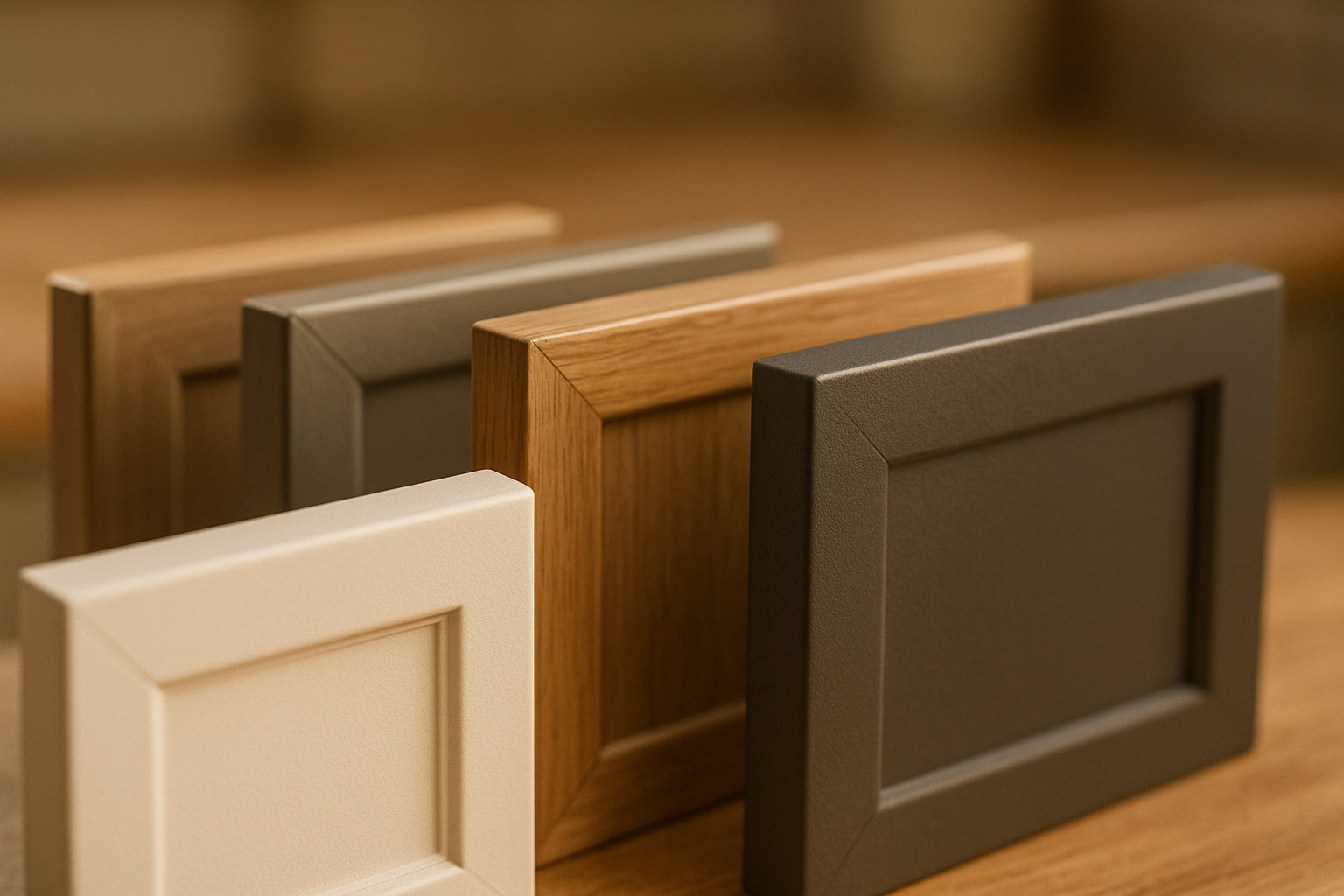
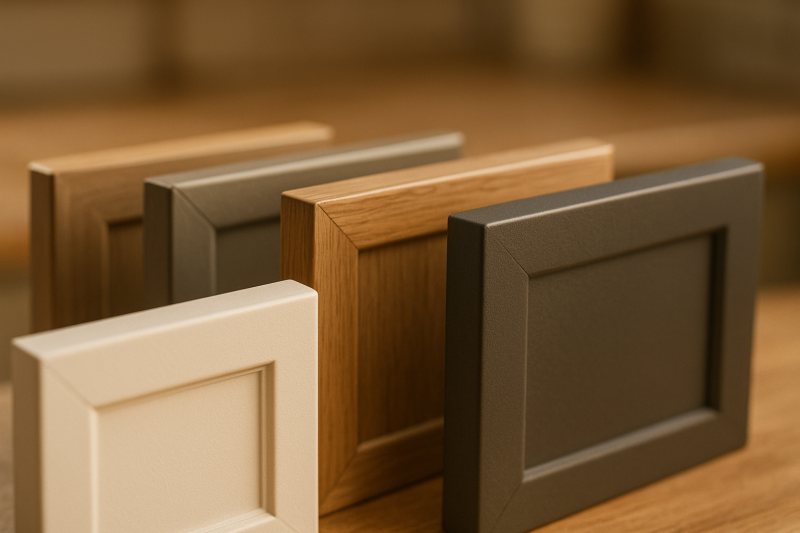
Comparing durable cabinet finishes side by side helps homeowners choose the right texture and sheen.
What Are Durable Cabinet Finishes?
Durable cabinet finishes are surface treatments engineered to withstand the daily wear of a busy kitchen, including grease splatters, humidity, and constant hand contact. Specifically, these finishes are applied either as liquid coatings, like catalyzed lacquer, or as manufactured surface materials, such as thermofoil sheets bonded to a substrate.
In addition, most professional refacing companies rely on factory-cured finishes rather than brush-applied paint, since factory curing produces a harder, more consistent surface. As a result, cabinets finished this way tend to resist chipping and yellowing far longer than DIY paint jobs.
Why Long-Lasting Cabinet Coatings Matter for Cincinnati Kitchens
Cincinnati’s humid summers and cold, dry winters put real stress on kitchen surfaces throughout the year. Because temperature and humidity swings cause wood and coatings to expand and contract, a poorly bonded finish is more likely to crack over time.
Consequently, choosing long-lasting cabinet coatings suited to seasonal changes helps homeowners avoid early repairs. Furthermore, a well-chosen finish protects the wood or substrate underneath, which extends the life of the entire cabinet system rather than just its surface appearance.
For a deeper comparison of how different materials hold up over time in this climate, this breakdown of durable kitchen finishes and what lasts offers additional context worth reviewing before you decide.
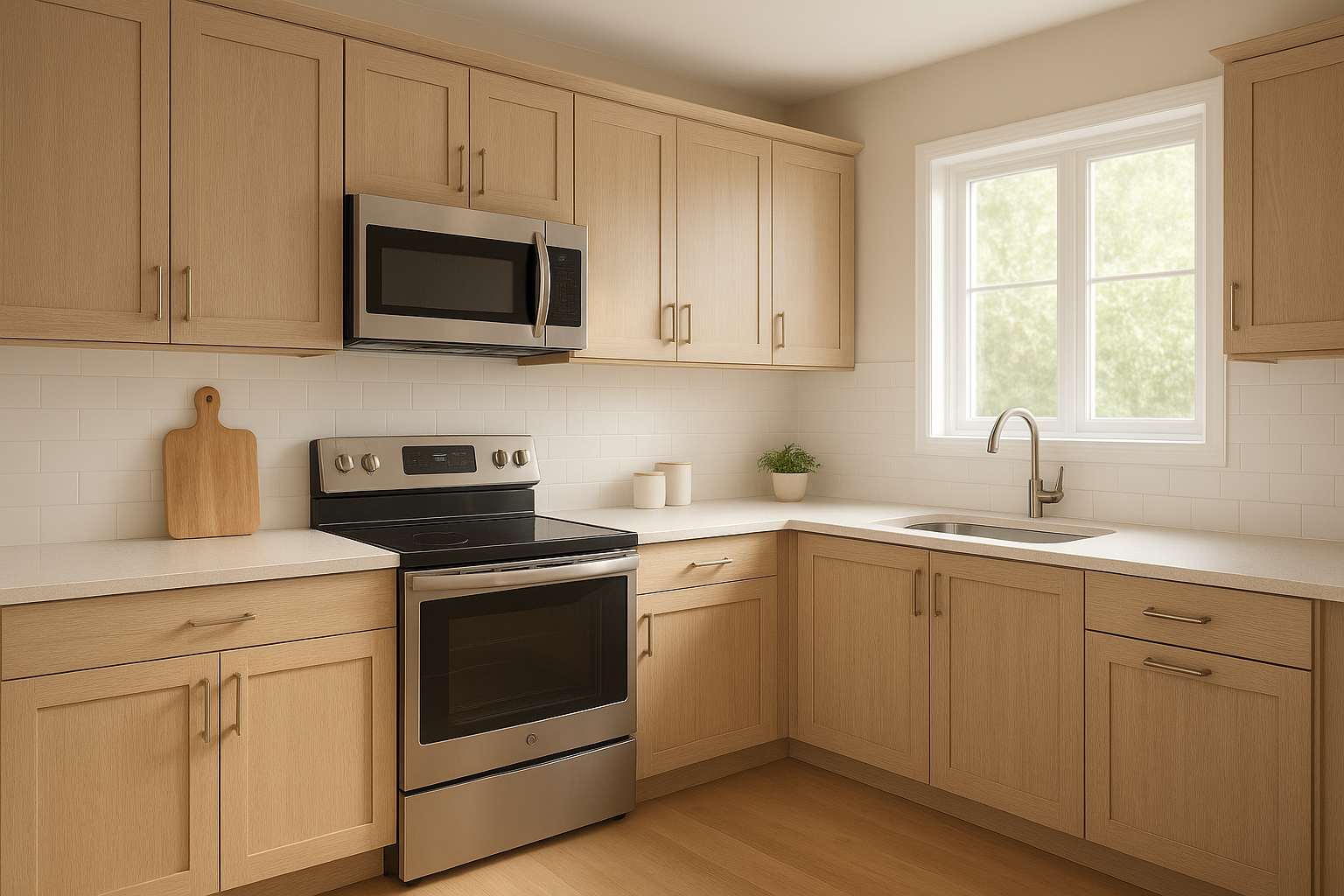
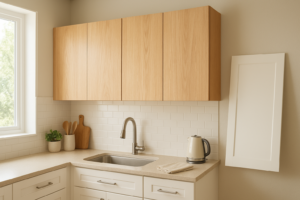
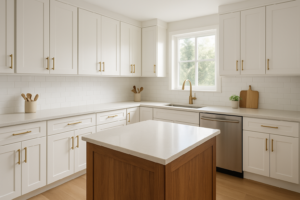
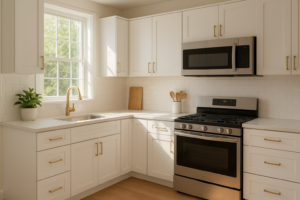
A finished Cincinnati kitchen showcasing durable cabinet finishes applied during a refacing project.
Top Types of Wear-Resistant Cabinet Surfaces
Several materials consistently perform well in real kitchens, and each offers distinct advantages depending on lifestyle and budget. Learn more about the most durable finishes.
- Catalyzed conversion varnish: A hard, chemically cured coating that resists scratches, moisture, and household chemicals better than standard lacquer.
- Thermofoil: A vinyl layer heat-fused to a rigid substrate, producing a seamless, moisture-resistant surface with no visible seams for grime to collect in.
- Factory-applied paint systems: Baked-on finishes applied in controlled environments, which cure harder and more evenly than brush-applied paint at home.
- Melamine laminate: A resin-based surface known for resisting heat and stains, commonly used on cabinet interiors and some exteriors.
According to Wikipedia’s overview of polyurethane coatings, cured polyurethane finishes form a dense molecular structure that significantly improves resistance to abrasion and chemical exposure, which explains their popularity in high-traffic kitchen applications. Similarly, melamine resin is prized for its hardness and heat tolerance.
To see a more detailed ranking of options, check out this guide on the most durable finishes for kitchen cabinets.
How to Choose Durable Cabinet Finishes for Refacing
Selecting the right finish starts with an honest look at how your kitchen gets used every day. For example, households with young children or frequent cooking may benefit most from thermofoil or conversion varnish because these options handle spills and impacts well; see our cabinet refacing Cincinnati options for local projects.
On the other hand, homeowners who prioritize a traditional wood-grain look might lean toward stained veneer with a catalyzed topcoat. In particular, it helps to consider how the finish interacts with sunlight exposure, since some coatings yellow or fade faster in bright kitchens.
Above all, working with an experienced refacing team ensures the finish is matched correctly to both your design goals and your kitchen’s daily demands. You can explore the full range of options in this guide to finishes available for cabinet refacing, or browse real completed projects in the project gallery for visual inspiration.
Step-by-Step: How a Durable Finish Is Applied During Refacing
Understanding the application process helps homeowners appreciate why professional refacing tends to outperform DIY painting projects.
- Assess and clean existing cabinets: Technicians inspect cabinet boxes for structural soundness and thoroughly clean surfaces to remove grease, grime, and old residue before any finish work begins.
- Sand and prep surfaces: Existing surfaces are sanded or scuffed to create proper adhesion, ensuring the new durable finish bonds tightly and resists premature peeling.
- Apply new veneer or panel material: A matching veneer or rigid thermofoil panel is applied to exposed box surfaces, creating a seamless, factory-quality appearance throughout the kitchen.
- Install new doors and drawer fronts: New doors and drawer fronts, pre-finished with a durable coating, are precisely fitted and secured to the existing cabinet frames.
- Seal, cure, and inspect the finish: The finish cures according to manufacturer specifications, then gets inspected for consistency and durability before final hardware goes on.
Because each step is handled by trained professionals, the resulting finish typically outlasts what most homeowners can achieve on their own. As noted in the EPA’s overview of volatile organic compounds, professionally applied, low-VOC finishes also tend to cure more evenly, which further supports long-term durability and better indoor air quality.
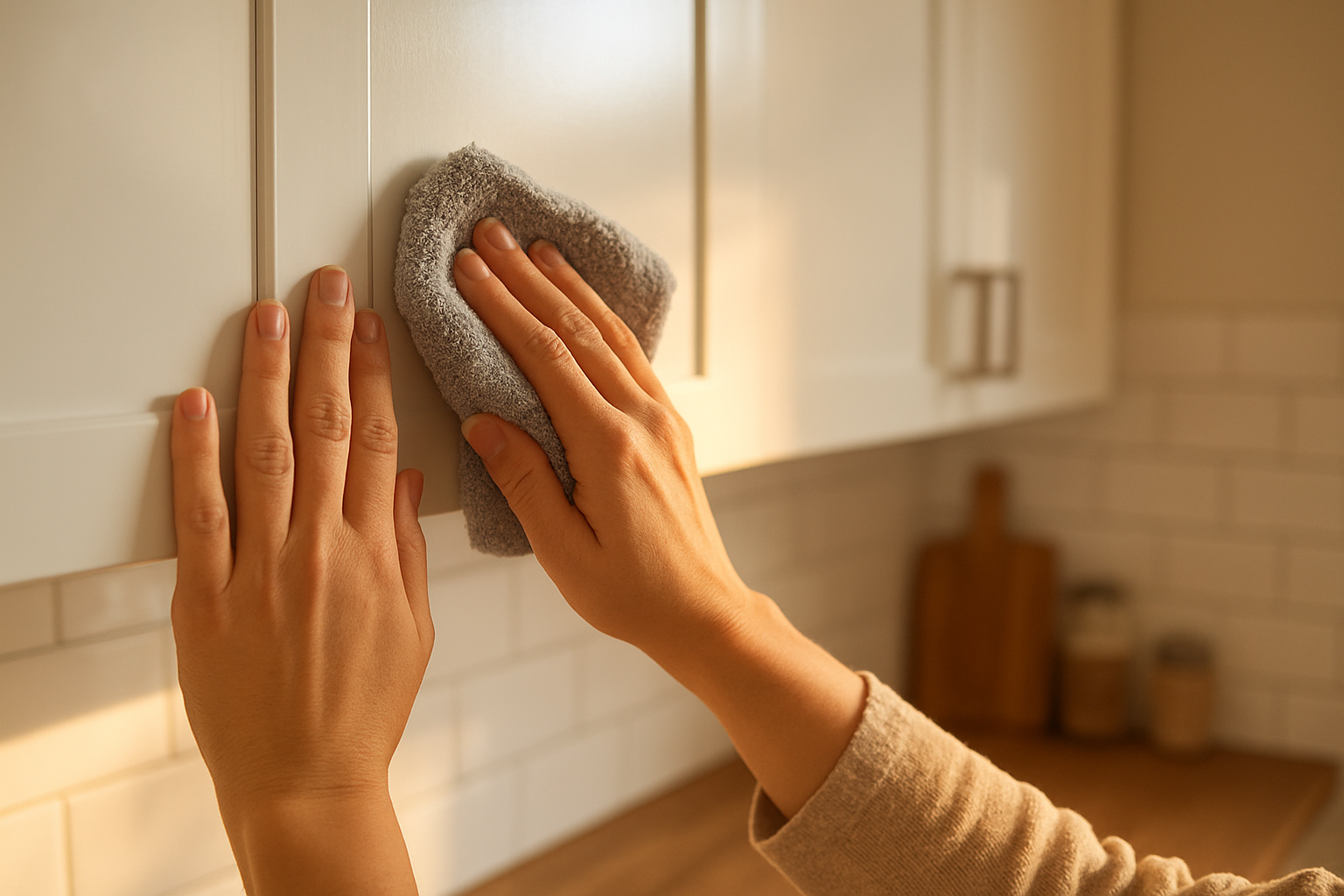
Simple cleaning habits help preserve durable cabinet finishes for many years.
Maintaining Durable Cabinet Finishes Over Time
Even the toughest finish needs some care to reach its full lifespan. Therefore, wiping spills quickly and avoiding abrasive scrubbing pads goes a long way toward preserving the surface.
Similarly, it helps to keep harsh chemical cleaners away from painted or thermofoil surfaces, since these can dull sheen or weaken adhesion over time. Instead, a soft cloth with mild soap and water is usually enough to keep cabinets looking new.
If you’re weighing style updates alongside finish durability, this article on classic cabinet designs that transform a kitchen pairs well with the maintenance tips shared here.
Common Mistakes That Shorten Finish Lifespan
Many finish failures trace back to a handful of avoidable mistakes rather than the material itself. For instance, skipping proper surface prep before painting is one of the most frequent causes of early peeling.
Likewise, allowing standing water near sinks or dishwashers can warp substrates and lift edges over time. In contrast, homeowners who address spills promptly and schedule occasional inspections tend to see their finishes last well beyond the average lifespan.
A recent industry review noted that improperly cured finishes fail up to three times faster than professionally applied, fully cured coatings, which underscores why proper application matters as much as material choice. If you’re ready to explore options for your own kitchen, the Cabinet experts in Cincinnati can walk through finish samples suited to your household’s needs.
Frequently Asked Questions About Durable Cabinet Finishes
What are durable cabinet finishes?
Durable cabinet finishes are protective coatings or surface materials applied to cabinet doors and frames that resist scratching, moisture, heat, and fading over many years of daily use. Common examples include catalyzed lacquer, thermofoil, and factory-applied paint systems.
How long do durable cabinet finishes last?
A well-applied, high-quality finish typically lasts 15 to 25 years with normal kitchen use. Lifespan depends on the finish type, application method, and how consistently the cabinets are cleaned and maintained.
What is the most durable finish for kitchen cabinets?
Catalyzed conversion varnish and thermofoil are widely considered among the most durable options because they resist chipping, moisture, and heat better than standard brushed paint. The best choice depends on your kitchen’s style and usage patterns.
How much does a durable cabinet finish cost?
Refinishing or refacing cabinets with a premium finish generally costs less than full cabinet replacement, often saving homeowners 30 to 50 percent. Exact pricing depends on kitchen size, finish type, and door style selected.
Can cabinet refacing use durable finishes instead of full replacement?
Yes, cabinet refacing applies new durable finishes and surface materials to existing cabinet boxes, giving homeowners a like-new look without tearing out functional cabinetry. This approach also reduces disruption and project timelines compared to full remodels.
What is the difference between thermofoil and painted wood finishes?
Thermofoil is a vinyl material heat-fused to a substrate, offering a seamless, moisture-resistant surface, while painted wood finishes provide a traditional look but can chip if not properly sealed. Both can be durable when installed correctly, but they wear differently over time.
Why do some cabinet finishes crack or peel?
Cracking and peeling usually happen when finishes are applied without proper surface preparation, sealing, or curing time. Excess moisture, heat exposure near stoves, and low-quality materials also accelerate finish failure.
How do I clean and maintain durable cabinet finishes?
Wipe cabinets with a soft cloth and mild, non-abrasive cleaner, and dry surfaces promptly to prevent water spots. Avoid harsh chemicals, abrasive pads, and excessive scrubbing, which can dull even the toughest finish over time.
Are durable cabinet finishes resistant to moisture and heat?
Many durable finishes, including catalyzed lacquer and thermofoil, are specifically formulated to resist moisture and moderate heat exposure common in kitchens. However, extreme heat near stovetops can still damage even high-quality finishes without proper ventilation.
What is the best finish for high-humidity kitchens?
Thermofoil and catalyzed conversion varnish generally perform best in high-humidity kitchens because they create a tight, moisture-resistant seal. Standard latex paint is more prone to swelling and peeling in damp environments.
How long does cabinet refacing with a new finish take?
Most cabinet refacing projects take two to five days from start to finish, depending on kitchen size and finish selection. This is significantly faster than a full cabinet replacement, which can take several weeks.
What common mistakes shorten the life of a cabinet finish?
Common mistakes include skipping proper surface prep, using abrasive cleaners, ignoring water spills near sinks, and choosing low-grade materials to save on upfront cost. These shortcuts often lead to premature wear within just a few years.
Final Thoughts on Choosing Durable Cabinet Finishes
Ultimately, durable cabinet finishes protect both the beauty and the function of one of the busiest rooms in any home. Whether you lean toward thermofoil, catalyzed varnish, or a classic factory-painted finish, the right choice comes down to your household’s habits, style preferences, and budget.
In short, professional application and simple ongoing care make the biggest difference in how long a finish truly lasts. For homeowners throughout Cincinnati considering a refresh, working with an experienced refacing team helps ensure the finish you choose today still looks great many years from now. Author: KT Cabinet Refacing. Last updated: 2026-08-12.