Refaced cabinets before and after photos give Cincinnati homeowners the clearest proof that a kitchen can be transformed without a full renovation. Instead of tearing out cabinet boxes and starting from scratch, cabinet refacing replaces only the visible surfaces — doors, drawer fronts, and exposed panels — while keeping the existing cabinet structure in place. The result is a kitchen that looks brand new in days rather than weeks. Homeowners across the greater Cincinnati area have used this approach to update dated finishes, switch door styles, and modernize their kitchens on a realistic budget. Below, we’ll walk through what actually changes during a typical refacing project, how the process works step by step, and what results homeowners can reasonably expect.
What Are Refaced Cabinets Before and After Transformations?
Refaced cabinets before and after is the comparison homeowners rely on to judge whether a refacing project delivered real value — the same kitchen space captured once before work begins and again once it’s finished. In practical terms, refacing means new doors, drawer fronts, and veneer on the boxes, without rebuilding the cabinet framework itself.
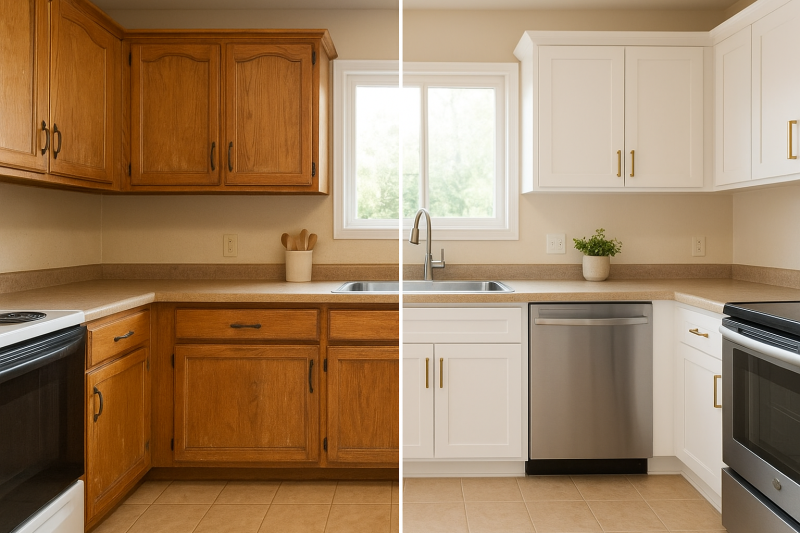
Because the underlying cabinet boxes stay put, the “before” photos usually show peeling laminate, dated wood tones, or worn hardware. The “after” images, however, reveal crisp new door panels, updated finishes, and often a completely different color scheme. As a result, the visual shift can feel just as dramatic as a full remodel, even though the layout hasn’t changed at all.
Furthermore, these comparisons help set realistic expectations. Since refacing works with what’s already there, a kitchen with solid, well-built cabinet boxes will typically produce the most convincing transformation. You can browse a wide range of completed projects in the full before-and-after gallery to see how different door styles and finishes look in real Cincinnati kitchens.
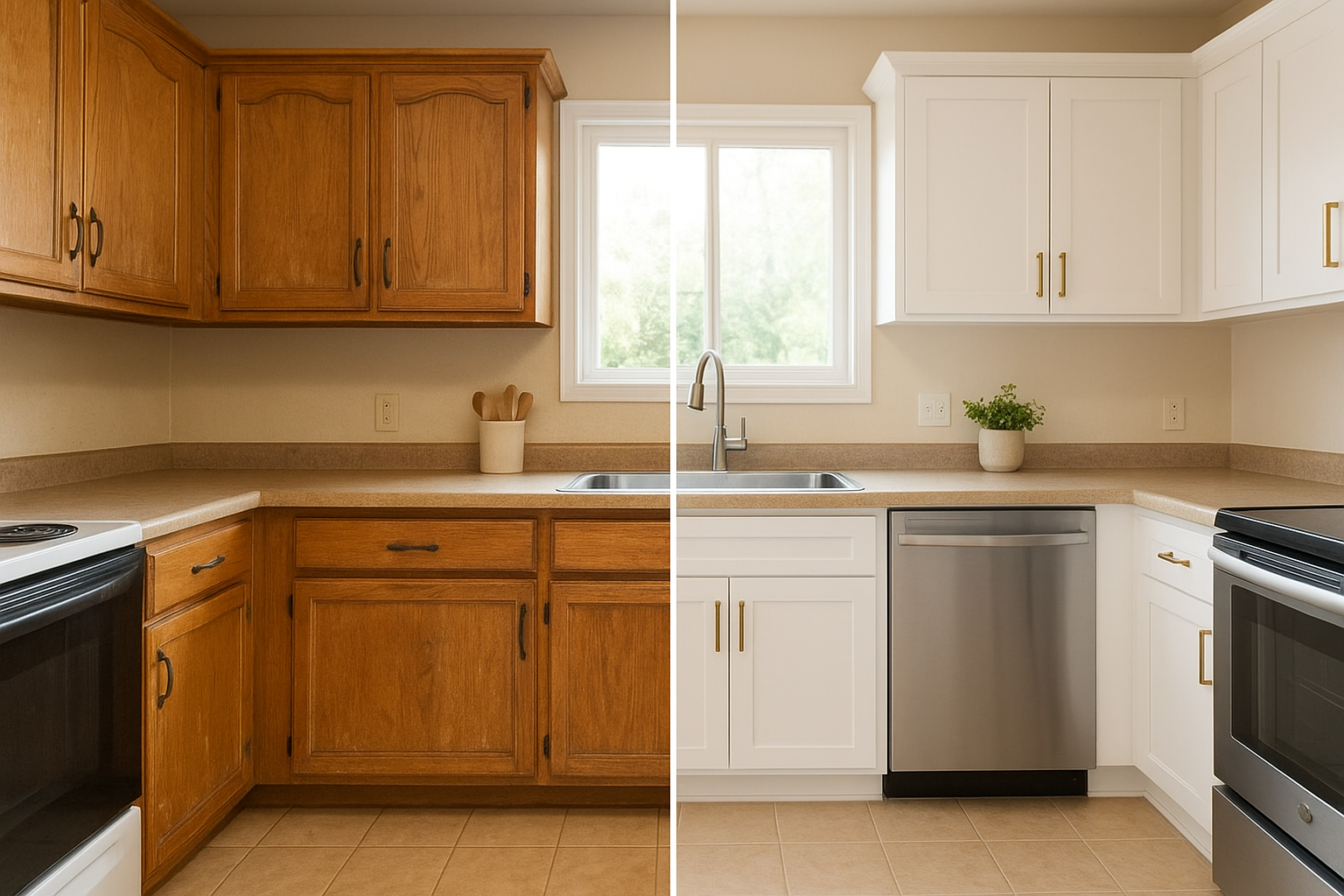
A side-by-side look at refaced cabinets before and after a Cincinnati kitchen update.
Why Homeowners Choose Cabinet Refacing Over Replacement
Cost is often the first reason homeowners look into cabinet refacing. Industry cost comparisons commonly place refacing at roughly 30% to 50% less than a full cabinet replacement, since the labor-intensive demolition and box construction steps are skipped entirely. In addition, because the kitchen isn’t gutted down to the studs, most households can keep using their kitchen throughout much of the project.
Timing matters too. A full remodel can disrupt a home for a month or longer, whereas refacing projects are frequently wrapped up within one to two weeks. For families who rely on their kitchen daily, that shorter timeline is a significant advantage. Consequently, refacing has become a popular middle ground between a simple coat of paint and a complete teardown.
There’s also an environmental angle worth noting. Because the existing cabinet boxes are reused rather than discarded, refacing generates far less construction waste than replacement. For homeowners weighing whether this approach can genuinely solve their kitchen’s problems, it helps to read more about whether cabinet refacing is an effective restoration method for kitchens in various conditions.
Refaced Cabinets Before and After: What Changes You’ll See
When comparing refaced cabinets before and after a project, the differences generally fall into three categories: doors and drawer fronts, box surfaces and finish, and hardware. Together, these changes account for nearly everything a person sees when they walk into the kitchen.
Door and Drawer Front Transformations
New doors and drawer fronts make the biggest visual impact in any refacing project. Homeowners can switch from a dated raised-panel look to a clean shaker style, or move from a dark wood tone to a bright painted finish. Since these pieces are custom fabricated to match existing openings, the fit looks seamless once installed.
Cabinet Box, Finish, and Hardware Updates
Exposed cabinet box surfaces — the sides, end panels, and face frames — receive a matching veneer so the entire kitchen reads as one cohesive design. New hardware, such as modern pulls or hinges, finishes the look. Specifically, this combination is what allows a kitchen with the same physical footprint to feel entirely reimagined. For homeowners wondering whether this approach can address specific problem areas, it’s worth reviewing whether cabinet refacing can fix outdated cabinets in their particular kitchen layout.
How the Cabinet Refacing Process Works
Understanding the process helps homeowners know what to expect before their own before-and-after photos are taken. In general, a refacing project follows five main steps.
- Schedule a design consultation. A specialist visits the home to inspect the cabinet boxes, take measurements, and discuss door styles, finishes, and hardware that fit the homeowner’s budget and vision.
- Select door styles and finishes. The homeowner reviews samples and finalizes decisions on door profiles, veneer colors, and hardware before any fabrication begins.
- Prepare and measure existing cabinet boxes. Technicians clean, sand, and precisely measure the frames so the replacement panels and doors will fit accurately once produced.
- Fabricate new doors and veneer panels. New doors, drawer fronts, and matching veneer panels are custom built off-site using the exact measurements from the kitchen.
- Install new surfaces and hardware. Installers apply veneer to the boxes, hang new doors and drawer fronts, and attach updated hardware, usually completing the job within one to two weeks.
Because much of the fabrication happens off-site, the in-home disruption stays minimal compared with a full remodel. As a result, most households can continue using at least part of their kitchen throughout the process.
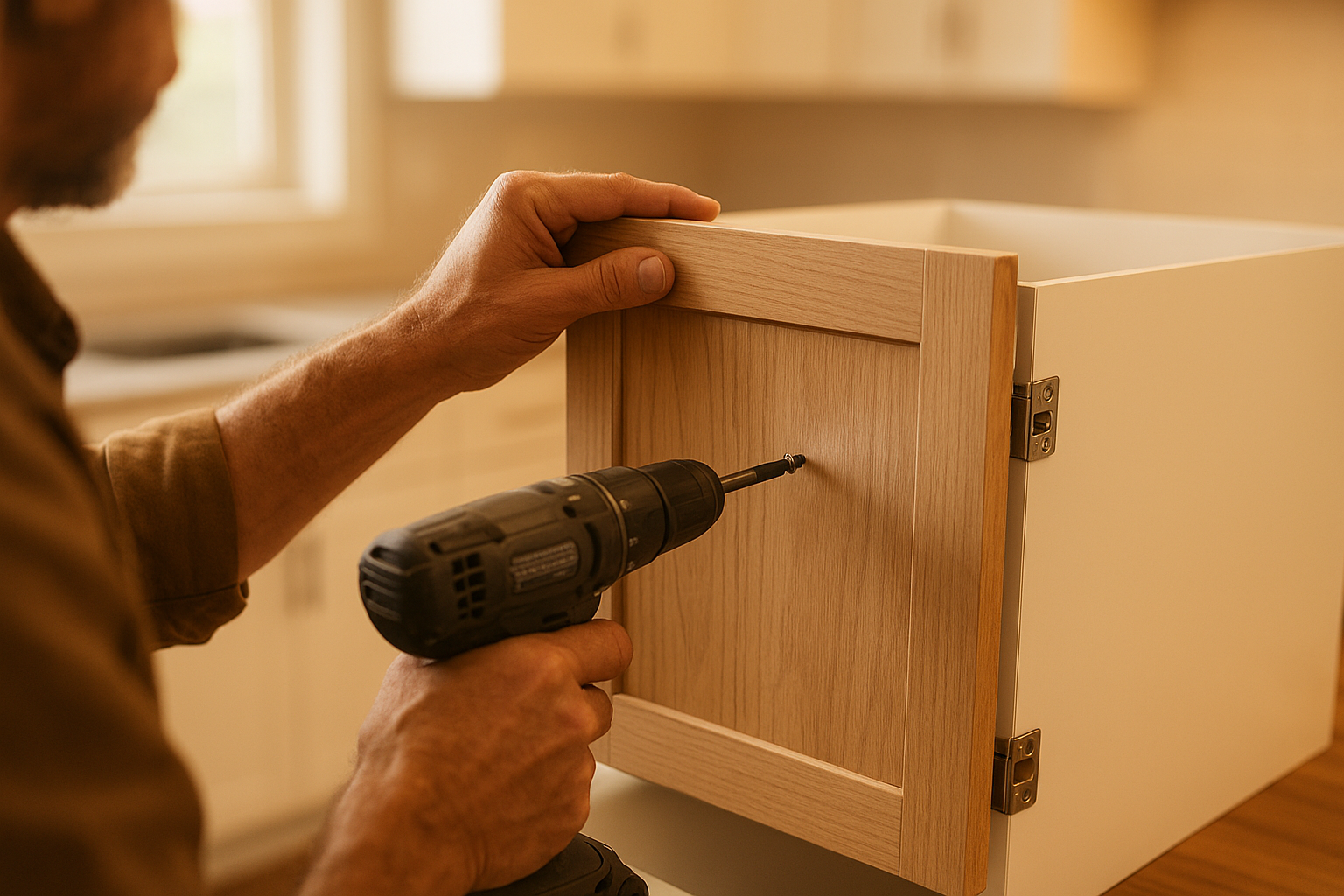
New door fronts being installed as part of the refacing process.
Cost and Timeline: What to Expect
Pricing for cabinet refacing depends on kitchen size, chosen door material, and finish complexity. However, as a general benchmark, refacing typically costs 30% to 50% less than a comparable full cabinet replacement, according to industry cost comparisons frequently cited by remodeling organizations. That means a project that might run tens of thousands of dollars as a full replacement could come in significantly lower with refacing.
Timeline is another major factor. Most refacing jobs wrap up in roughly one to two weeks from installation start to finish, whereas full remodels routinely stretch past a month once demolition, plumbing, and electrical work are factored in. For an accurate estimate specific to your kitchen, a home visit and consultation remain the most reliable way to get precise numbers — you can start that conversation directly through KT Cabinet Refacing’s Cincinnati-based team.
Cabinet Resurfacing vs Refacing vs Replacement: Key Differences
These three terms get mixed up often, so it’s worth clarifying them. Cabinet resurfacing generally refers to refinishing existing surfaces — sanding and repainting or restaining — without replacing the doors themselves. Cabinet refacing goes further, swapping out doors and drawer fronts entirely while adding matching veneer to the boxes. Full replacement removes everything, including the cabinet boxes, down to bare walls.
In other words, resurfacing works best for cabinets in good structural shape that just need a cosmetic refresh, while refacing suits kitchens wanting a more complete style change without a full teardown. If you’re still deciding between these paths, it’s helpful to review whether cabinet resurfacing is a good option for your specific cabinets, or whether resurfacing instead of refacing makes more sense for your budget. According to general cabinetry references such as Wikipedia’s overview of kitchen cabinets, cabinetry construction methods vary widely, which is exactly why a professional inspection matters before choosing an approach.
Common Cabinet Refacing Mistakes to Avoid
Even a great process can go wrong if a few key steps get rushed. First, skipping a thorough inspection of the cabinet boxes is a frequent misstep; if the frames are warped or water-damaged, new veneer won’t adhere properly or last. Second, choosing the cheapest possible door material to save money upfront often backfires, since lower-grade laminates can peel or fade sooner than expected.
Additionally, homeowners sometimes overlook finish selection, such as low-VOC (volatile organic compound) paints and adhesives that support healthier indoor air quality. The U.S. Environmental Protection Agency notes that certain finishes can release compounds into indoor air, so it’s worth asking your contractor about the products used during installation — you can read more on the topic via the EPA’s guidance on volatile organic compounds. Finally, some homeowners forget to plan for hardware changes, which can leave the finished kitchen feeling only partially updated. Reviewing several completed projects beforehand, including options detailed by the National Kitchen & Bath Association, can help set realistic expectations before work begins.
Frequently Asked Questions About Refaced Cabinets Before and After
What do refaced cabinets before and after photos actually show?
Refaced cabinets before and after photos show the same kitchen captured twice: once with the original, worn doors and finishes, and again after new door fronts, veneer, and hardware have been installed. They give homeowners a realistic way to judge whether results will match their expectations before committing to a project.
What is cabinet refacing?
Cabinet refacing is a kitchen update method that replaces cabinet doors, drawer fronts, and exposed panel surfaces while keeping the existing cabinet boxes in place. It typically costs less and takes far less time than tearing out and replacing an entire kitchen.
How long does cabinet refacing take to complete?
Most cabinet refacing projects are completed in about one to two weeks, depending on the kitchen’s size and the door style chosen. A full gut-and-replace remodel, by contrast, often takes four to eight weeks or more.
How much does cabinet refacing cost in Cincinnati?
Cabinet refacing generally costs 30% to 50% less than full cabinet replacement, according to common industry cost comparisons. Exact pricing depends on kitchen size, door material, and finish selections, so a home consultation is the best way to get an accurate number.
Can any kitchen cabinets be refaced?
Most cabinets can be refaced as long as the existing boxes are structurally sound and free of water damage or warping. A contractor typically inspects the cabinet frames first to confirm they can support new veneer and hardware.
What is the difference between cabinet refacing and cabinet resurfacing?
Cabinet refacing usually involves replacing doors and drawer fronts entirely while applying new veneer to cabinet boxes, whereas resurfacing often refers to refinishing existing surfaces without replacing doors. The two terms are sometimes used interchangeably, so it helps to ask a contractor exactly what scope of work is included.
Will refaced cabinets look as good as brand-new cabinets?
Yes, when done well, refaced cabinets are visually indistinguishable from new custom cabinetry. Because the doors, hardware, and visible surfaces are all new, the finished kitchen looks completely updated even though the underlying boxes remain the same.
Do refaced cabinets hold up over time?
Refaced cabinets can hold up for many years when quality materials and proper installation techniques are used. Durability largely depends on the veneer or laminate material chosen and how well daily wear, moisture, and heat are managed in the kitchen.
What door materials are commonly used in cabinet refacing?
Common options include solid wood, rigid thermofoil, and high-pressure laminate doors, each offering different price points and maintenance needs. Wood doors tend to offer a classic look, while thermofoil and laminate resist moisture and are easier to clean.
Can I change my kitchen layout with cabinet refacing?
Cabinet refacing does not change the physical layout of your kitchen since it works with the existing cabinet boxes. However, you can add new cabinet sections, updated hardware, and accessories like pull-out shelves to improve function without a full layout change.
What is the biggest mistake homeowners make when refacing cabinets?
The most common mistake is skipping a proper inspection of the cabinet boxes before starting, which can lead to problems if the frames are damaged or uneven. Choosing a low-quality veneer to save money upfront is another frequent regret, since it often needs replacing sooner.
Is cabinet refacing better than full cabinet replacement?
Cabinet refacing is often the better choice when the existing cabinet boxes are structurally sound and the homeowner wants a faster, lower-cost update. Full replacement makes more sense when the layout needs to change or the boxes themselves are damaged beyond repair.
How do I know if refacing is right for my kitchen?
A quick way to decide is to check whether your cabinet boxes are still solid and your layout works for your needs; if so, refacing is usually a strong fit. A local specialist can inspect your kitchen in person and confirm whether refacing or another option makes more sense.
Final Thoughts on Refaced Cabinets Before and After
Ultimately, refaced cabinets before and after comparisons make it easy to see why so many Cincinnati homeowners choose this route over a full remodel. Since the process keeps existing cabinet boxes in place while updating doors, finishes, and hardware, it delivers a dramatic visual change at a lower cost and in a fraction of the time. Whether your kitchen needs a simple style refresh or a more complete facelift, understanding the real differences between refacing, resurfacing, and replacement helps you choose the right path with confidence. For homeowners ready to see what’s possible, requesting a consultation remains the clearest next step toward a kitchen transformation that fits both budget and lifestyle.