Eco-conscious cabinet solutions are reshaping the way Cincinnati homeowners renovate their kitchens, offering a path to a beautiful, updated space without the heavy environmental toll of a full gut remodel. Rather than tearing out cabinet boxes and hauling them to a landfill, more households are choosing refacing methods that reuse the sturdy frame already in place while refreshing the doors, drawer fronts, and finishes on top. As a result, families cut construction waste dramatically, spend far less money, and still walk away with a kitchen that looks brand new. Furthermore, this approach appeals to anyone who values cleaner indoor air, responsibly sourced materials, and cabinetry built to last for decades. Throughout this guide, we’ll unpack exactly what eco-conscious cabinet solutions involve, why so many Cincinnati homeowners are choosing them over energy-intensive full replacements, and how the right sustainable materials, energy-efficient pairings, and certifications combine to create a genuinely greener kitchen.
Quick Answer: Eco-conscious cabinet solutions reface existing cabinet boxes with sustainably sourced veneers, low-VOC finishes, and recycled materials instead of replacing the entire structure. This method cuts construction waste, lowers project cost, and typically finishes in days rather than weeks — all while pairing naturally with energy-efficient appliances and fixtures for a fully sustainable kitchen.
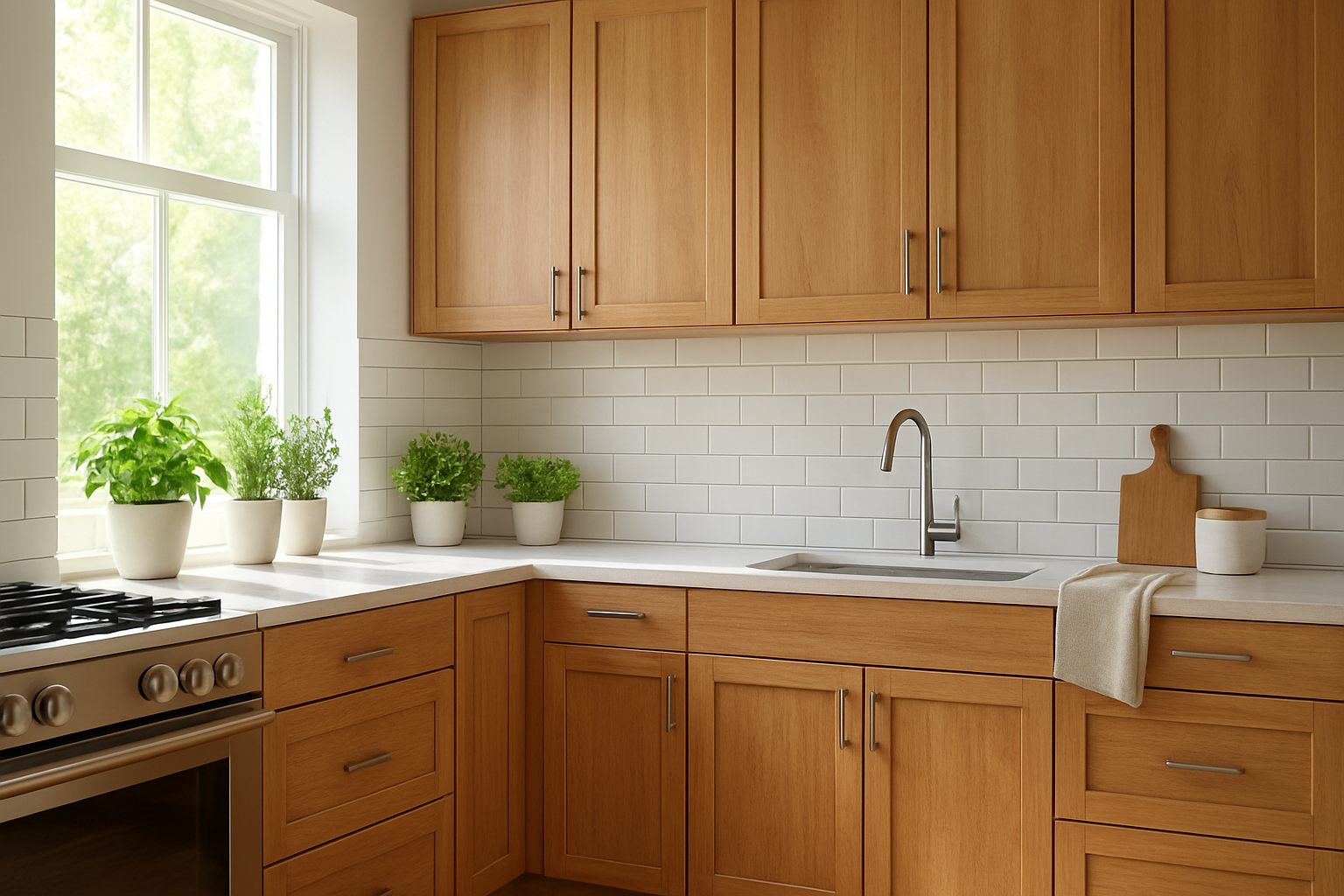
Refaced cabinetry brings warmth to a kitchen while supporting eco-conscious cabinet solutions.
What Are Eco-Conscious Cabinet Solutions?
Eco-conscious cabinet solutions are cabinet refacing and renovation methods that prioritize resource conservation, responsibly sourced materials, and waste reduction throughout a project. Instead of demolishing entire cabinet structures, these approaches reuse sturdy cabinet boxes and simply replace visible surfaces such as doors, drawer fronts, and end panels. Consequently, homeowners get a full style transformation while diverting cabinetry from landfills.
In practice, this often means choosing wood veneer, thermofoil, or laminate facings that carry sustainability certifications. For example, materials bearing the Forest Stewardship Council (FSC) label come from forests managed with long-term ecological balance in mind. Additionally, many contractors now pair these materials with water-based, low-VOC (volatile organic compound) adhesives and finishes, which release fewer chemicals into indoor air.
Because the cabinet boxes remain intact, the overall project generates far less construction debris. Therefore, homeowners who choose refacing over full replacement are directly supporting a smaller environmental footprint while still upgrading the look and function of their kitchen.
Why Cincinnati Homeowners Are Choosing Sustainable Cabinet Refacing
Sustainable cabinet refacing has grown in popularity throughout Cincinnati as homeowners look for renovation options that balance cost, convenience, and environmental responsibility. Unlike a gut renovation, refacing avoids tearing out plumbing, electrical connections, or flooring near the cabinet area. As a result, projects finish faster and with far less disruption to daily household routines.
Furthermore, local homeowners appreciate that refacing keeps usable cabinet boxes out of the waste stream. According to the U.S. Environmental Protection Agency, construction and demolition activities generate more than 600 million tons of debris annually in the United States, and cabinetry is a notable contributor when full kitchens are gutted unnecessarily. By contrast, refacing directly reduces this category of waste on a per-project basis.
In addition, many Cincinnati families are motivated by indoor air quality concerns, especially in homes with young children or family members with respiratory sensitivities. Low-VOC finishes and adhesives address this concern directly, since they emit fewer airborne chemicals during and after installation. Above all, homeowners want a kitchen that looks updated without compromising the health of their household or the surrounding environment.
Key Materials Used in Green Cabinet Refacing
Green cabinet refacing relies on a specific set of materials chosen for their reduced environmental impact and long-term durability. Wood veneers sourced from FSC-certified forests are among the most popular choices, since they offer the natural look of solid wood while using significantly less raw timber than solid-wood doors.
Recycled thermofoil is another common option. This material wraps a durable, moisture-resistant film around engineered wood substrates, often made partially from reclaimed wood fibers. Similarly, laminate facings made with recycled content provide a budget-friendly, low-maintenance surface that resists scratching and staining in busy kitchens.
For finishes, water-based stains and low-VOC paints have largely replaced older solvent-based products. These formulas dry with minimal odor and off-gas far less over time. Meanwhile, adhesives used to bond new veneers to existing cabinet boxes have also shifted toward water-based formulations that meet GREENGUARD or CARB2 emissions standards.
Hardware selections round out the picture. Many suppliers now offer cabinet pulls and hinges made from recycled metals, allowing homeowners to complete the eco-conscious theme down to the smallest detail.
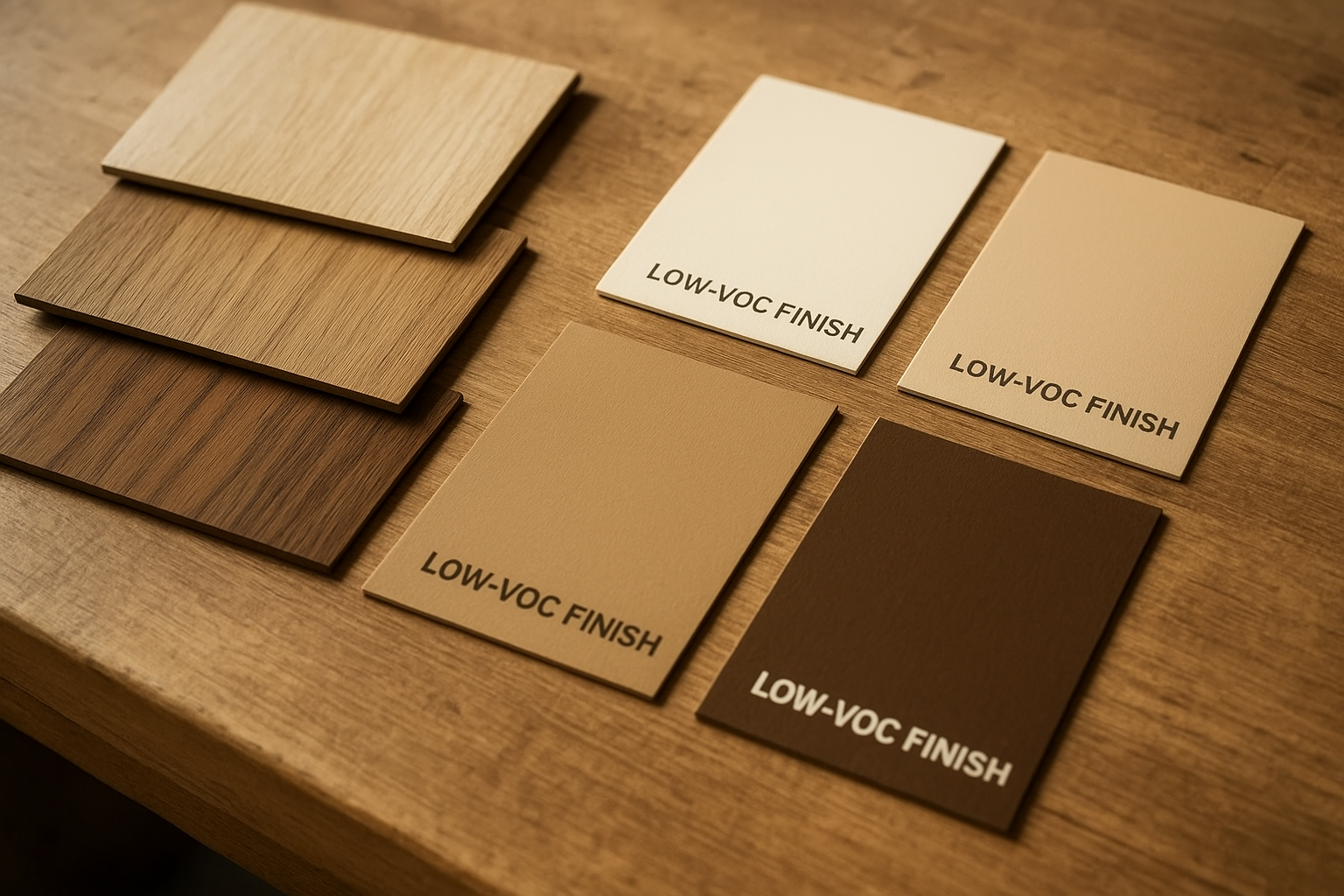
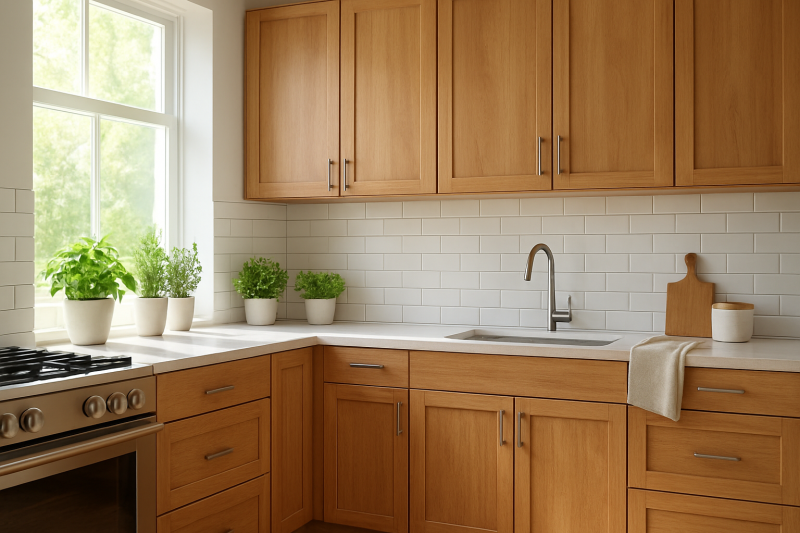
Sample materials like these are often selected for sustainable cabinet refacing projects.
Cabinet Material Sustainability Scorecard
Not all “green” cabinet materials perform equally. Here’s a quick scorecard homeowners can use when comparing options for eco-conscious cabinet solutions:
- FSC-certified wood veneer: High sustainability score, excellent durability (15+ years), moderate cost, natural aesthetic.
- Recycled thermofoil: Good sustainability score, strong moisture resistance, budget-friendly, ideal for humid kitchen zones.
- Recycled-content laminate: Good sustainability score, highly scratch-resistant, lowest upfront cost, widest color selection.
- Reclaimed solid wood: Highest sustainability score, premium aesthetic, higher cost, best suited for accent panels or islands.
The Environmental Benefits of Refacing vs. Full Replacement
Choosing refacing over full cabinet replacement offers measurable environmental advantages. Since the existing cabinet boxes stay in place, the project avoids the resource demands of manufacturing entirely new cabinet units, including fresh lumber, hardware, and shipping materials.
In contrast, full replacement typically sends the old cabinets to a landfill, even when the boxes themselves are structurally sound. This unnecessary disposal adds to local waste volumes and consumes additional resources to produce brand-new replacements. Refacing, therefore, represents a more circular approach to kitchen renovation.
Transportation emissions matter too. Working with a local Cincinnati refacing specialist reduces the shipping distance for materials compared to ordering entirely new cabinetry from distant manufacturers. As a result, the overall carbon footprint of the project shrinks further. For homeowners weighing their options, resources like this guide to eco-friendly cabinet options can help clarify which materials best fit a greener kitchen goal.
Energy-Efficient Kitchen Pairings That Complete a Sustainable Kitchen
While eco-conscious cabinet solutions address materials and waste, a fully sustainable kitchen also considers energy and water use. Consequently, many Cincinnati homeowners pair their cabinet refacing project with a handful of energy-efficient upgrades that multiply the environmental payoff.
Energy Star Appliances
Refrigerators, dishwashers, and range hoods carrying the ENERGY STAR label use significantly less electricity than standard models. In particular, pairing new refaced cabinetry with an Energy Star refrigerator can visually modernize a kitchen while lowering utility bills for years.
LED Under-Cabinet Lighting
LED strips installed beneath refaced cabinets use roughly 75 percent less energy than incandescent bulbs and last far longer. Similarly, they generate less heat, which helps keep low-VOC finishes and adhesives stable over time.
Water-Efficient Fixtures
Low-flow faucets and aerators reduce water consumption at the sink without sacrificing pressure. Above all, combining these fixtures with eco-conscious cabinet solutions gives homeowners a kitchen that is sustainable from the countertop down to the plumbing.
How to Choose Eco-Friendly Cabinet Options for Your Kitchen
Selecting the right eco-friendly cabinet options involves a clear, sequential process. Following these steps helps ensure the final result is both sustainable and long-lasting.
- Assess your existing cabinet boxes. Have a professional inspect your current cabinet boxes for structural soundness, since refacing only works when the underlying frame is still sturdy and free of water damage.
- Choose sustainable facing materials. Select FSC-certified wood veneers or recycled thermofoil for new doors and drawer fronts to reduce the environmental impact of sourcing fresh raw materials.
- Select low-VOC adhesives and finishes. Ask your contractor to use water-based, low-VOC adhesives and finishes to protect indoor air quality throughout installation and long after completion.
- Verify certifications and sourcing. Request documentation confirming FSC certification, GREENGUARD compliance, or CARB2 ratings for every material used in the project.
- Schedule professional installation to minimize waste. Work with an experienced refacing team that measures precisely and recycles offcuts, further reducing landfill contributions.
For homeowners exploring layout-specific advice, this overview of sustainable options for kitchen renovations covers additional considerations worth reviewing before making a final decision.
Cost and Value of Eco-Conscious Cabinet Solutions
Cost is often the deciding factor when homeowners compare eco-conscious cabinet solutions to a full remodel. Generally, refacing costs 30 to 50 percent less than complete cabinet replacement, since labor and material needs are significantly reduced. Sustainable materials, while sometimes priced slightly higher upfront than conventional options, often prove more durable over time, which improves long-term value.
Moreover, faster project timelines translate into lower labor costs overall. Most refacing jobs finish within two to five days, compared to several weeks for a gut renovation. This efficiency also limits the disruption to daily kitchen use, which many families consider just as valuable as the financial savings.
Homeowners in smaller homes benefit as well. As explained in this resource on whether cabinet refacing suits small kitchens, compact spaces respond especially well to refacing because the process avoids major structural changes.
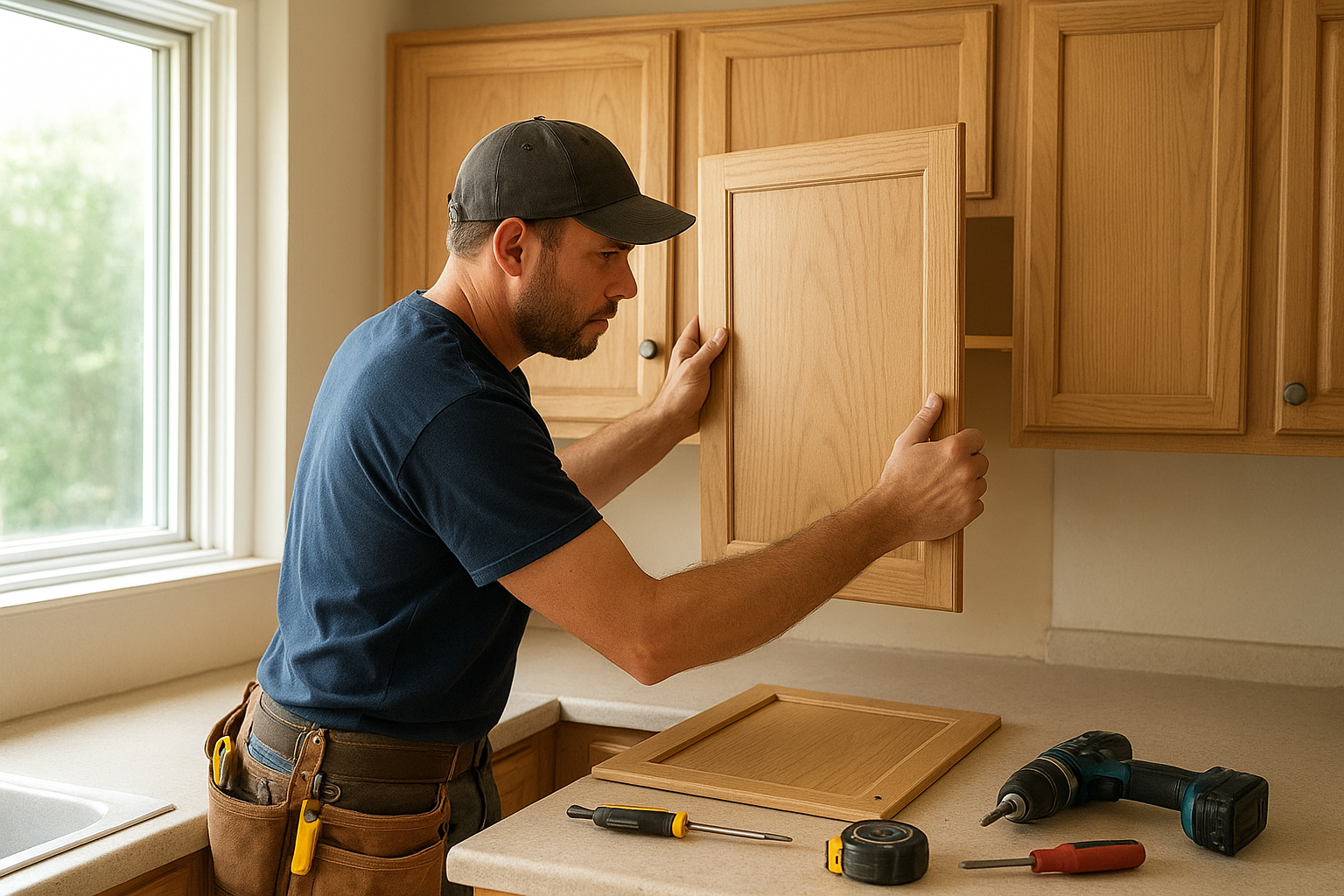
Professional installation ensures eco-conscious cabinet solutions perform well for years.
Maintenance Tips to Extend the Life of Your Eco-Conscious Cabinets
Proper care keeps sustainable materials performing at their best for years. Specifically, a few simple habits go a long way toward protecting your investment.
- Wipe veneer and thermofoil surfaces with a soft, damp cloth rather than abrasive cleaners that can dull low-VOC finishes.
- Control kitchen humidity where possible, since excess moisture can shorten the lifespan of wood veneers over time.
- Tighten recycled-metal hardware periodically to prevent wear on drawer fronts and hinges.
- Avoid harsh solvents; instead, use pH-neutral, eco-friendly cleaning products that won’t strip protective coatings.
Common Myths About Eco-Conscious Cabinet Solutions, Debunked
Myth: Sustainable materials are less durable
In reality, FSC-certified veneers and recycled thermofoil often outperform conventional materials, resisting moisture and wear for 15 years or more when properly installed.
Myth: Green cabinetry always costs more
On the contrary, because refacing avoids the cost of entirely new cabinet boxes, eco-conscious cabinet solutions typically cost 30 to 50 percent less than full replacement, even with premium certified materials.
Myth: Any product labeled “eco-friendly” is verified
Not necessarily. Some products marketed as green lack verifiable certifications. Therefore, always request FSC, GREENGUARD, or CARB2 documentation before committing to materials.
Choosing a Local Cincinnati Partner for Your Refacing Project
Selecting a knowledgeable local partner makes a meaningful difference in the outcome of any refacing project. Cincinnati-based specialists understand regional climate factors, common cabinet materials found in older area homes, and how to source sustainable materials efficiently without long shipping delays.
Because every kitchen has unique needs, a personalized consultation helps homeowners match their style preferences with genuinely eco-friendly materials. This is particularly important since some products marketed as “green” do not carry verifiable certifications. Therefore, working directly with an experienced local team, such as the one at ktcabinetrefacing.com, helps ensure materials meet real sustainability standards rather than marketing claims alone.
For a broader regional perspective, this Cincinnati guide to sustainable kitchen renovations outlines additional local considerations, while this complete guide to eco-friendly refacing options answers many common material questions in more depth.
Frequently Asked Questions About Eco-Conscious Cabinet Solutions
What are eco-conscious cabinet solutions?
Eco-conscious cabinet solutions are refacing and renovation methods that reuse existing cabinet boxes while updating doors, drawer fronts, and finishes with sustainably sourced or low-impact materials. This approach reduces landfill waste compared to full cabinet replacement.
How does cabinet refacing reduce environmental waste?
Refacing keeps the structurally sound cabinet boxes in place instead of sending them to a landfill. Only the visible surfaces are replaced, which significantly cuts down on demolition debris and new material consumption.
Is cabinet refacing more sustainable than full replacement?
Yes, refacing is generally more sustainable because it conserves the existing wood or particleboard structure and requires far less raw material. Full replacement, by contrast, discards entire cabinet units even when the boxes are still functional.
What materials are used in eco-friendly cabinet refacing?
Common materials include FSC-certified wood veneers, recycled thermofoil, low-VOC paints, and water-based adhesives. These options minimize chemical off-gassing and support responsible forestry practices.
How much do eco-conscious cabinet solutions cost?
Costs vary by kitchen size and materials, but refacing typically runs 30 to 50 percent less than full cabinet replacement. Homeowners save on both labor and material expenses since the cabinet boxes remain in place.
How long does an eco-friendly cabinet refacing project take?
Most refacing projects are completed within two to five days, depending on kitchen size and material selection. This is considerably faster than a full remodel, which can take several weeks.
What certifications should I look for in sustainable cabinetry?
Look for Forest Stewardship Council (FSC) certification on wood products and GREENGUARD or CARB2 compliance on finishes and adhesives. These labels confirm responsible sourcing and low chemical emissions.
Can eco-conscious cabinet solutions work in small kitchens?
Absolutely, refacing works well in compact kitchens because it does not require structural changes or major layout disruption. Homeowners can update finishes and hardware to make small spaces feel brighter and more open.
What’s the difference between low-VOC and traditional finishes?
Low-VOC finishes release far fewer volatile organic compounds into indoor air compared to traditional solvent-based coatings. This results in better indoor air quality and less odor during and after installation.
What common mistakes should homeowners avoid with green refacing?
A common mistake is choosing materials based on price alone without checking certifications or durability ratings. Skipping a professional structural assessment of existing cabinet boxes can also lead to problems down the line.
Are eco-conscious cabinet solutions durable long-term?
Yes, when installed by experienced professionals, sustainable refacing materials hold up well to daily kitchen use for 15 years or more. Quality veneers and finishes resist moisture, scratching, and fading.
Does refacing help with indoor air quality?
Yes, choosing low-VOC adhesives and finishes during refacing reduces the chemical emissions typically associated with new cabinetry installation. This is especially beneficial for households with children, allergies, or respiratory sensitivities.
Where can Cincinnati homeowners get eco-conscious cabinet solutions?
Cincinnati homeowners can work with local refacing specialists who offer sustainably sourced materials and low-impact installation methods. Choosing a local provider also reduces transportation emissions compared to shipping new cabinets long distances.
Do eco-conscious cabinet solutions affect home resale value?
Generally, yes. Buyers increasingly favor kitchens with certified, low-impact materials, and a fresh refaced look can boost perceived value without the high cost of a full renovation appearing on the closing statement.
Can eco-conscious cabinets be paired with energy-efficient kitchen upgrades?
Yes, many homeowners combine cabinet refacing with ENERGY STAR appliances, LED lighting, and water-efficient fixtures during the same project for a more complete, energy-conscious kitchen upgrade.
Final Thoughts on Sustainable Kitchen Upgrades
In summary, eco-conscious cabinet solutions give Cincinnati homeowners a practical way to update their kitchens without generating unnecessary waste or expense. By reusing sturdy cabinet boxes and selecting certified, low-impact materials, families can achieve a fresh look while supporting responsible resource use. Furthermore, faster timelines, lower costs, and compatibility with energy-efficient appliances and fixtures make this approach accessible for a wide range of budgets and kitchen sizes.
Ultimately, whether the goal is better indoor air quality, reduced landfill contributions, or simply a more attractive kitchen, eco-conscious cabinet solutions offer a balanced path forward. Homeowners who take the time to verify certifications and work with experienced local professionals will likely enjoy a durable, beautiful result that reflects both their style and their values.