Cabinet Refacing: The Complete Guide to Costs, Process, and Results
Cabinet refacing is one of the smartest, most cost-effective ways to transform a kitchen — delivering a brand-new look at 40% to 50% less than the cost of full cabinet replacement. This guide covers everything Cincinnati homeowners need to know: exactly what cabinet refacing involves, what it costs, how long it takes, what materials are available, and how to choose the right local specialist for lasting results.
What Is Cabinet Refacing? A Clear, Honest Definition
Cabinet refacing is the process of replacing your cabinet doors, drawer fronts, and hardware while applying a fresh veneer or laminate skin to the existing cabinet box frames. The result is a completely new kitchen appearance — without demolishing, removing, or replacing the underlying cabinet structures that are already installed in your walls and floor.
According to Wikipedia’s overview of cabinet refacing, this technique has been widely adopted precisely because it delivers aesthetic results comparable to full replacement at a dramatically lower price point and with far less disruption to daily life.
In a typical refacing project, a professional installer will:
- Remove all existing cabinet doors and drawer fronts
- Apply a matching veneer or laminate skin to all exposed cabinet box surfaces
- Install brand-new doors and drawer fronts in your chosen style and finish
- Fit new hinges, pulls, knobs, and other hardware
- Add finishing touches such as new molding or toe kicks where needed
What remains in place is the existing cabinet box — the carcass — which is typically the most labor-intensive and structurally significant part of any kitchen. As long as those boxes are sound, refacing is a viable and highly attractive alternative to full replacement.
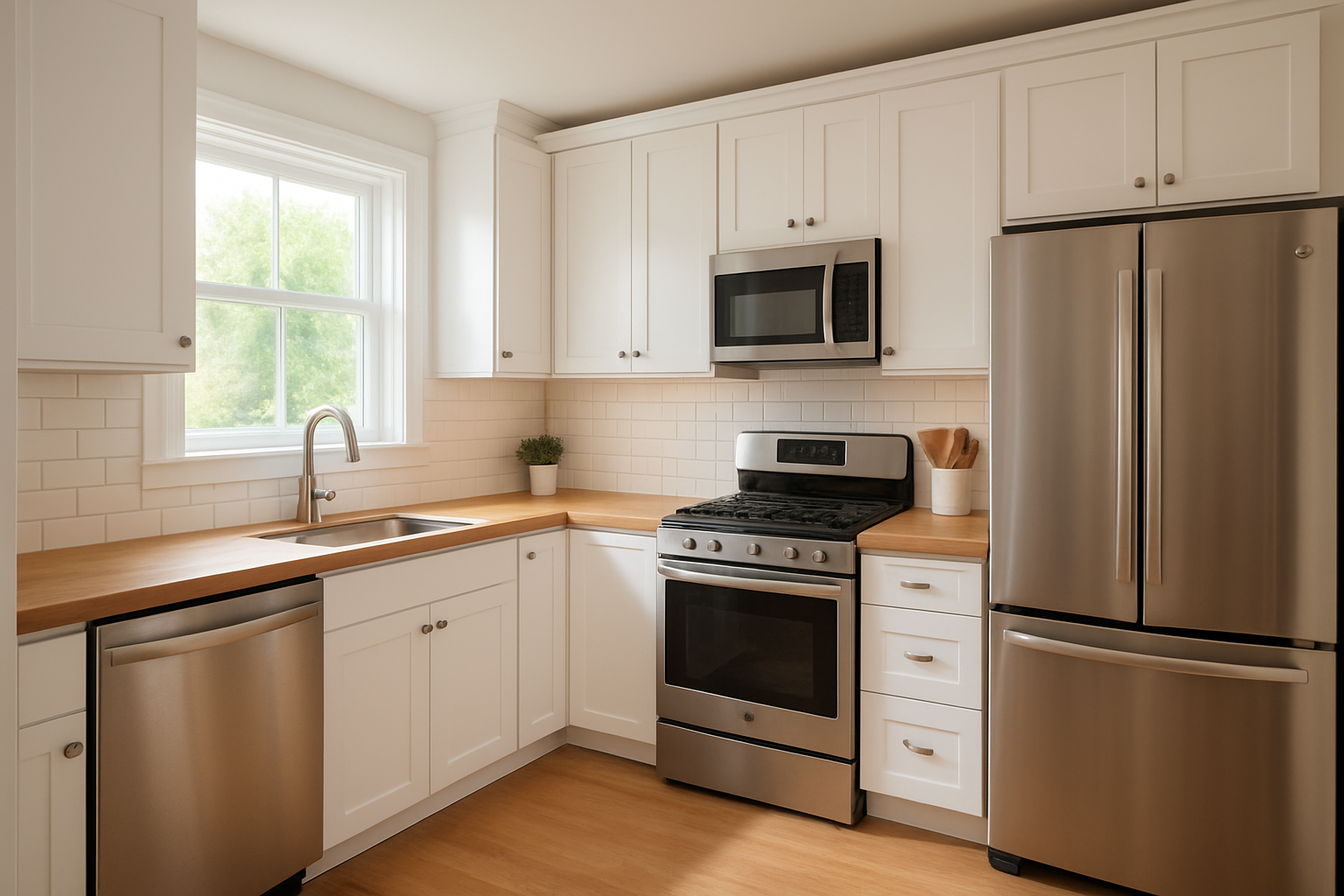
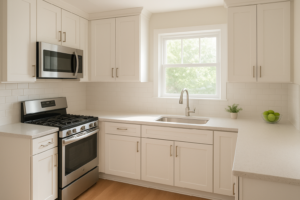
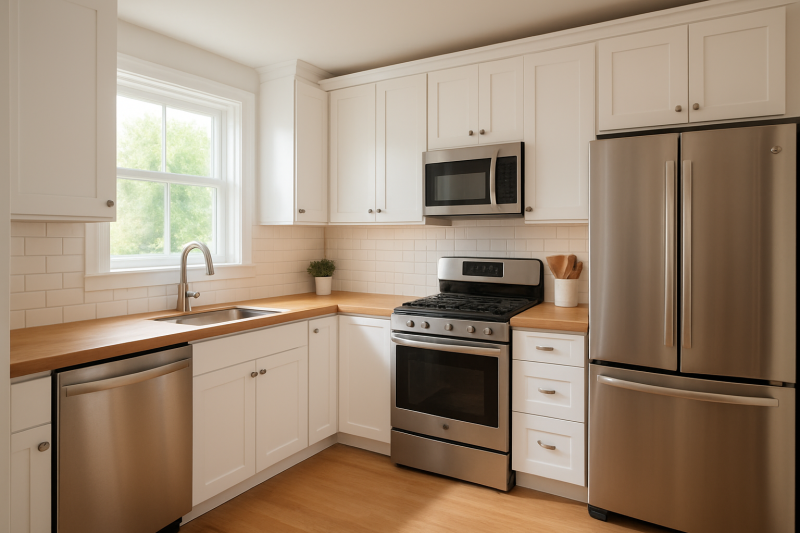
Professional cabinet refacing delivers a stunning kitchen transformation in just a few days — no demolition required. For a deeper walkthrough, see our Where to Find Professional Cabinet Refacing and Installation in Cincinnati.
How Much Does Cabinet Refacing Cost? A Full Breakdown
Cost is the most common question homeowners ask before starting a cabinet refacing project — and for good reason. Understanding the full pricing picture helps you budget accurately and compare quotes with confidence.
Average Cabinet Refacing Cost Ranges
For a typical kitchen, professional cabinet refacing costs fall within the following ranges: For a deeper walkthrough, see our Where to Find Affordable Cabinet Refacing in Cincinnati.
According to the National Kitchen and Bath Association, a full kitchen cabinet replacement in a standard home can easily run $15,000 to $30,000 or more. Cabinet refacing consistently delivers the same visual impact at 40% to 50% of that price.
What Factors Affect Cabinet Refacing Cost?
Several variables influence where your project will land within those ranges:
- Number of cabinet doors and drawer fronts — more units means higher material and labor costs
- Material choice — real wood veneer and solid wood doors cost more than thermofoil or laminate
- Door style complexity — decorative styles like raised panel or detailed inset doors take more fabrication time than flat or shaker styles
- Hardware upgrades — premium pulls, hinges, or soft-close mechanisms add to the total
- Additional features — rollout trays, lazy Susans, pull-out shelves, or organizational inserts are often available as add-ons
- Local labor rates — pricing in Greater Cincinnati reflects regional market conditions For a deeper walkthrough, see our Local Cabinet Refacer Cincinnati: Complete Hiring Guide.
- Condition of existing cabinet boxes — minor repairs to frames before refacing may add modest costs
Cost Per Linear Foot: What to Expect
Many refacing companies quote projects on a per-linear-foot basis. Typical ranges are:
- Economy / laminate materials: $200 – $350 per linear foot
- Mid-range / thermofoil or standard wood veneer: $350 – $500 per linear foot
- Premium / solid wood or specialty finishes: $500 – $750+ per linear foot
These figures include materials and professional installation. Always request a fully itemized written estimate from your contractor — any reputable company will provide one without hesitation.
Is Cabinet Refacing Worth the Cost?
From a pure return-on-investment standpoint, yes — cabinet refacing is widely considered one of the highest-value kitchen improvements available. Remodeling Magazine’s annual Cost vs. Value Report consistently shows kitchen updates among the top-returning home improvements, and an updated kitchen is often a primary factor in buyer decisions. Refacing delivers that buyer-appealing result at a fraction of full replacement cost.
Even if you are not planning to sell, refacing converts an outdated or drab kitchen into a space you genuinely enjoy using — typically for $4,000 to $10,000 rather than $25,000+.
Cabinet Refacing vs. Full Replacement: The Honest Comparison
The refacing-versus-replacement decision comes down to cost, time, disruption, and what you actually want to change. Here is how the two approaches compare across every meaningful dimension:
When refacing makes the most sense: your cabinet boxes are structurally sound, you are happy with your existing kitchen layout, and you want a dramatic visual upgrade without spending full remodel dollars or enduring weeks of construction disruption.
When replacement makes more sense: your cabinet boxes are damaged beyond repair, you want to fundamentally change the kitchen layout, or your existing cabinets are so outdated that their internal dimensions no longer serve your needs.
Cabinet Refacing vs. Cabinet Painting: Which Is Better?
Cabinet painting is often considered a budget alternative to refacing — but the two are not comparable in terms of durability or final quality. Here is what homeowners need to understand before making this choice:
Cabinet painting applies a new coat of paint to the existing surface. It can look refreshed initially, but paint on cabinet doors chips at hinge points, yellows over time (especially whites), and provides no structural improvement. Refacing replaces the door and drawer front entirely and bonds new material directly to the cabinet frame — producing a finish that lasts a decade or more with minimal maintenance.
The bottom line: if you want results that last, refacing is the clearly superior investment over painting. Painting may cost less upfront, but you will likely repaint within 5 years — closing the cost gap while accepting a lower-quality result each time.
Materials and Door Styles Available for Cabinet Refacing
One of the most significant advantages of professional cabinet refacing is the breadth of material and style options available. You are not limited to one look — a skilled specialist can match virtually any design aesthetic from farmhouse to ultra-modern.
Cabinet Refacing Material Options
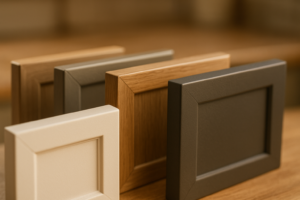
- Real wood veneer — thin slices of genuine hardwood (oak, maple, cherry, walnut) applied to cabinet frames. Offers authentic grain patterns, a warm appearance, and can be stained or finished to match almost any palette. Best for homeowners who want a natural, high-end feel.
- Rigid thermofoil (RTF) — a vinyl film bonded over an MDF core under heat and pressure. Extremely moisture-resistant, easy to clean, and available in dozens of colors and textures. Ideal for busy families or kitchens exposed to high humidity.
- High-pressure laminate (HPL) — a highly durable synthetic surface available in an enormous range of colors, patterns, and wood-look finishes. Resists scratches, impacts, and stains better than most alternatives. A practical choice for high-use kitchens.
- Solid wood doors — premium-grade doors fabricated entirely from solid hardwood. The most durable and most traditional option, and the only choice that can be refinished or restained multiple times over its lifetime.
- Acrylic / high-gloss panels — a sleek, reflective surface popular in contemporary kitchen designs. Highly resistant to fingerprints and simple to wipe clean. Best suited to modern or minimalist kitchen styles.
Popular Door Styles for Cabinet Refacing
- Shaker — the most requested style today; clean recessed panel with simple framing. Works in traditional, transitional, and modern kitchens alike.
- Raised panel — a classic, traditional look with a prominent center panel. Common in colonial and craftsman-style homes.
- Flat panel (slab) — minimalist, frameless appearance. The defining choice for contemporary and European-style kitchens.
- Beadboard — vertical grooved detail that adds cottage, farmhouse, or country character to any kitchen.
- Inset — doors set flush inside the cabinet frame for a furniture-grade, custom look. More complex to install but exceptionally refined in appearance.
- Glass insert — a style option that incorporates glass panels into upper cabinet doors for an open, display-friendly aesthetic.
Hardware: The Finishing Touch
Hardware upgrades are one of the highest-impact, lowest-cost additions to any refacing project. Replacing pulls and knobs alone can shift the entire character of a kitchen. Current hardware options include:
- Matte black — bold, modern, and highly popular in contemporary kitchens
- Brushed nickel — versatile, timeless, and complementary to nearly any cabinet finish
- Oil-rubbed bronze — warm, traditional tone suited to classic or craftsman kitchens
- Polished chrome — bright, clean look well suited to modern or industrial aesthetics
- Satin brass / champagne gold — a trending warm-metal finish that pairs beautifully with white or navy cabinets
- Soft-close hinges — an upgrade that eliminates slamming and extends door longevity
Is Your Kitchen a Good Candidate for Cabinet Refacing?
Most kitchens qualify for refacing, but a professional assessment is always the right first step. The core requirement is that your existing cabinet boxes are structurally sound.
Signs Your Kitchen Is a Strong Refacing Candidate
- Cabinet boxes are level, plumb, and firmly attached to the wall
- No significant water damage, soft spots, warping, or rot in the frame
- You are happy with the existing kitchen layout and do not need to move cabinets
- The interior storage works well — you just want a fresh exterior appearance
- Doors and drawer fronts are worn, outdated, or damaged but the boxes beneath are solid
Signs Replacement May Be Necessary Instead
- Cabinet boxes show extensive water damage, mold, or structural rot
- Frames are severely warped, sagging, or pulling away from the wall
- You want to significantly change the kitchen layout — adding islands, moving walls, or relocating cabinet runs
- The existing cabinet dimensions are too small for your needs and cannot be supplemented
When in doubt, always request a professional in-home assessment. A qualified Cincinnati cabinet specialist can inspect your existing cabinets, identify any concerns, and give you an honest recommendation — at no cost or obligation.
How Cabinet Refacing Works: The Full Process, Step by Step
Understanding exactly what happens during a professional cabinet refacing project helps you prepare, ask better questions, and evaluate quotes more accurately. Here is the complete process from first contact to finished kitchen: For a deeper walkthrough, see our What Cabinet Styles Are Trending for Kitchen Refacing in Cincinnati?.
- Initial consultation and cabinet assessment. A specialist visits your home, inspects your existing cabinet boxes, discusses your design goals and budget, and assesses whether refacing is the right solution. This step is typically free and comes with no obligation.
- Receive a detailed written estimate. Your installer provides a fully itemized written quote covering materials, door count, labor, hardware, and any additional features such as rollout trays or new molding. Never accept a verbal-only estimate — a reputable company will always provide this in writing.
- Select your materials, door style, and hardware. Choose your veneer or laminate type, door profile (shaker, raised panel, slab, etc.), finish color, and hardware finish. This design consultation is where your new kitchen truly takes shape — bring inspiration photos if you have them.
- Materials are ordered and fabricated. Your new cabinet doors and drawer fronts are custom-manufactured to fit your existing cabinet openings precisely. Lead times vary by material — typically 2 to 4 weeks from order to delivery for custom-fabricated doors.
- Prepare your kitchen for installation day. Clear out cabinet contents, remove items from countertops adjacent to the work area, and ensure the kitchen is fully accessible. The refacing crew will handle the rest on installation day.
- Installation: veneer application and door hanging. On installation day, the crew removes existing doors and drawer fronts, cleans all cabinet surfaces, and precisely applies veneer or laminate skin to every exposed face frame. New doors and drawer fronts are then hung, adjusted, and fitted with hardware.
- Final walkthrough and sign-off. Walk through the completed project with your installer. Inspect every door, drawer front, veneer edge, and piece of hardware. Any adjustments — alignment, hardware tightening, edge trimming — are handled before the crew leaves your home.
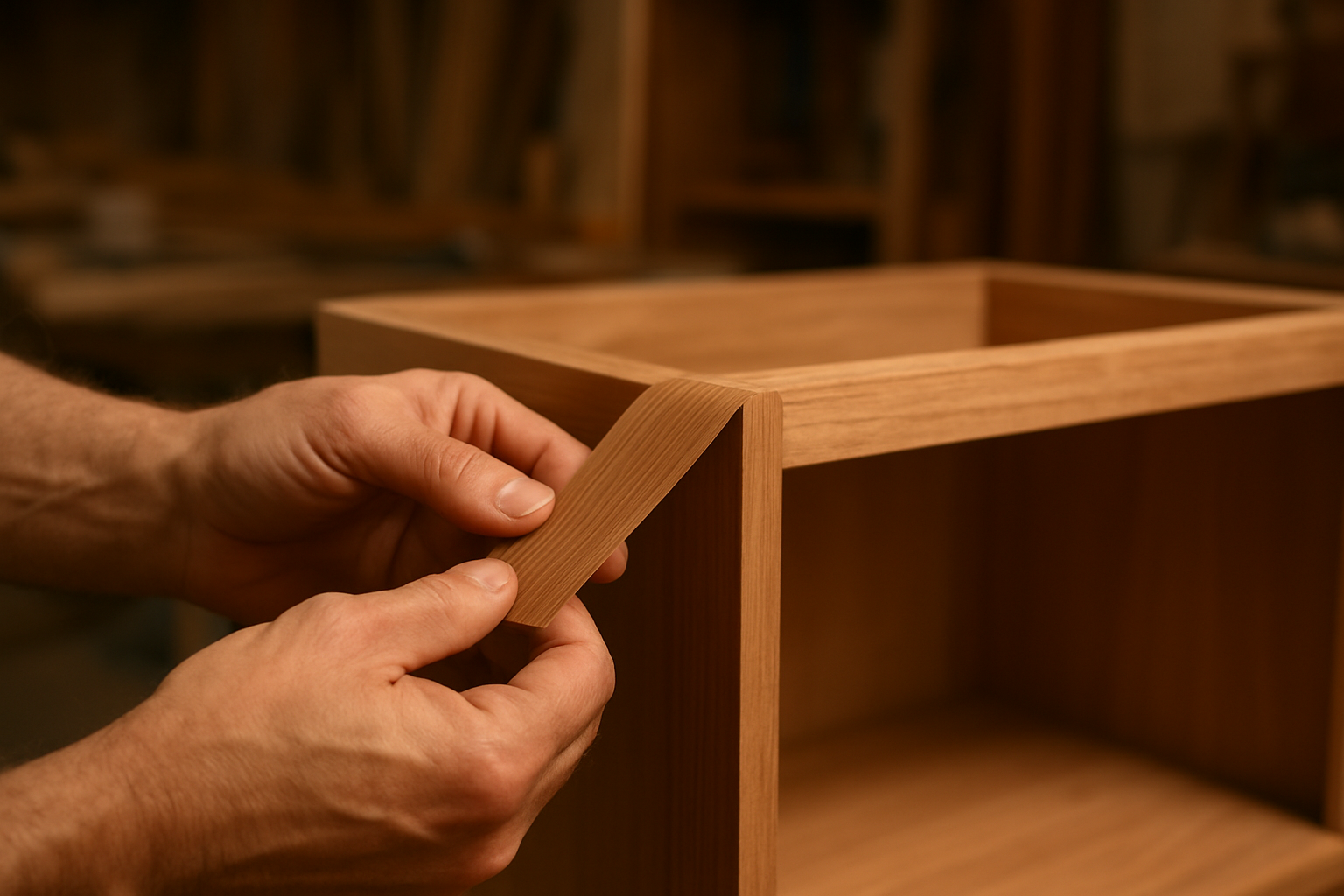
Precise veneer application to the cabinet face frame is the foundation of a durable, flawless refacing result.
How Long Does Cabinet Refacing Take?
For most homeowners, the actual installation phase of cabinet refacing takes 2 to 5 days depending on kitchen size and complexity. A small kitchen with 10 to 15 door openings can often be completed in a single day or two. Larger kitchens with 30+ doors, island cabinets, and custom features may take a full week.
Factor in these additional time considerations:
- Design and selection: 1–2 hours during your initial consultation
- Lead time for materials: typically 2–4 weeks after order confirmation for custom doors
- Installation: 2–5 days on-site
- Full kitchen use restorable: typically same day or next day after installation is complete
Compare this with a full cabinet replacement, which requires complete demolition, new cabinet delivery, installation, and often tile, drywall, and countertop work — commonly consuming 3 to 6 weeks of disrupted kitchen access. For a family that depends on their kitchen daily, the refacing timeline is a decisive advantage.
The Environmental Case for Cabinet Refacing
Beyond cost and convenience, cabinet refacing is a meaningfully more sustainable choice than full replacement. When you reface your cabinets, the existing cabinet box — all of that wood, particleboard, plywood, and framing hardware — stays in place and continues being used. Nothing is demolished. Nothing goes to a landfill.
According to the U.S. Environmental Protection Agency, construction and demolition debris accounts for more than 600 million tons of waste annually in the United States. A typical kitchen gut-out generates hundreds of pounds of that waste. Cabinet refacing eliminates that contribution entirely.
For Cincinnati homeowners who want a beautiful kitchen and a smaller environmental footprint, refacing is one of the clearest win-wins available in home improvement. For a deeper walkthrough, see our Who Does Cabinet Refacing in Cincinnati, Ohio? Your Complete Local Guide.
What Sets Local Cincinnati Cabinet Refacing Specialists Apart
Working with a locally focused cabinet refacing specialist offers advantages that national franchises and general contractors cannot match. A Cincinnati-based team understands local home architecture, the design preferences of Greater Cincinnati families, and the practical demands of kitchens in this region’s climate and housing stock.
Kitchen Transformations Cabinet Refacing is a locally focused specialist serving homeowners throughout the Greater Cincinnati area. Their exclusive focus on cabinet refacing — rather than general contracting — means every project benefits from deeper technical knowledge, better materials sourcing, and a smoother installation experience from start to finish.
Learn more about Cincinnati’s residential neighborhoods and why locally grounded expertise matters when entrusting someone with the most-used room in your home.
How to Choose the Right Cabinet Refacing Company
When evaluating cabinet refacing companies in Cincinnati, assess each one against these criteria: For a deeper walkthrough, see our Top Cabinet Refacing Specialists in Cincinnati: How to Choose the Best.
- Demonstrated local experience — ask specifically how long they have served Cincinnati-area homeowners
- A visible before-and-after portfolio — review completed projects to assess quality, style range, and fit and finish
- Transparent, itemized written estimates — any company that resists putting pricing in writing is a red flag
- Verified customer reviews — check Google, Houzz, and Yelp for consistent patterns of satisfaction
- Clear warranty coverage — a confident company backs its work with explicit warranties on both materials and labor
- No-pressure consultation process — the best specialists educate and advise; they do not push you toward a decision
- Licensing and insurance — always confirm the company carries appropriate liability coverage before work begins
When you are ready to take the next step, contact the Kitchen Transformations team to schedule your free in-home consultation and receive a no-obligation written estimate tailored specifically to your kitchen. You can also browse completed work in the project gallery to see the quality difference firsthand.
Frequently Asked Questions About Cabinet Refacing
What is cabinet refacing and how does it work?
Cabinet refacing replaces your cabinet doors, drawer fronts, and hardware while applying a new veneer or laminate skin to the existing cabinet box frames. The underlying cabinet structure stays in place — only the visible exterior surfaces are replaced. The result is a completely new kitchen appearance without demolition, typically completed in 2 to 5 days.
How much does cabinet refacing cost in Cincinnati?
Cabinet refacing in Cincinnati typically costs between $4,000 and $10,000 for a medium-sized kitchen, and $1,500 to $4,000 for smaller kitchens. Larger kitchens or premium materials can reach $9,000 to $15,000. This is 40% to 50% less than a full cabinet replacement, which can cost $15,000 to $45,000 or more for the same kitchen. For a deeper walkthrough, see our Where Can I Get Cabinet Refacing in Cincinnati?.
What factors most affect the cost of cabinet refacing?
The main cost drivers are the number of cabinet doors and drawer fronts, the material you choose (laminate vs. wood veneer vs. solid wood), door style complexity, hardware selection, and whether you add interior upgrades like rollout trays or soft-close hinges. A larger kitchen with premium solid wood doors will cost significantly more than a smaller kitchen finished in thermofoil laminate.
How long does cabinet refacing take from start to finish?
The on-site installation typically takes 2 to 5 days depending on kitchen size. However, factor in 2 to 4 weeks of lead time after you place your order for custom doors to be fabricated. From your first consultation to project completion, most homeowners are looking at a total timeline of 3 to 6 weeks — far faster than a full remodel, which can take 2 to 6 months when permitting and trades are involved.
Is cabinet refacing worth it compared to full replacement?
Yes — if your existing cabinet boxes are structurally sound and you are happy with your kitchen layout, cabinet refacing delivers the same visual transformation as full replacement at 40% to 50% of the cost, in a fraction of the time, and with minimal disruption. It is widely regarded as one of the highest-return kitchen investments available.
Can I change my cabinet door style during refacing?
Absolutely. Cabinet refacing is the ideal time to change your door style entirely. You can switch from outdated raised-panel doors to a clean shaker style, go from flat slab to beadboard, or add glass inserts to upper cabinets. Since the doors are replaced completely, your style options are nearly unlimited regardless of what you had before.
What materials are used for professional cabinet refacing?
Professional cabinet refacing uses real wood veneer, rigid thermofoil (RTF), high-pressure laminate (HPL), solid wood doors, or acrylic high-gloss panels. Each material has different cost, durability, and aesthetic characteristics. Real wood veneer and solid wood are the most premium options; thermofoil and laminate offer excellent durability at a lower price point and are ideal for high-moisture kitchens.
Is cabinet refacing better than cabinet painting?
Yes, for most homeowners seeking a lasting result. Cabinet painting costs less upfront ($1,200 to $3,500) but typically lasts only 3 to 7 years before chipping, peeling, or yellowing. Refacing replaces doors and drawer fronts entirely and bonds new material to the frames, producing a factory-quality finish that lasts 10 to 20+ years. Refacing also allows you to change door profiles, which painting cannot do.
Does cabinet refacing add value to my home?
Yes. An updated kitchen is consistently cited as one of the top factors in homebuyer decisions, and Remodeling Magazine’s Cost vs. Value Report ranks kitchen updates among the highest-ROI home improvements year after year. Cabinet refacing delivers that buyer-appealing kitchen upgrade at a fraction of the cost of full replacement, making it one of the most efficient ways to add market value to your home.
Will I need to leave my home during cabinet refacing?
No. Unlike a full kitchen remodel, cabinet refacing does not require you to vacate your home. You will have limited kitchen access during the 2 to 5 days of active installation, but professional crews work efficiently and can typically restore basic kitchen function each evening. Most families continue living normally throughout the project.
How do I know if my kitchen qualifies for cabinet refacing?
Your kitchen is a strong candidate if the existing cabinet boxes are level, plumb, structurally sound, and free from significant water damage, rot, or warping. If you are happy with your kitchen layout and simply want a fresh appearance, refacing is almost certainly viable. A professional in-home assessment — usually free of charge — will confirm suitability and identify any issues before work begins.
How do I choose the right cabinet refacing company in Cincinnati?
Look for demonstrated local experience, a portfolio of completed Cincinnati-area projects, verified customer reviews on Google and Houzz, itemized written estimates, clear warranty terms, and licensing with liability insurance. Avoid any company that pressures you toward a quick decision or refuses to provide pricing in writing. A reputable specialist will educate you, show you their work, and let the quality speak for itself.
Conclusion: Cabinet Refacing Is the Smart Kitchen Upgrade
Cabinet refacing delivers everything most homeowners actually want from a kitchen update — a completely fresh appearance, quality materials, lasting durability, and meaningful savings — without the cost, timeline, or disruption of a full remodel. It is a proven solution that has helped thousands of Cincinnati homeowners fall back in love with their kitchens at a fraction of full replacement cost.
Whether you are updating outdated finishes, switching door styles, upgrading hardware, or simply refreshing the most important room in your home, the right local specialist makes all the difference. The team at Kitchen Transformations Cabinet Refacing brings the craftsmanship, local knowledge, and client-first approach that Cincinnati homeowners deserve — delivering kitchens that are beautiful, functional, and built to last.