Durable kitchen finishes make the difference between a kitchen that still looks brand-new after a decade of family dinners and one that shows scratches, stains, and peeling within a year or two. Because kitchens absorb more daily wear than almost any other room in the house, the finishes you choose for cabinets, countertops, floors, and backsplashes must stand up to grease, steam, spills, and constant hands-on use. This guide covers every major surface in the kitchen — not just cabinets — so you can build a space that looks stunning today and still performs beautifully fifteen or twenty years from now.
Unlike guides that only compare paint chips or door styles, this resource digs into the actual engineering behind each material. As a result, you will finish reading with a clear, confident plan for choosing durable kitchen finishes that match your household’s real habits — not just a showroom fantasy.
What Makes a Kitchen Finish Truly Durable?
Durable kitchen finishes are surface treatments applied to cabinets, countertops, floors, and backsplashes that are specifically engineered to withstand the daily demands of a working kitchen. Specifically, five factors determine whether a finish will last: moisture resistance, heat tolerance, impact and scratch resistance, UV stability, and ease of cleaning.
Moisture resistance matters because sinks, dishwashers, and steam from cooking constantly expose surfaces to water. Heat tolerance matters near ranges and ovens, where repeated temperature swings can warp or peel weaker materials. Meanwhile, impact resistance protects against dropped pans and the friction of daily door and drawer use, and UV stability prevents fading near sunny windows.
According to the National Kitchen and Bath Association (NKBA), cabinet and countertop surfaces make up the largest visual footprint in most kitchens, which is why their longevity is critical to your overall investment. A well-chosen finish can last 15 to 20 years, while a poor match may show visible wear within just a few seasons.
In short, the finish you choose directly shapes both the appearance and the lifespan of your entire kitchen — which is exactly why the rest of this guide breaks down every major surface material, one at a time.
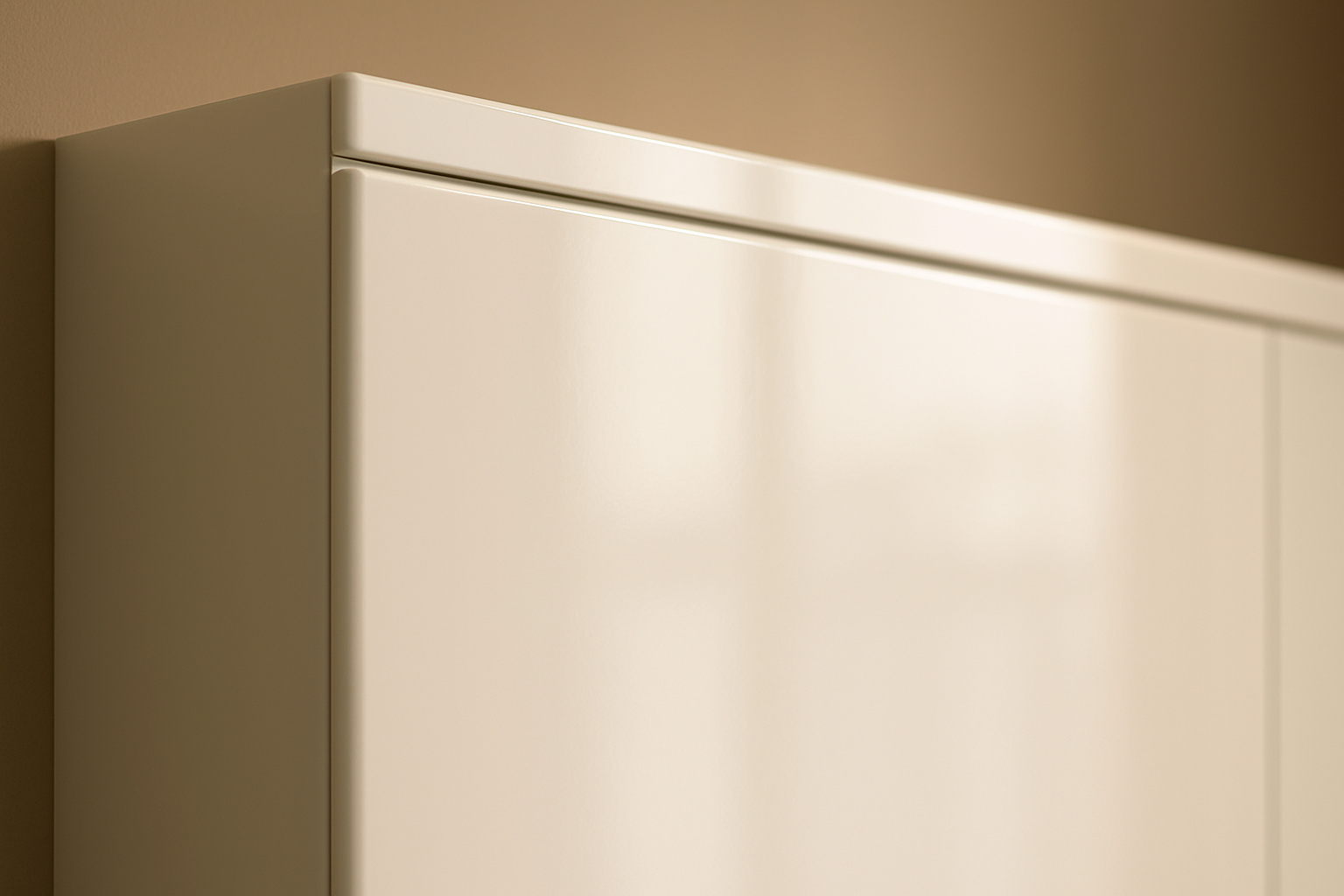
Choosing durable kitchen finishes for your cabinets protects your investment for years to come. This guide is produced by Kitchen Transformations; add an author bio and a “Last updated” date near the top for credibility.
Durable Kitchen Finishes for Cabinets: A Complete Comparison
Cabinets take the most daily contact of any kitchen surface, so this category deserves the closest look. Below, we compare five cabinet finish options side by side, including two that many competing guides skip entirely.
Thermofoil: Easy Care, Modern Look
Thermofoil is a vinyl film heat-pressed onto an MDF (medium-density fiberboard, a compressed wood-fiber panel) core. It creates a seamless, non-porous surface that resists moisture and cleans with a damp cloth. For busy households, thermofoil remains one of the most practical, budget-friendly choices available.
However, thermofoil does have one notable weakness: prolonged exposure to high heat, such as from a nearby oven vent, can cause the film to peel over time. Fortunately, proper installation and mindful placement away from heat sources largely eliminate this risk.
Wood Veneer: Natural Beauty with Solid Performance
Wood veneer consists of thin slices of real wood bonded to a stable substrate. When properly sealed, it performs well in kitchen environments and offers the warmth of natural wood at a fraction of solid-wood pricing.
Furthermore, wood veneer can be refinished if it shows wear, giving it a longer effective lifespan than several synthetic options. That said, it does require more attentive maintenance in areas prone to moisture, such as near the sink.
High-Pressure Laminate (HPL): The Workhorse Finish
High-pressure laminate is built from layers of kraft paper saturated with resin and fused together under extreme heat and pressure. As a result, it is widely regarded as one of the most resilient surface materials for kitchens, resisting scratches, stains, and impact better than most alternatives.
Consequently, HPL is a top choice for families with young children or heavy daily cooking activity. It comes in a vast range of colors, patterns, and textures — including convincing wood-grain options — and is notably cost-effective compared with solid wood or stone.
Lacquer and Painted Finishes: Beautiful but Demanding
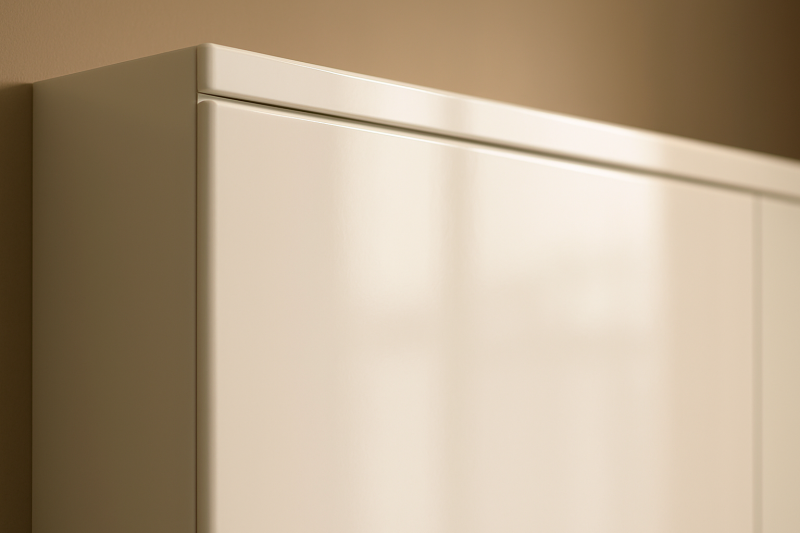
Lacquer finishes deliver a sleek, contemporary look with excellent depth of color, and they are popular in modern and transitional kitchens. In contrast to laminate, however, lacquer is more prone to chipping and scratching if not handled carefully.
Painted finishes offer a similar aesthetic at a lower price point, but they demand the most maintenance of any option on this list. Touch-ups are common, especially around high-contact areas like door edges and drawer pulls. If you choose a painted finish, look for low-VOC (volatile organic compound, an ingredient linked to indoor air quality concerns) paint; the U.S. Environmental Protection Agency outlines why this matters for indoor air quality.
Solid Wood and Rigid Thermofoil (RTF): Two Options Worth Knowing
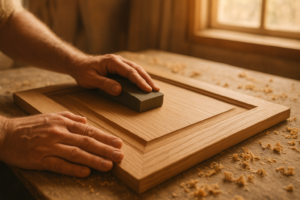
Solid wood cabinets remain a classic choice because dents and scratches can typically be sanded out and refinished, extending their working life indefinitely with proper care. However, solid wood is more sensitive to humidity swings than engineered alternatives. Learn more about refinishing wooden cabinets.
Rigid thermofoil, often called RTF, uses a thicker, more heat-tolerant vinyl layer than standard thermofoil and is molded over an MDF profile. Therefore, it holds up better around heat sources while still offering the same seamless, easy-clean surface — making it a strong middle-ground option many homeowners overlook. Learn more about durable finishes for refaced cabinets.
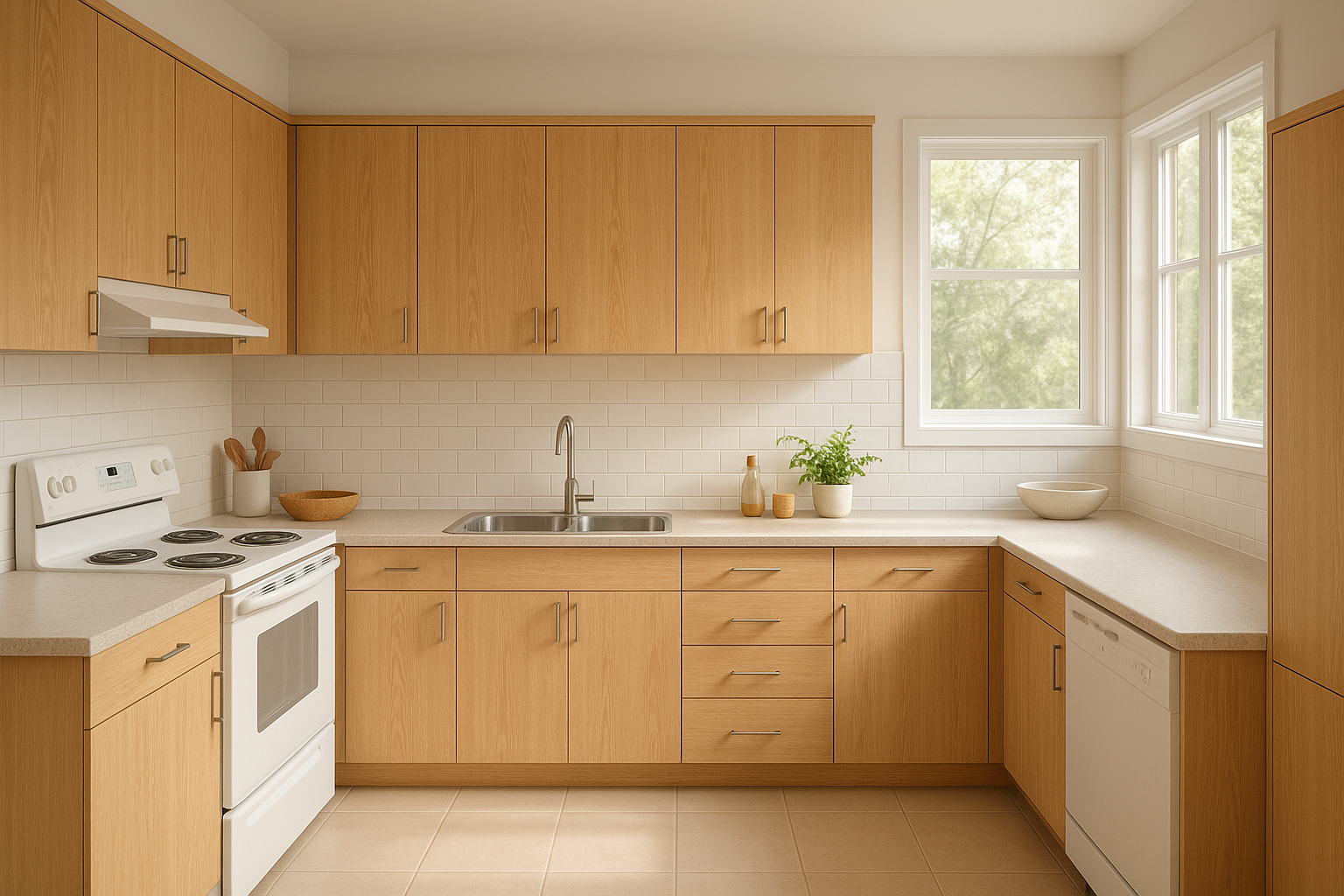
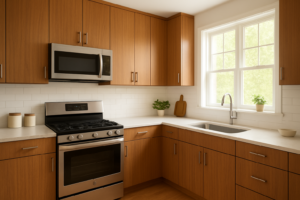
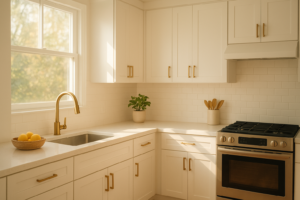
Wood veneer and laminate surfaces offer a compelling mix of style and lasting resilience.
Durable Countertop Materials That Complement Your Cabinet Finish
Cabinets are only half the story. Consequently, pairing your cabinet finish with a countertop that can handle the same daily abuse is essential for a truly durable kitchen finishes strategy.
Quartz Countertops
Engineered quartz combines crushed natural stone with resin binders, producing a non-porous surface that resists stains, scratches, and bacteria growth without needing regular sealing. As a result, it is one of the top-rated surfaces for high-traffic family kitchens.
Granite Countertops
Granite offers exceptional heat resistance and natural variation in color and pattern. It does require periodic resealing, roughly once a year, to maintain its stain resistance, but its hardness makes it nearly impossible to scratch under normal use.
Butcher Block and Wood Countertops
Butcher block brings warmth and a food-safe cutting surface when properly oiled. In contrast to stone, it can scorch or scratch, but minor damage sands out easily, similar to solid wood cabinetry.
Stainless Steel Countertops
Stainless steel resists heat, moisture, and bacteria exceptionally well, which is why it dominates commercial kitchens. Scratches will appear over time, though many homeowners embrace the brushed patina as part of the material’s industrial character.
Flooring Finishes Built to Survive Daily Family Traffic
Floors absorb foot traffic, dropped dishes, and pet claws every single day. Therefore, the finish beneath your feet matters just as much as the one on your cabinets.
Luxury Vinyl Plank (LVP)
LVP features a tough wear layer over a rigid core, making it fully waterproof and highly resistant to dents. Consequently, it has become the go-to flooring finish for busy family kitchens.
Porcelain Tile
Porcelain tile is fired at high temperatures, producing a dense, low-porosity surface that resists water, stains, and scratching for decades with minimal upkeep.
Sealed and Engineered Hardwood
Engineered hardwood pairs a real wood veneer top layer with a stable plywood core, reducing the warping risk associated with solid hardwood in humid kitchen environments. A quality polyurethane sealant further boosts scratch and moisture resistance.
Backsplash and Wall Finishes That Resist Grease and Stains
The backsplash absorbs grease splatter and steam more directly than any other wall surface. As a result, material choice here has an outsized impact on how often you’ll need to repaint or reclean.
- Ceramic and porcelain tile: glazed surfaces wipe clean instantly and resist staining indefinitely.
- Glass tile: non-porous and moisture-proof, though it can show water spots if not dried regularly.
- Stainless steel backsplash panels: extremely heat- and grease-resistant, popular directly behind ranges.
- Washable, scrubbable paint: a budget option for walls outside the direct splash zone, provided it is rated for high-moisture rooms.
Hardware and Fixture Finishes That Hold Up to Daily Use
Cabinet pulls, hinges, and faucets get touched dozens of times a day, so their finish matters more than most homeowners realize. PVD (physical vapor deposition, a process that bonds an ultra-thin metal coating to hardware) produces finishes that resist tarnishing, fingerprints, and corrosion far longer than standard plating.
Brushed nickel and matte black are the two most popular high-durability finishes for daily-use hardware, largely because both hide fingerprints and light scratching better than polished chrome.
How to Choose the Right Long-Lasting Kitchen Surfaces
Selecting the right finish involves more than picking a color you like. Specifically, you need to match each material’s strengths to your kitchen’s real-world conditions. Follow these steps to make a confident decision:
- Assess your kitchen’s daily use. Consider how often you cook, whether you have kids or pets, and how much foot traffic your kitchen handles each day, since high-use kitchens benefit most from laminate or thermofoil.
- Compare available finish materials side by side. Review each option’s durability rating, maintenance requirements, and cost, and always request physical samples to evaluate appearance under your kitchen’s natural lighting.
- Set a realistic budget for the full project. Cabinet refacing with premium finishes typically costs 40 to 50 percent less than full cabinet replacement, according to industry estimates, making it an efficient path to a fresh kitchen. See our maintain refaced cabinets guide for upkeep tips.
- Request samples and consult a professional installer. Always view samples in your actual space before committing, since a local refacing specialist can confirm which materials suit your cabinets, countertops, and long-term goals.
- Schedule your cabinet refacing or upgrade project. Professional installation ensures the finish bonds correctly and performs as intended, because skilled application is just as important as the material itself.
Why Cabinet Refacing Delivers Resilient Kitchen Finishes Without a Full Remodel
Cabinet refacing is the process of applying new surface materials — veneers, thermofoil, RTF, or laminate — to your existing cabinet boxes while replacing door fronts and drawer faces. It is refacing tips and costs that often make refacing the practical alternative to a full renovation, delivering durable kitchen finishes at lower cost.
Because the underlying cabinet structure remains intact, refacing projects are typically completed in just a few days. Furthermore, homeowners retain the layout and storage they already love while gaining a completely refreshed appearance.
At Kitchen Transformations Cabinet Refacing in Cincinnati, Ohio, the team specializes in exactly this kind of targeted kitchen improvement. They work closely with homeowners throughout the greater Cincinnati area to select finish materials that align with each family’s lifestyle, aesthetic goals, and budget. You can explore completed projects in their project gallery to see the range of finishes and styles available. This article was written by the Kitchen Transformations team and includes practical guidance; last updated 2026-07-28. Last updated: 2026-08-12. Author: Kitchen Transformations team.
Maintenance Tips That Extend the Life of Every Kitchen Finish
Even the toughest finish needs proper care to reach its full lifespan. Fortunately, maintaining most modern cabinet, counter, and floor finishes is straightforward; see our maintain newly refaced cabinets guide for specific care steps.
- Wipe surfaces regularly with a soft, damp cloth to prevent grease buildup.
- Use mild, pH-neutral cleaners rather than abrasive or bleach-based products.
- Dry surfaces promptly after cleaning to prevent moisture penetration at seams.
- Avoid placing hot pots or appliances directly against cabinet or countertop surfaces.
- Reseal natural stone countertops annually to maintain their stain resistance.
- Check hinges and hardware annually; loose hardware accelerates surface wear at contact points.
In addition, addressing minor chips or scratches promptly prevents them from spreading. Most manufacturers provide touch-up kits for their finishes, making small repairs easy to handle at home.
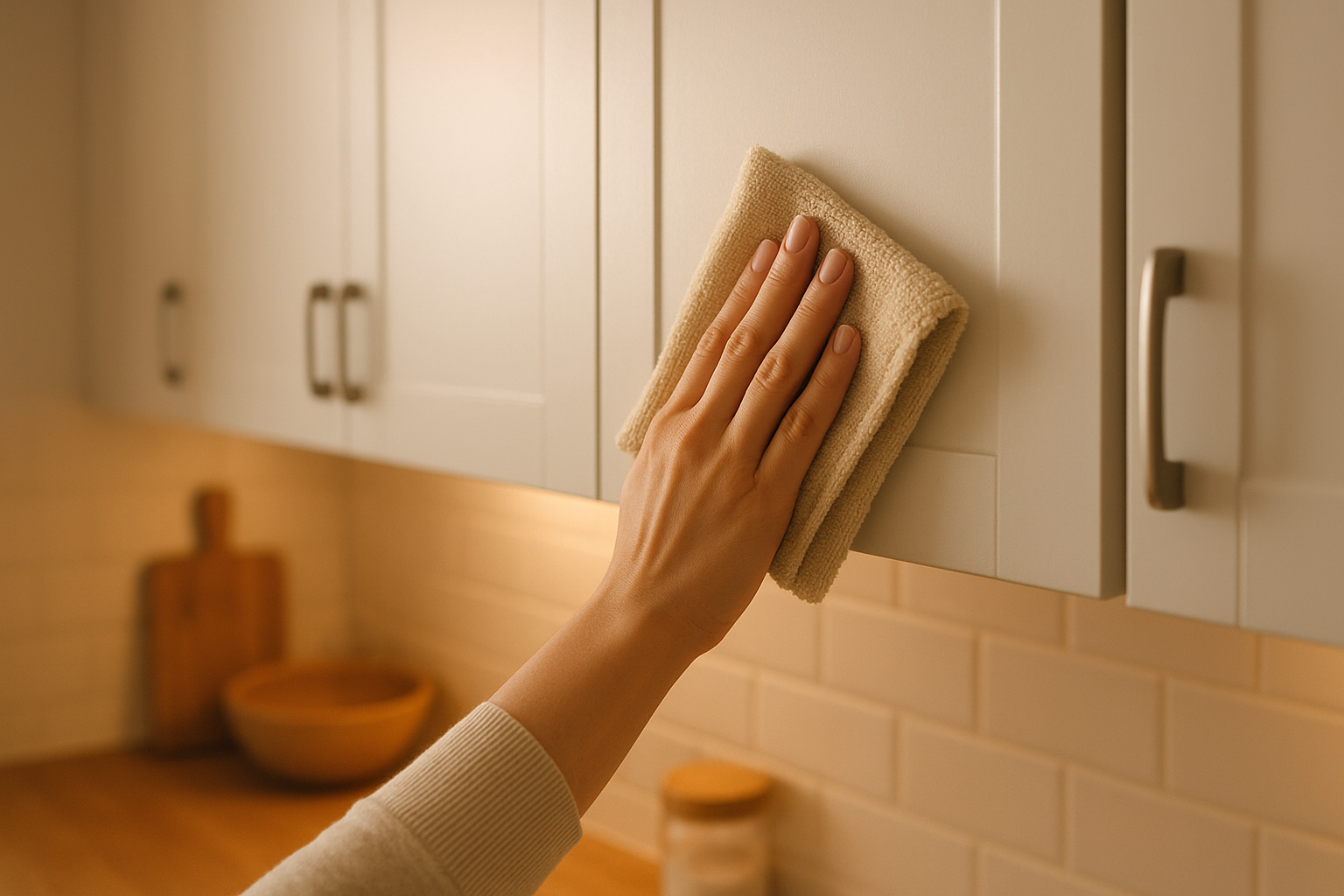
Regular, gentle cleaning is the simplest way to preserve long-lasting kitchen surfaces.
Common Mistakes That Shorten the Life of Kitchen Finishes
Many homeowners unknowingly shorten the life of their new finishes through a few avoidable habits. Below are the most common mistakes we see:
- Choosing a finish purely for looks without checking its heat or moisture rating.
- Installing thermofoil directly beside an oven or dishwasher vent without proper clearance.
- Using harsh, abrasive scrubbers on laminate or lacquer surfaces.
- Skipping annual resealing on natural stone or wood surfaces.
- Hiring an unqualified installer, which can void manufacturer warranties.
Cost Comparison: Cabinet Refacing vs. Full Replacement
Cost is often the deciding factor when upgrading to durable kitchen finishes. Refacing vs repainting details often show why homeowners choose refacing for durability and value compared with full replacement.
This savings allows many homeowners to invest in premium finish materials, such as high-pressure laminate or rigid thermofoil, within the same overall budget they had planned for a basic replacement.
Frequently Asked Questions About Durable Kitchen Finishes
What are the most durable kitchen finishes for cabinets?
The most durable kitchen finishes for cabinets include high-pressure laminate, wood veneer, thermofoil, and rigid thermofoil. Each offers strong resistance to daily wear when properly maintained. Your best choice depends on your kitchen’s specific use patterns and aesthetic preferences.
How long do durable kitchen finishes typically last?
Quality cabinet finishes can last 10 to 20 years or more with proper care. The lifespan depends on the material chosen, how the kitchen is used, and routine maintenance habits. Professional installation also plays a significant role in long-term performance.
Is cabinet refacing a good way to get long-lasting kitchen surfaces?
Yes, cabinet refacing is an excellent way to achieve durable kitchen finishes at a lower cost than full replacement. It applies fresh, high-quality surface materials to your existing cabinet boxes. The result looks brand new and can last for many years with normal care.
What finish is easiest to clean in a kitchen?
Thermofoil and high-gloss lacquer finishes are among the easiest to clean because their smooth, non-porous surfaces resist grease and moisture. A damp cloth is usually all that is needed. This makes them particularly practical for households that cook frequently.
Does wood veneer hold up well in a kitchen environment?
Wood veneer can hold up well when sealed properly and kept away from excessive moisture. It provides a natural, warm look while offering reasonable durability for most kitchens. Additionally, it can be refinished if surface wear occurs over time.
How does thermofoil compare to painted cabinet finishes?
Thermofoil is generally more resistant to chipping and moisture than standard painted finishes. However, it can peel near high-heat sources like ovens if not properly installed. Painted finishes offer more color flexibility but require more frequent touch-ups.
What kitchen finish is best for a busy family household?
High-pressure laminate and thermofoil are both excellent choices for busy households because they resist scratches, stains, and moisture. They are also straightforward to clean after daily cooking. Consequently, they are consistently recommended for families with children or heavy kitchen use.
How much does it cost to update kitchen cabinet finishes?
Costs vary widely depending on the material and scope of the project. Cabinet refacing typically costs 40 to 50 percent less than full cabinet replacement, making it a budget-friendly option. This saving allows homeowners to invest in higher-quality finish materials within the same overall budget.
Can I change the finish on my existing cabinets without replacing them?
Yes, cabinet refacing allows you to update the finish on your existing cabinets without a full replacement. New veneers and door fronts are applied over the existing cabinet structure. This process is faster, less disruptive, and significantly more affordable than tearing out and replacing everything.
What common mistakes should I avoid when choosing kitchen finishes?
Avoid choosing finishes purely for aesthetics without considering durability and maintenance requirements. Also, do not overlook the impact of humidity and heat on certain materials like thermofoil near stoves. Consulting a professional before deciding helps you avoid costly regrets.
Are matte or gloss finishes more durable in a kitchen?
Gloss finishes tend to be easier to wipe clean, but matte finishes can hide minor scratches and smudges more effectively. Both can be durable when made from quality materials. Your choice should therefore reflect both practical needs and your preferred visual style.
How do I maintain durable kitchen finishes over time?
Regular gentle cleaning with a soft cloth and mild cleaner is the best way to maintain kitchen finishes. Avoid abrasive scrubbers and harsh chemicals that can degrade surface materials over time. Promptly addressing minor damage also prevents small issues from becoming larger, more costly problems.
Which countertop material pairs best with durable kitchen finishes for high-traffic kitchens?
Quartz pairs especially well because it is non-porous, stain-resistant, and needs no sealing. It complements laminate, thermofoil, and wood veneer cabinets without adding extra maintenance to your routine.
What flooring holds up best alongside durable cabinet finishes in a busy kitchen?
Luxury vinyl plank and porcelain tile both hold up exceptionally well, since neither absorbs moisture or shows scratches easily. Either option pairs seamlessly with any of the cabinet finishes covered above.
Ready to Upgrade Your Kitchen Surfaces?
If you are ready to explore your options, the team at Kitchen Transformations Cabinet Refacing is here to help. Serving homeowners throughout Cincinnati and the surrounding area, they provide personalized guidance on choosing finish materials that suit your home, your family, and your budget. Reach out today to schedule a consultation and take the first step toward a kitchen that looks exceptional and holds up for years.
You can also visit the Kitchen Transformations Cabinet Refacing website to learn more about their services and view completed projects in the Cincinnati area.
Conclusion
Choosing durable kitchen finishes is one of the most impactful decisions you can make when updating your kitchen. The right materials — whether thermofoil, wood veneer, high-pressure laminate, quartz, or porcelain tile — can serve your household beautifully for a decade or more. In contrast, the wrong choice leads to early wear and avoidable expense. By understanding each finish’s strengths, maintaining surfaces properly, and working with a skilled professional, you can achieve a kitchen that looks stunning across cabinets, countertops, floors, and backsplashes alike, while standing up to real daily family life. For Cincinnati homeowners, cabinet refacing offers the ideal combination of quality, efficiency, and lasting value.