Refacing vs replacing cabinets is a decision nearly every Cincinnati homeowner faces once a kitchen starts to feel dated. Both options can transform the look of your kitchen, but they involve very different costs, timelines, and levels of disruption. Understanding how each approach works, however, makes it much easier to choose the right path for your home, budget, and lifestyle.
This guide breaks down the real differences between cabinet refacing and full cabinet replacement, including price ranges, project timelines, and long-term durability. In addition, it explains how a company like KT Cabinet Refacing helps homeowners throughout the greater Cincinnati area achieve a refreshed kitchen without the mess of a total remodel. By the end, you will have a clear framework for deciding which option makes the most sense for your specific situation.
What Is the Difference Between Refacing vs Replacing Cabinets?
Cabinet refacing means replacing only the doors, drawer fronts, and exterior surfaces while keeping the existing cabinet boxes in place. Cabinet replacement, on the other hand, involves removing the entire cabinet structure and installing brand-new boxes, doors, and hardware throughout the kitchen. Refacing is typically faster and less expensive, while replacement offers more flexibility to change the kitchen’s layout.
Cabinets themselves are a category of built-in cabinetry used for storage in kitchens and bathrooms, and their boxes are usually the most durable part of the structure. Because refacing works with your kitchen’s current footprint, plumbing and electrical lines usually stay untouched. Consequently, homeowners avoid the permitting delays and structural work that often come with a full replacement.
Replacement, in contrast, is the better choice when cabinet boxes are damaged, warped, or no longer structurally sound. For a deeper look at how refacing compares to replacement across every stage of a project, this detailed comparison guide walks through each factor step by step.
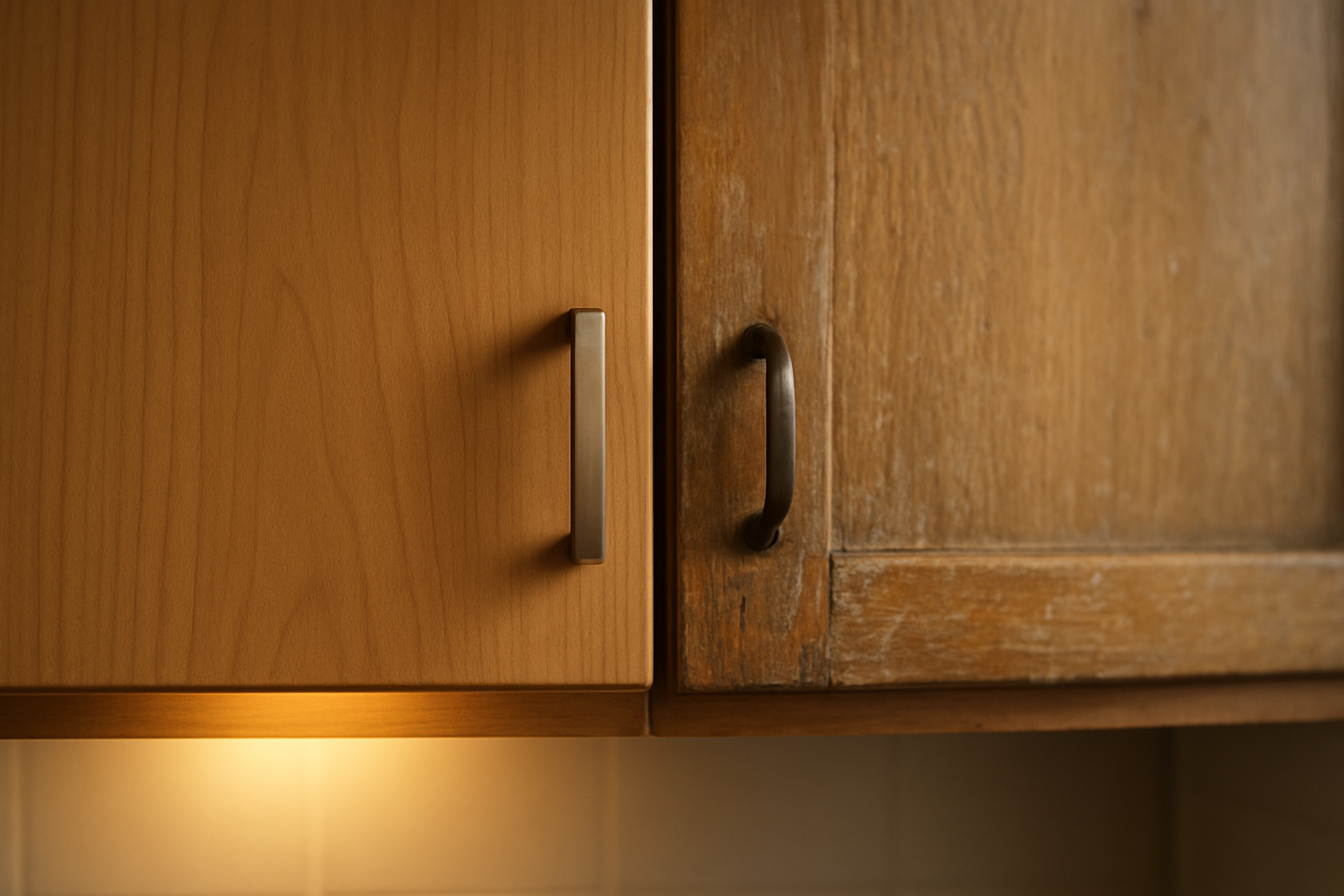
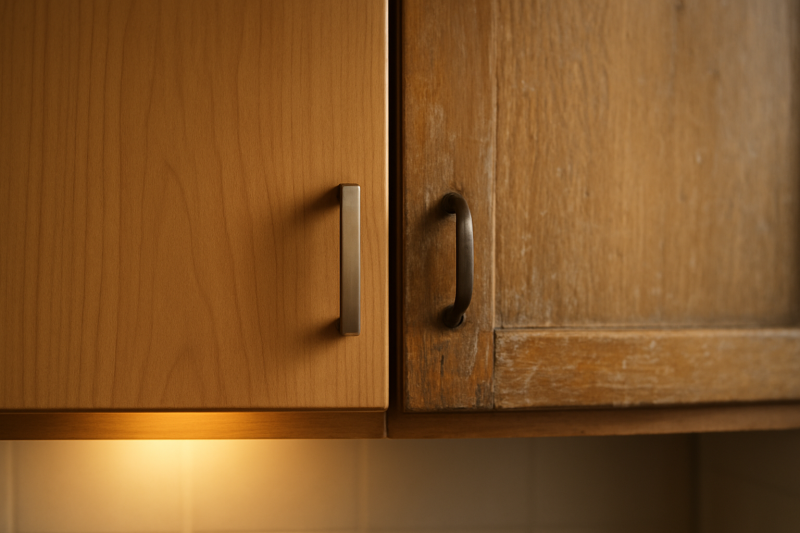
A close look at how refacing vs replacing cabinets can dramatically change a door’s appearance.
Cabinet Refacing vs Cabinet Replacement: Comparing the Costs
On average, cabinet refacing costs 30 to 50 percent less than full cabinet replacement, according to industry cost data from the Remodeling Magazine Cost vs. Value Report. A typical refacing project in a mid-size kitchen ranges from $4,000 to $10,000, whereas full replacement often runs between $15,000 and $30,000 or more depending on materials and cabinet count.
This price gap exists mainly because refacing reuses the cabinet boxes, which are usually the most labor-intensive and expensive part of a kitchen to build or install. As a result, homeowners save significantly on both materials and labor. Furthermore, refacing allows for high-end finishes, like solid wood doors or new hardware, at a fraction of what a full renovation would cost for the same look.
For homeowners weighing whether refacing is truly worth the investment, this breakdown of whether cabinet refacing is a good investment explains the return on value in more detail.
How Long Does Refacing Take Compared to Replacing?
Most cabinet refacing projects take one to two weeks from start to finish, while full cabinet replacement can take four to eight weeks or longer. This shorter timeline is one of the biggest reasons homeowners in the Cincinnati area choose refacing when they need a fast, low-disruption update. Learn more in our kitchen refacing guide.
Full replacement often requires demolition, plumbing adjustments, and inspection scheduling, all of which add time to the project. In contrast, refacing crews typically work around existing plumbing and electrical, allowing the kitchen to stay partially usable throughout the project. For homeowners who cannot be without a kitchen for long, this guide on whether cabinet refacing is less disruptive than remodeling explains exactly how much daily disruption to expect.
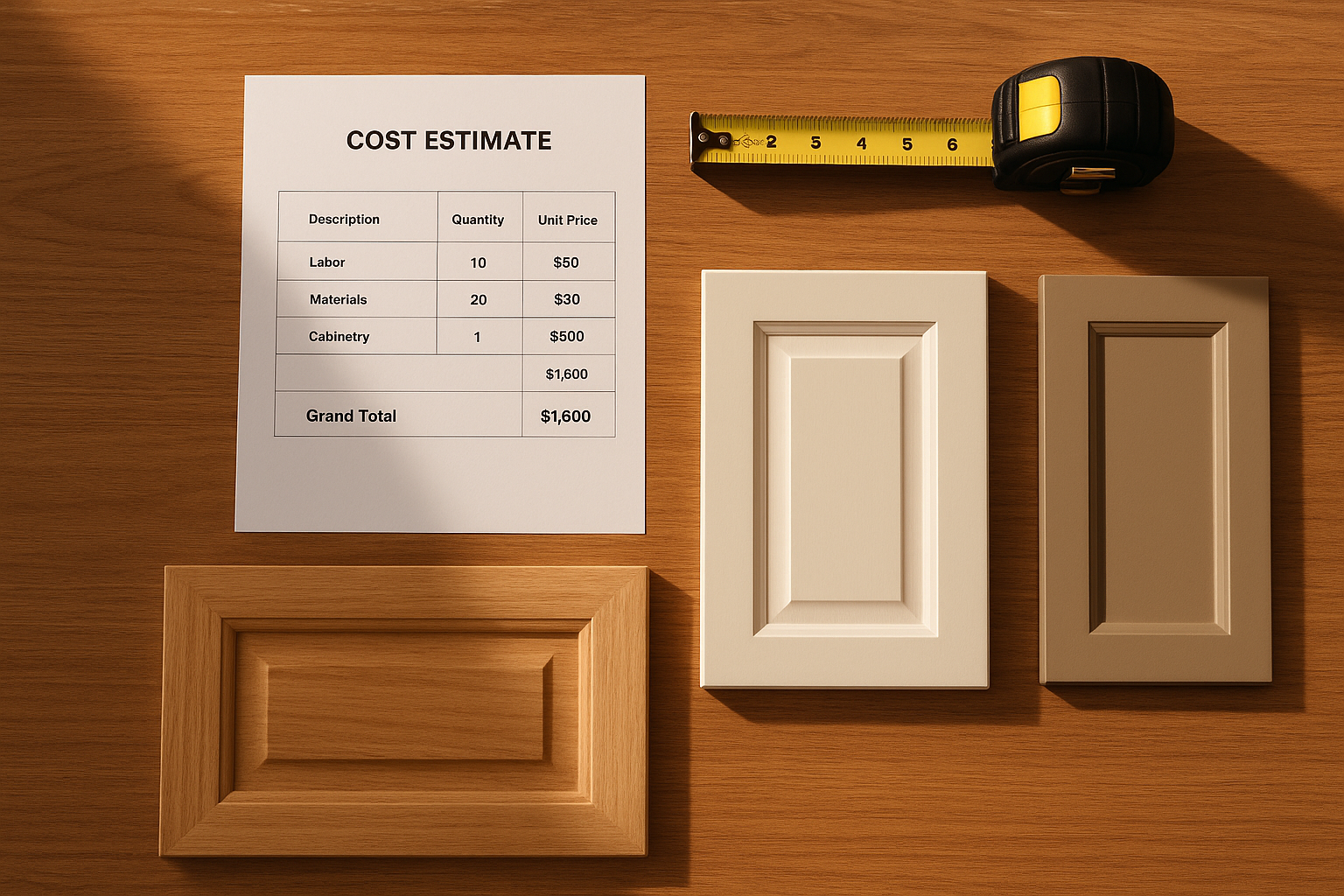
Comparing written estimates side by side helps homeowners weigh refacing vs replacing cabinets before committing to a project.
Refacing or Replacing: Which Option Fits Your Kitchen?
Refacing works best when cabinet boxes are structurally sound but the doors, finishes, or hardware look outdated. Replacing is the better choice when boxes are water-damaged, warped, or when you want to change the kitchen’s entire layout.
Several signs point toward refacing as the smarter option:
- The cabinet boxes are level, solid, and free of water damage.
- You like your kitchen’s current layout and do not need to move plumbing or appliances.
- You want a lower-cost way to update outdated finishes with cabinet makeover tips.
Conversely, replacement usually makes more sense when boxes show serious rot, when you are expanding storage space, or when a layout change is part of the plan. Homeowners looking for creative ways to refresh a kitchen without gutting it can find more ideas in this guide on updating kitchen cabinets without a full replacement.
Durability and Long-Term Value
Both refacing and replacement can last 15 to 20 years or longer when installed correctly, provided homeowners choose quality materials and finishes. However, replacement offers a bit more flexibility for structural upgrades, while refacing delivers comparable durability for the exterior surfaces homeowners see and touch every day.
High-quality rigid thermofoil or real wood veneers used in refacing hold up well against daily wear, moisture, and temperature changes. Similarly, new hinges and drawer glides installed during refacing often outperform decades-old hardware. As a result, many homeowners find that refacing meets their durability needs without the cost of full replacement. For a broader look at freshening up a kitchen without a full remodel, see this guide on modernizing a kitchen without a remodel.
How to Decide Between Refacing and Replacing Your Cabinets
Above all, a clear process helps homeowners avoid an expensive mistake. Follow these five steps to reach a confident decision:
- Inspect your cabinet boxes for water damage, warping, or structural issues before deciding on a direction, since sound boxes are required for refacing to work well.
- Set a realistic budget range and compare it against average refacing and replacement costs in your area to see which option fits comfortably.
- Decide whether you need a layout change, such as moving appliances or adding storage, because this typically requires full replacement rather than refacing.
- Ask a local cabinet specialist, such as KT Cabinet Refacing, to evaluate your kitchen in person and recommend the best approach for your specific goals.
- Review timelines and disruption levels for each option, keeping in mind that refacing generally finishes in one to two weeks with less mess.
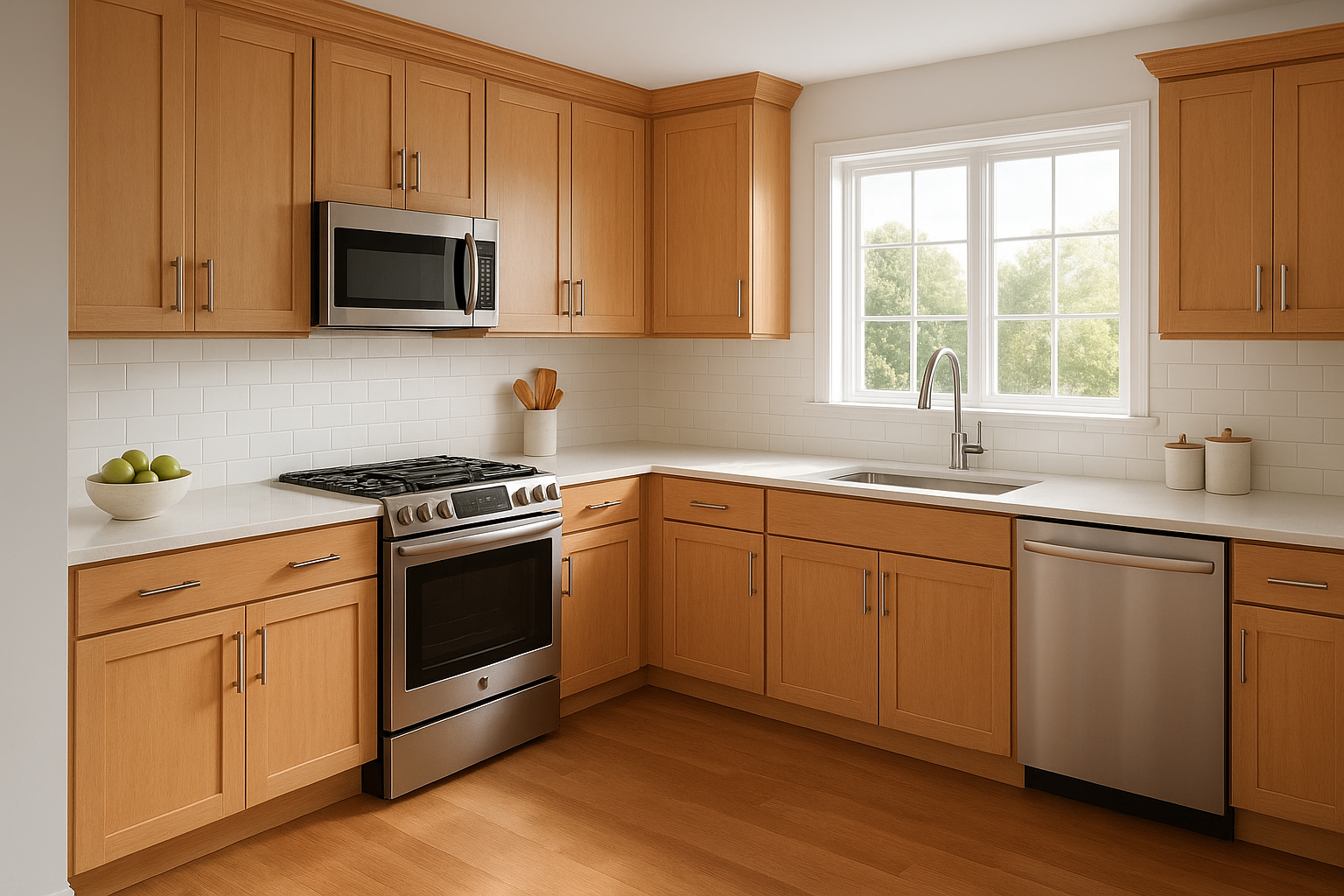
A finished project shows how much a kitchen can transform once the refacing or replacing decision is made.
Frequently Asked Questions About Refacing vs Replacing Cabinets
What is the main difference between refacing vs replacing cabinets?
Refacing keeps the existing cabinet boxes and updates only the doors, drawer fronts, and finishes, while replacing removes everything and installs new boxes throughout. Refacing vs replacing cabinets ultimately comes down to whether your current cabinet structure is still solid.
How much does cabinet refacing cost compared to replacement?
Refacing typically costs 30 to 50 percent less than full replacement, often ranging from $4,000 to $10,000 for a mid-size kitchen. Replacement projects commonly start around $15,000 and can climb well beyond that depending on materials.
How long does a cabinet refacing project take?
Most refacing projects are completed in one to two weeks. Full replacement, in contrast, usually takes four to eight weeks or more.
Is cabinet refacing as durable as replacement?
Yes, when quality materials are used, refaced cabinets can last 15 to 20 years or longer, similar to newly replaced cabinets. The main difference is that replacement also renews the internal cabinet boxes.
Can you change your kitchen layout with cabinet refacing?
No, refacing keeps the current cabinet boxes in place, so it is not the right option if you want to move appliances or reconfigure storage. Layout changes generally require full cabinet replacement.
Does cabinet refacing increase home value?
Refacing can improve a home’s appeal and resale value by giving the kitchen a modern look at a lower cost than replacement. However, the exact value increase depends on local market conditions and overall home condition.
What are common mistakes homeowners make when choosing between refacing and replacing?
A common mistake is choosing refacing without first inspecting the cabinet boxes for hidden water damage or structural issues. Another is assuming replacement is always better, when refacing often delivers similar results for far less money.
Is refacing a good option for older homes?
Yes, refacing works well in older homes as long as the cabinet boxes remain structurally sound. Older homes with lead-based paint should follow EPA renovation guidelines when any surface disturbance is involved.
Can you DIY cabinet refacing instead of hiring a professional?
While small do-it-yourself refacing kits exist, professional installation typically delivers a more precise, durable result. Working with a local specialist also helps ensure proper measurements, hardware alignment, and finish quality.
Which option causes less disruption to daily life?
Refacing is generally far less disruptive since it avoids major demolition and often allows partial kitchen use during the project. Full replacement usually requires the kitchen to be out of commission for several weeks.
How do you know if your cabinets are good candidates for refacing?
Cabinets are good candidates for refacing if the boxes are level, dry, and free from warping or water damage. A quick inspection or professional consultation can confirm whether refacing is the right fit.
Is refacing or replacing better for a kitchen remodel on a budget?
For most budget-conscious homeowners, refacing offers the better value since it delivers a refreshed look for a fraction of the cost of full replacement. Replacement may still be necessary, though, if the existing cabinet boxes are damaged beyond repair.
Final Thoughts: Choosing Between Cabinet Refacing and Replacement
Choosing between refacing vs replacing cabinets ultimately depends on the condition of your existing cabinet boxes, your budget, and how much disruption you are willing to accept. Refacing offers a faster, more affordable path to a refreshed kitchen when the underlying structure is sound, while replacement makes more sense for damaged cabinets or major layout changes.
Either way, working with an experienced local team, like KT Cabinet Refacing, ensures the finished kitchen holds up to everyday life in the greater Cincinnati area. Before starting any project, it is worth reviewing your options carefully at ktcabinetrefacing.com to see which approach fits your home best. Add an author byline and an "About the Author" section listing credentials, local experience, and a clear "Last updated" date to boost credibility.