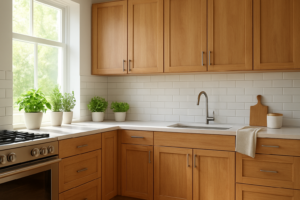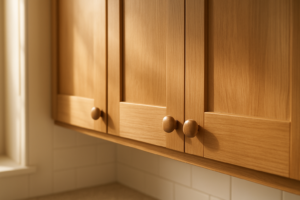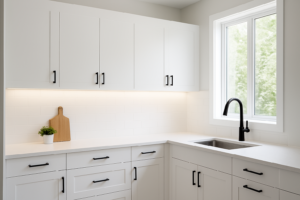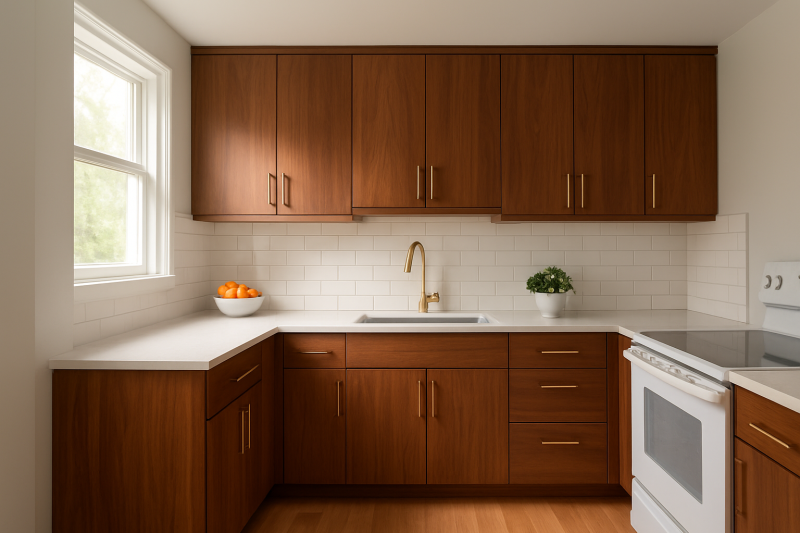
Kitchen refacing techniques give Cincinnati homeowners a faster, less invasive way to transform a tired kitchen than tearing out cabinet boxes and starting from scratch. Instead of a full demolition, these modern methods replace doors, drawer fronts, and exposed surfaces while the existing cabinet framework, sometimes called the “cabinet box” (the structural shell that holds shelves and drawers), stays exactly where it is. As a result, a kitchen can look brand new in a matter of days rather than weeks, and homeowners save both money and stress along the way. This guide breaks down every major kitchen refacing technique in use today, the materials behind them, real cost comparisons, and answers to the questions homeowners ask most before booking a project.
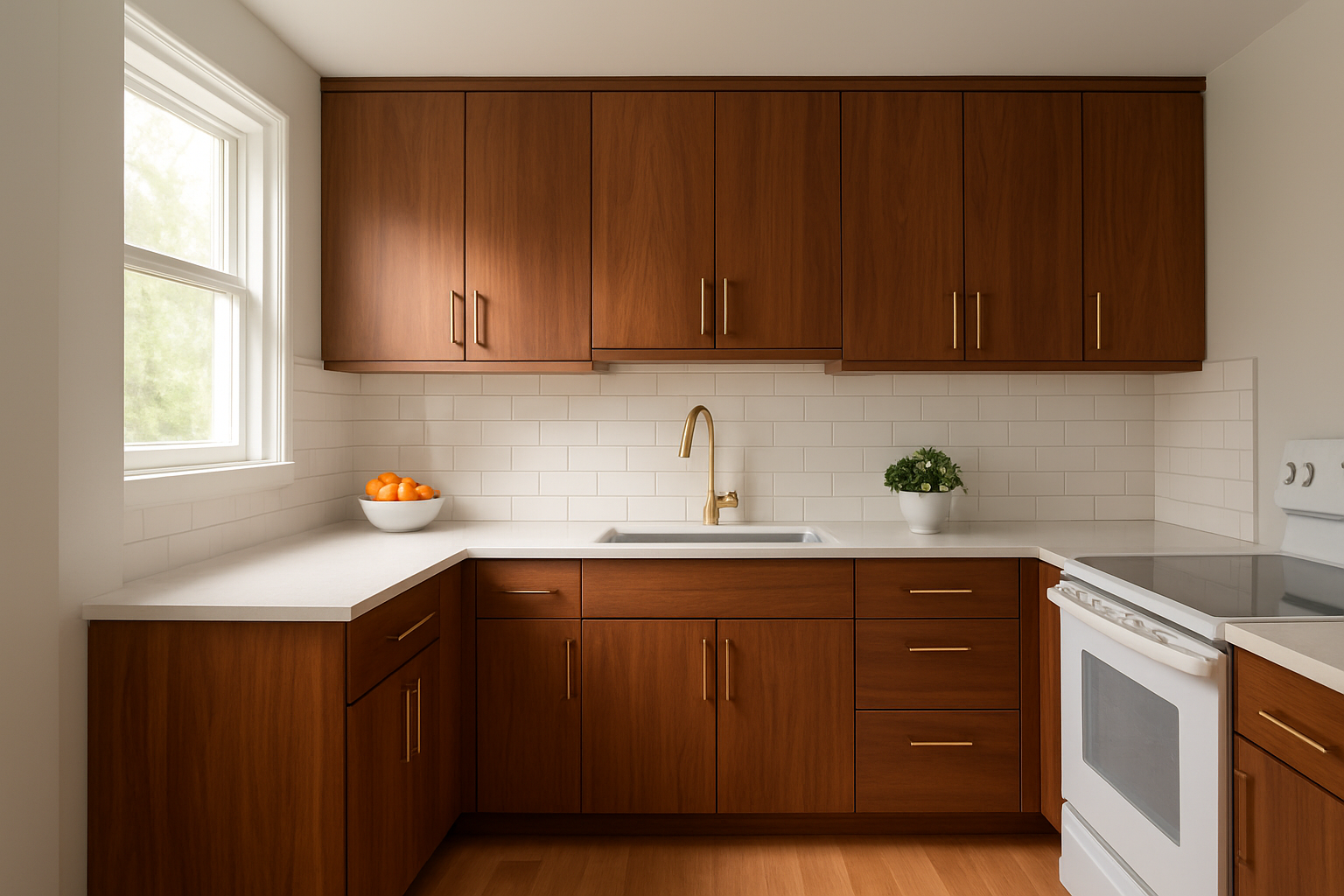
Modern kitchen refacing techniques give outdated cabinets a warm, updated finish without demolition or downtime.
What Are Kitchen Refacing Techniques, Exactly?
In simple terms, kitchen refacing techniques use new door materials, veneers, and hardware to change the way cabinets look while leaving the internal structure untouched. Because the boxes remain in place, there is no need to reroute plumbing, rewire electrical outlets, or rebuild the kitchen layout. Therefore, homeowners get a genuinely new appearance without the structural work that a full renovation typically demands.
This distinction matters because many homeowners confuse refacing with repainting or with a complete remodel. Repainting only changes color and usually wears faster. A full remodel, on the other hand, removes everything down to the studs. Refacing sits in between: it delivers a true material and hardware upgrade, but it respects the existing footprint of the kitchen. Consequently, it has become the go-to solution for homeowners who want dramatic visual change without dramatic disruption.
Kitchen Refacing Techniques vs. Painting vs. Full Remodel
Choosing the right project starts with understanding how the three main options actually compare. The table below lays out the differences in plain terms so homeowners can match the technique to their goals, timeline, and budget.
| Approach | Typical Timeline | Relative Cost | Structural Changes |
|---|---|---|---|
| Cabinet painting | 1–3 days | Lowest | None |
| Kitchen refacing techniques | 3–5 days | 30–50% less than replacement | None — boxes stay in place |
| Full cabinet remodel | 4–8 weeks | Highest | Extensive — layout, plumbing, electrical |
As the table shows, refacing occupies the sweet spot between a quick paint job and a total gut renovation. In particular, it delivers remodel-level visual impact while keeping the timeline and budget close to a cosmetic update. For homeowners comparing every path forward, this breakdown of kitchen remodeling alternatives that save time and money lays out the trade-offs in more detail.
Why Cincinnati Homeowners Choose Cabinet Refacing
Cabinet refacing appeals to homeowners who want meaningful change without vacating their kitchen for weeks at a time. In particular, families with young children or demanding schedules appreciate a process that keeps most of the space usable throughout construction.
Additionally, refacing tends to cost significantly less than replacement because the existing cabinet boxes are reused instead of discarded. According to the National Kitchen and Bath Association, cabinetry often represents the single largest expense in a kitchen renovation budget. Therefore, reducing that cost through refacing can free up money for countertops, lighting, or flooring upgrades instead. For homeowners exploring every angle, this guide on kitchen remodeling alternatives that save time and money breaks the comparison down even further.
Quick Answer: Kitchen refacing techniques combine new-generation veneers, thermofoil doors, and upgraded hardware to modernize a kitchen in three to five days, typically at 30 to 50 percent less cost than full cabinet replacement.
Modern Materials Powering Today’s Kitchen Refacing Techniques
Today’s refacing methods rely on materials that either did not exist or were not affordable a decade ago. Understanding these options helps homeowners pick the right kitchen refacing technique for their household’s habits, style, and budget.
Wood Veneer
Wood veneer is a thin slice of real wood bonded to an engineered substrate, so it delivers authentic grain and warmth without the cost of solid wood cabinetry. Because it is real wood, it can be stained or refinished later, which extends its usable life considerably.
Rigid Thermofoil
Rigid thermofoil is a vinyl film heat-pressed over an MDF (medium-density fiberboard) core, creating a seamless, moisture-resistant surface with no visible seams. This makes it especially popular near sinks and dishwashers, where humidity and splashing are constant concerns.
High-Pressure Laminate
High-pressure laminate has become a favorite for its scratch resistance and wide color range, since it is manufactured under intense heat and pressure to form a hard, durable outer layer. In busy households, that durability translates directly into fewer visible marks over time.
Painted MDF Panels
Painted MDF panels offer a smooth, factory-finished look at a lower price point than veneer, and they take paint evenly because the surface has no wood grain to telegraph through. Meanwhile, matte and textured finishes are replacing high-gloss looks in many Cincinnati homes, echoing broader design trends documented by resources like Wikipedia’s overview of kitchen cabinetry. As a result, homeowners now have far more choices for matching their personal style than they did even five years ago.
The Kitchen Refacing Process, Step by Step
Understanding the refacing process helps homeowners know exactly what to expect before work begins. Below is the typical sequence a Cincinnati refacing specialist follows from the first phone call to the final walkthrough.
- Design consultation: A specialist visits the home to assess existing cabinet boxes, measure dimensions, and discuss door styles, finishes, and hardware preferences directly with the homeowner.
- Material and finish selection: Homeowners choose from wood veneer, thermofoil, or laminate options along with color palettes, making sure new surfaces match countertops and flooring already installed.
- Surface preparation: Technicians clean, sand, and repair existing cabinet boxes so the new veneer or laminate adheres evenly and the finished surface looks seamless and durable for years.
- Veneer application and door installation: Crews apply matching veneer to exposed cabinet surfaces, then install new doors, drawer fronts, and end panels for a fully cohesive appearance.
- Hardware upgrade: New hinges, soft-close mechanisms, and drawer slides are fitted throughout the kitchen, replacing worn or noisy components with quieter, longer-lasting hardware.
- Final walkthrough: The specialist and homeowner inspect every door, drawer, and panel together, confirming alignment, finish quality, and function before the project is officially closed out.
Because this sequence is well established, most projects stay on schedule from start to finish. For a broader look at fast updates that complement refacing, this resource on quick kitchen updates that transform your space fast offers additional inspiration.
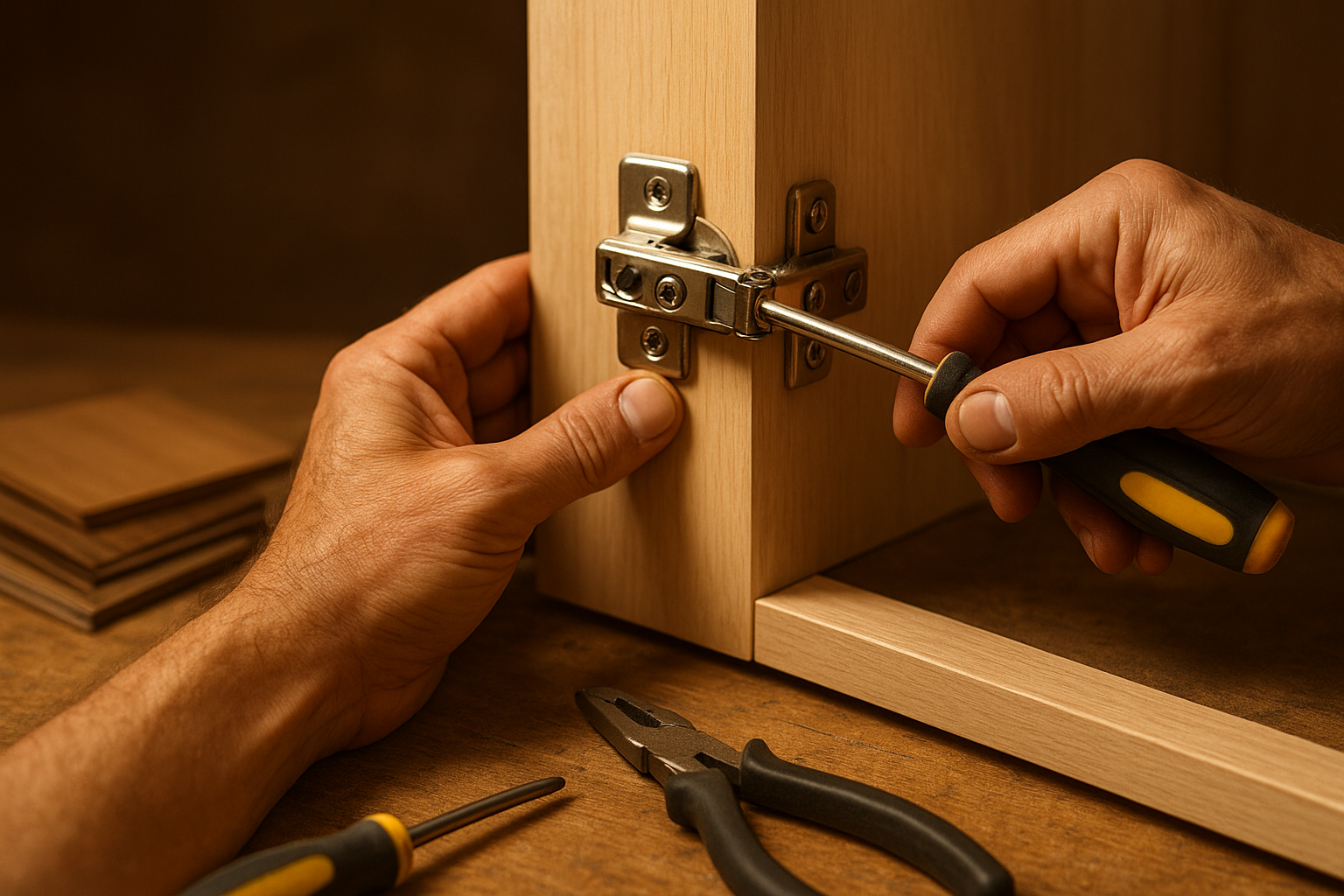
Careful surface preparation and precise installation are central to lasting refacing results.
Creative Kitchen Refacing Techniques for a Custom Look
Beyond simply swapping doors, many Cincinnati homeowners now request creative touches that make refaced kitchens feel custom-built. Two-tone cabinetry, for instance, pairs a darker island finish with lighter perimeter cabinets to create visual contrast and depth.
Similarly, open shelving accents, glass-front inserts, and under-cabinet lighting are frequently added during refacing to modernize the overall feel of the room. In contrast to a decade ago, homeowners today expect these techniques to deliver true design flexibility, not just a surface-level refresh. Popular additions include:
- Two-tone islands paired with lighter perimeter cabinetry
- Glass-front inserts on select upper cabinets
- Under-cabinet LED lighting for task areas
- Open shelving accents in place of one or two upper cabinets
- Furniture-style feet and crown molding on end panels
This guide on modern kitchen aesthetics for Cincinnati homes explores these design choices in far more depth, and this piece on how to modernize your kitchen without a remodel covers additional layout tricks worth considering before a project begins.
Cost and Time Comparison: Refacing vs. Full Remodel
Cost is often the deciding factor between refacing and a full remodel. Industry estimates suggest a complete kitchen remodel can take four to eight weeks and involve significant demolition, whereas most refacing projects wrap up within a single week.
Furthermore, because cabinet boxes remain in place, disposal costs and material waste drop substantially. The U.S. Environmental Protection Agency notes that renovation waste and indoor air quality during construction are common homeowner concerns, and refacing directly addresses both by limiting the scope of work involved. For a full, step-by-step budget breakdown, see how to refresh your kitchen on a budget, or browse these budget-friendly fixes for outdated cabinets for smaller-scale ideas.
Environmental Benefits of Choosing Refacing Over Replacement
Sustainability is an increasingly common concern among homeowners planning a kitchen update. Because kitchen refacing techniques reuse the existing cabinet box, far less material ends up in a landfill compared to a full tear-out and replacement.
In addition, choosing low-VOC (volatile organic compound) finishes and adhesives further reduces the environmental footprint of the project while also improving indoor air quality during and after installation. Homeowners who prioritize sustainability should ask their contractor directly about the VOC content of adhesives and finishes before work begins.
Common Mistakes to Avoid With Kitchen Refacing Techniques
Even the best kitchen refacing techniques can fall short if a few common pitfalls are not addressed early. Being aware of these mistakes ahead of time helps homeowners avoid costly surprises mid-project.
- Skipping the box inspection: Refacing only works well when the existing cabinet box is structurally sound, so always confirm this before signing a contract.
- Mismatched finishes: Choosing a door color or texture that clashes with existing countertops or flooring is one of the most frequent regrets homeowners report.
- Ignoring hardware quality: Cheap hinges and slides undermine an otherwise beautiful refacing job within a year or two of daily use.
- Vague estimates: A written, itemized estimate protects both the homeowner and the contractor from misunderstandings about scope and price.
Finding the Right Cabinet Refacing Specialist in Cincinnati
Choosing an experienced local specialist matters just as much as the materials themselves. A company based in Cincinnati, Ohio, that focuses specifically on cabinet refacing brings a level of familiarity with local homes, styles, and timelines that a general contractor may not offer.
Homeowners should ask about warranty coverage, review completed projects, and confirm a clear written estimate before starting any work. For homeowners still weighing their options, how to modernize your kitchen without a remodel outlines exactly what to expect from a trusted refacing partner, and how you can refresh your kitchen without a full remodel covers additional planning questions worth asking upfront. Visiting ktcabinetrefacing.com is a practical next step for scheduling a local consultation.
Frequently Asked Questions About Kitchen Refacing Techniques
What are kitchen refacing techniques?
Kitchen refacing techniques are modern methods for updating cabinet exteriors, such as rigid thermofoil doors, wood veneer overlays, and soft-close hardware upgrades, without replacing the entire cabinet box.
How long does kitchen cabinet refacing take?
Most cabinet refacing projects take between three and five days, compared to several weeks for a full remodel. Timelines depend on kitchen size and material choices.
How much does cabinet refacing cost compared to replacement?
Refacing typically costs 30 to 50 percent less than full cabinet replacement because the existing boxes stay in place. Final pricing depends on door style, materials, and kitchen size.
What materials are used in modern cabinet refacing?
Common materials include wood veneer, rigid thermofoil, high-pressure laminate, and painted MDF panels. Each offers different durability, cost, and finish options.
Can any cabinet be refaced?
Most cabinet boxes in solid condition can be refaced successfully. However, cabinets with water damage or structural warping may need repair or replacement first.
What is the difference between refacing and remodeling?
Refacing updates only the visible surfaces, like doors and panels, while the cabinet boxes remain. Remodeling removes everything and installs entirely new cabinetry, layout, and often plumbing or electrical changes.
How is refacing different from simply repainting cabinets?
Repainting only changes color and typically wears within a few years, while refacing replaces the actual surface material and often the doors and hardware, resulting in a more durable, longer-lasting finish.
What are common mistakes homeowners make when refacing cabinets?
A frequent mistake is choosing a contractor without checking cabinet box condition first. Another is picking finishes that clash with countertops or flooring already in place.
Is cabinet refacing durable enough for daily use?
Yes, quality refacing materials like thermofoil and wood veneer withstand daily kitchen wear when properly installed. Regular cleaning and gentle care extend their lifespan significantly.
Can I change my cabinet layout during refacing?
Minor layout changes, such as adding pull-out shelves or converting a cabinet to drawers, are possible during refacing. Major layout changes usually require a full remodel instead.
What door styles are popular in kitchen refacing techniques today?
Shaker-style doors, flat-panel slab designs, and two-tone color combinations are currently popular. Matte finishes and matching hardware also feature heavily in modern refacing projects.
Do I need to move out during refacing?
No, homeowners typically stay in their homes throughout the refacing process. Most kitchens remain partially usable since work is completed in stages.
How do I choose a refacing contractor in Cincinnati?
Look for a contractor with local experience, verified reviews, and a clear written estimate. Ask to see completed projects and confirm warranty coverage before signing an agreement.
What is the environmental impact of refacing versus replacing cabinets?
Refacing reduces construction waste because existing cabinet boxes stay out of landfills. Choosing low-VOC finishes further lowers the environmental footprint of the project.
Can refacing include new hardware and hinges?
Yes, most refacing packages include new hinges, drawer slides, and hardware like handles and pulls. Upgrading to soft-close mechanisms is a popular add-on.
How do I maintain refaced cabinets long term?
Wipe surfaces with a soft cloth and mild cleaner, and avoid abrasive scrubbers. Address spills quickly and keep hinges lubricated to preserve the finish for years.
Final Thoughts on Kitchen Refacing Techniques
Ultimately, kitchen refacing techniques give Cincinnati homeowners a practical way to modernize a kitchen without the cost and disruption of a full remodel. From new veneers and thermofoil doors to two-tone designs and upgraded hardware, today’s methods deliver lasting style with far less downtime than homeowners often expect.
Whether the goal is a quick refresh or a fully custom look, working with an experienced local specialist ensures the process runs smoothly from the first consultation to the final walkthrough. For further reading, explore how to modernize your kitchen without a remodel or how to refresh your kitchen on a budget. In the end, these techniques prove that a kitchen can feel brand new without ever tearing out the cabinets themselves.