Quality cabinet refacing turns a tired, dated kitchen into a genuine showpiece by replacing cabinet doors, drawer fronts, and exposed surfaces while your existing cabinet boxes stay exactly where they are. For Cincinnati homeowners weighing their options, this approach delivers custom-remodel results without the cost, mess, or six-week timeline of a full teardown. In fact, industry cost data consistently shows that minor kitchen upgrades recoup a strong share of their cost at resale, according to the Remodeling Magazine Cost vs. Value Report. This guide goes further than most — covering exactly what separates genuinely high-quality cabinet refacing from a rushed cosmetic fix, the real process step by step, true cost ranges, material science, functionality upgrades, long-term maintenance, and the precise questions to ask before you hire anyone.
Quick Answer: Quality cabinet refacing means replacing cabinet doors, drawer fronts, and exposed surfaces with durable new materials while preserving the sturdy cabinet boxes underneath. Done correctly, it uses solid construction, moisture-resistant finishes, upgraded functional hardware, and workmanship built to withstand years of daily kitchen use — not just a fresh coat of paint slapped over old wood.
What Is Quality Cabinet Refacing?
Quality cabinet refacing is a kitchen renovation method that covers existing cabinet boxes with new veneer, laminate, or solid-wood material, then adds fresh doors and drawer fronts. Unlike painting alone, refacing changes both the color and the texture of every visible surface. As a result, the kitchen looks brand new while the structural cabinet framework — often still perfectly sound — stays exactly where it is.
Because the term “refacing” gets used loosely across the remodeling industry, quality matters just as much as the concept itself. Specifically, a genuinely high-quality job uses moisture-resistant adhesives, properly sealed edges, and hardware rated for repeated daily use. In contrast, a rushed or budget job may look fine on installation day but peel, bubble, or warp within a year or two — which is exactly why so many homeowners search for “quality” cabinet refacing rather than simply “cheap” cabinet refacing.
Cabinet Resurfacing vs. Full Remodeling: Why Cincinnati Homeowners Choose Refacing
Cabinet resurfacing appeals to homeowners for a simple reason: it delivers a dramatically updated kitchen without demolition. For example, plumbing, electrical, and flooring generally stay untouched, so there is far less risk of hidden costs or surprise repairs. Therefore, families can budget with much greater confidence than they can for a gut remodel.
In addition, refacing is considerably less disruptive to daily life. Most homeowners keep using their kitchen throughout much of the project, which matters greatly for busy households. If you’re curious about exactly how the two approaches compare day to day, this breakdown of why cabinet refacing is less disruptive than remodeling covers the timeline differences in detail.
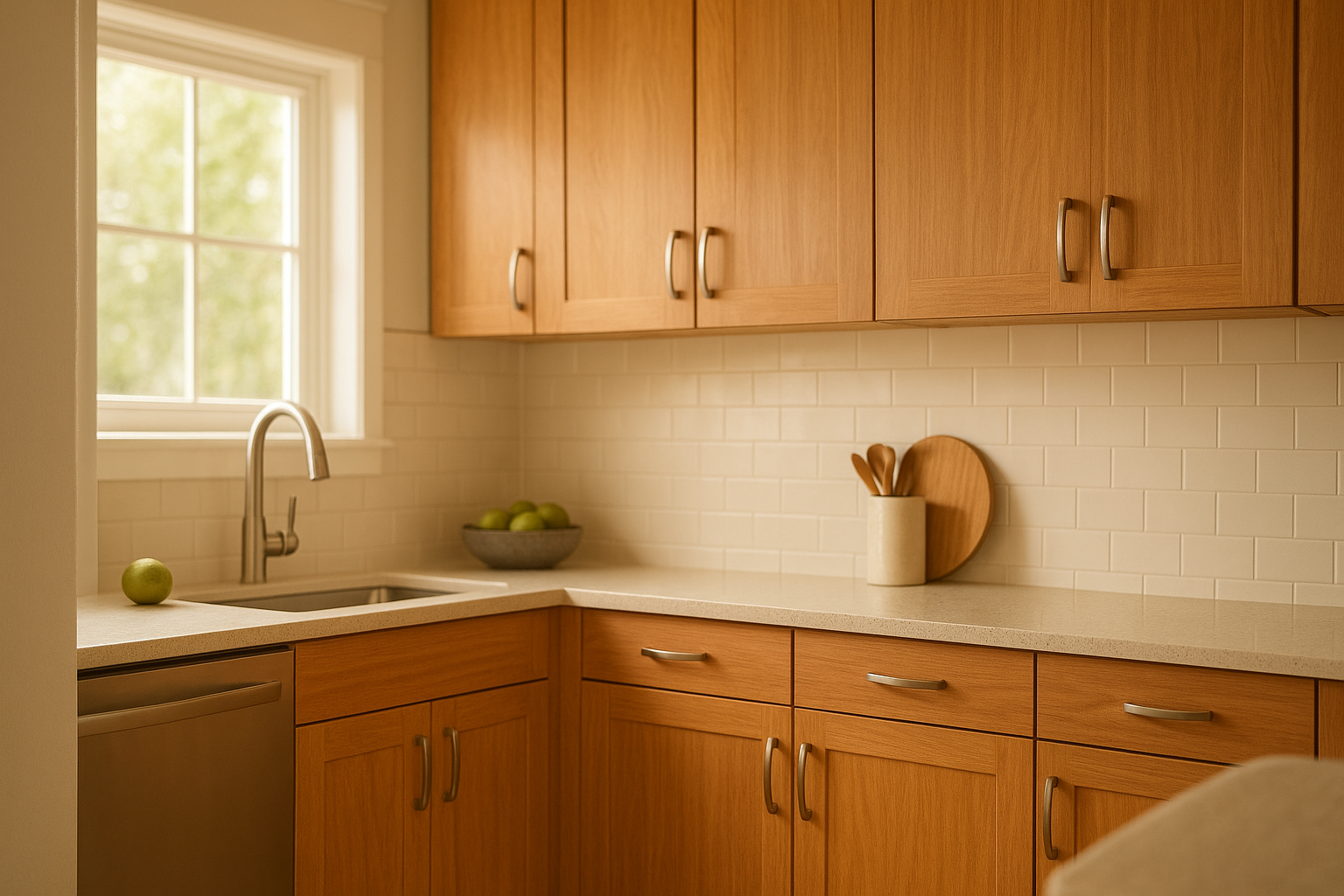
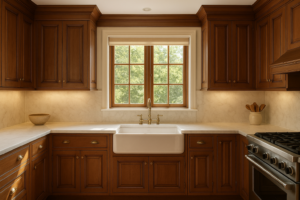
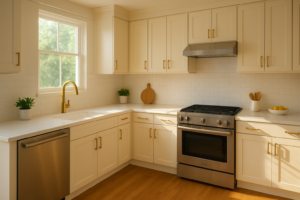
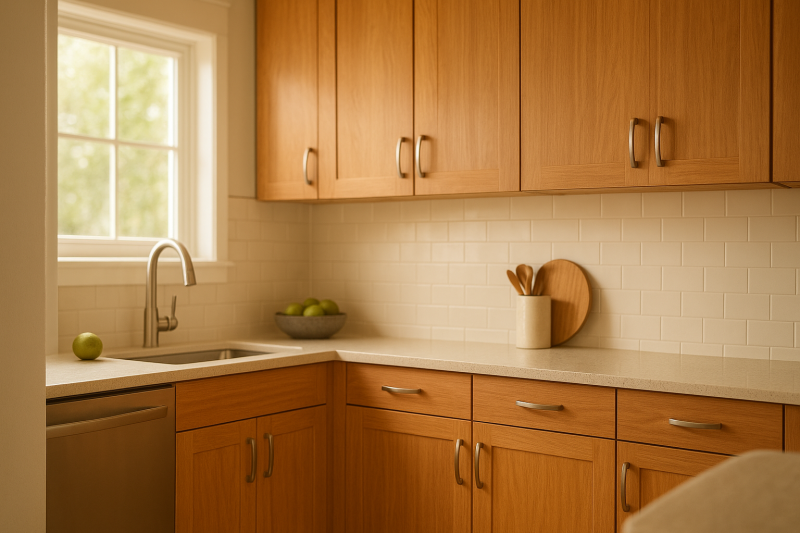
A finished example of quality cabinet refacing, where new doors and veneer surfaces transform the entire kitchen. For a deeper walkthrough, see our Refacing Kitchen Islands: A Cincinnati Homeowner Guide.
Quality Cabinet Refacing vs. Painting vs. Full Replacement
Homeowners typically compare three paths: painting the existing doors, refacing the whole cabinet system, or ripping everything out and replacing it. Each option solves a different problem, so it helps to see them side by side before deciding which fits your kitchen and your budget.
| Factor | Painting Only | Quality Cabinet Refacing | Full Replacement |
|---|---|---|---|
| Average cost | $1,000–$3,500 | $5,000–$15,000 | $25,000+ |
| Typical timeline | 1–2 days | 3–7 days | 4–8 weeks |
| Durability | Chips within 1–3 years | 15–20 years | 20–30 years |
| Layout changes possible | No | Limited (doors, storage inserts) | Full flexibility |
| Household disruption | Minimal | Low | High |
As the table shows, painting is cheapest but rarely lasts. Meanwhile, full replacement lasts longest but costs several times more and disrupts your household for weeks. Quality cabinet refacing sits in the sweet spot, delivering near-replacement durability at a fraction of the price and disruption. If you simply want the easiest way to update cabinets without a full replacement, refacing is almost always the answer.
Signs Your Kitchen Needs Professional Cabinet Refacing Services
Not every kitchen needs a full teardown. However, certain warning signs suggest it’s time to call in professional cabinet refacing services rather than living with worn cabinetry any longer.
- Doors and drawer fronts look dated, faded, or chipped despite sturdy boxes underneath.
- Hinges are loose, sticky, or noisy even after basic adjustments.
- You want a new color scheme without the expense of full replacement.
- Cabinet boxes remain structurally solid with no water damage or warping.
- Storage feels disorganized, even though the layout itself still works for your kitchen.
If these signs sound familiar, a local specialist can evaluate whether your kitchen is a good candidate. The team behind these top cabinet refacing services in Cincinnati typically starts with a free assessment before recommending next steps. For a deeper walkthrough, see our Who Offers the Best Cincinnati Kitchen Cabinet Refacing Services?.
The Cabinet Refacing Process: A Step-by-Step Overview
Understanding the process helps homeowners know exactly what to expect. Here is how a professional team typically approaches a quality cabinet refacing project from start to finish.
- Initial Consultation and Design Assessment: A specialist inspects the existing cabinet boxes, discusses door styles and finishes, and confirms the layout supports refacing rather than requiring partial replacement.
- Precise Measurements and Material Selection: The team measures every opening down to the millimeter and helps you choose veneer, thermofoil, or solid-wood doors that fit your budget and style.
- Surface Preparation and Box Refacing: Existing surfaces are cleaned, sanded, and covered with matching veneer, so every seam disappears into a genuinely seamless finish.
- New Doors and Hardware Installation: Custom-fitted doors, drawer fronts, and upgraded hardware such as soft-close hinges are installed and carefully aligned for even reveals.
- Final Quality Inspection: The finished kitchen is checked for alignment, finish consistency, and smooth operation before the homeowner walkthrough and final approval.
For a more detailed breakdown of what happens during each visit, this guide on what to expect during cabinet refacing walks through timelines and preparation tips homeowners find genuinely useful. For a deeper walkthrough, see our Are There Eco-Friendly Options for Cabinet Refacing? A Complete Guide.
Materials That Define High-Quality Kitchen Cabinet Refacing
Materials make the biggest difference between a refacing job that lasts decades and one that fails within a couple of years. Real wood veneer, for instance, offers a natural grain appearance and holds up well to daily wear, similar to solid cabinetry construction methods used industry-wide.
Rigid thermofoil is another popular option because it resists moisture particularly well around sinks and dishwashers. Meanwhile, solid-wood doors provide the closest match to fully custom cabinetry. Above all, edge banding, adhesive quality, and hinge hardware matter just as much as the visible door material itself — a detail many lower-cost providers skip entirely.
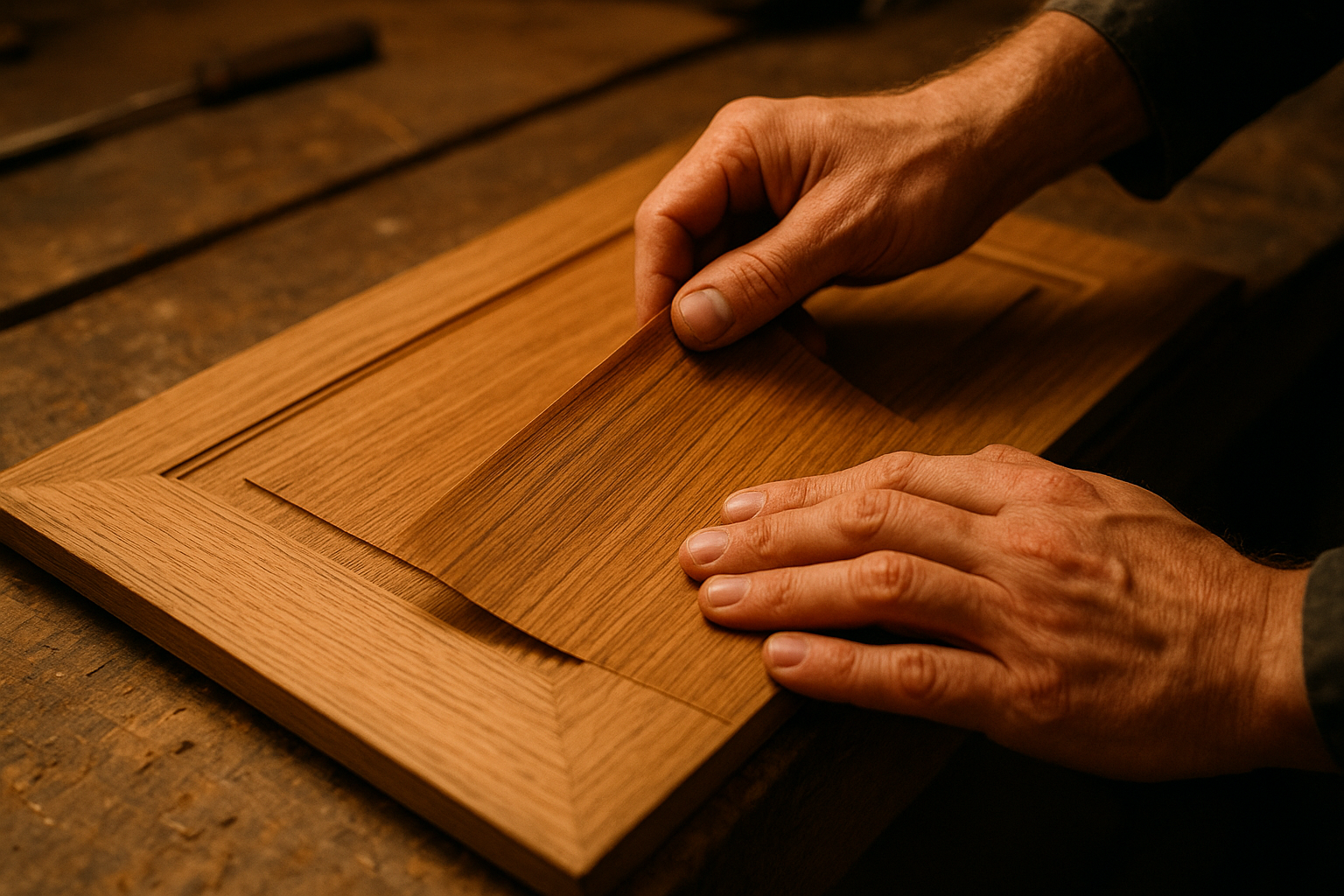
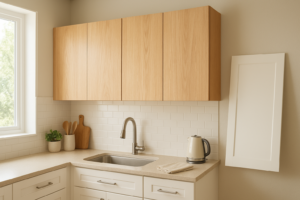
Careful veneer application is one of the details that separates quality cabinet refacing from a temporary cosmetic fix.
Beyond Looks: How Cabinet Refacing Improves Kitchen Functionality
Cosmetic upgrades are only half the story. A genuinely well-executed refacing project also fixes everyday annoyances that have nothing to do with color. For example, sticky drawers become smooth-gliding, soft-close mechanisms, and cramped corner cabinets can gain pull-out shelving or lazy Susans during the same visit.
In addition, many homeowners add roll-out trays, built-in trash pullouts, or spice-rack inserts while doors and hardware are already being replaced, since labor overlaps and adds only modest cost. Consequently, the kitchen doesn’t just look newer — it actually works better every single day. To see specific examples of these upgrades, this guide on how cabinet refacing improves kitchen functionality covers the most requested add-ons.
Eco-Friendly and Low-VOC Refacing Options
Because refacing reuses your existing cabinet boxes instead of sending them to a landfill, it is inherently a more sustainable choice than full replacement. Furthermore, many manufacturers now offer low-VOC (volatile organic compound) adhesives and finishes, which matters for indoor air quality, especially in homes with young children or allergy sensitivities. According to the EPA’s guidance on volatile organic compounds, choosing lower-emission materials can meaningfully improve indoor air quality during and after a renovation.
Specifically, ask any prospective contractor whether their adhesives and finishes are low-VOC certified. This single question is a fast way to gauge whether a company prioritizes long-term quality over the cheapest possible materials.
How Much Does Quality Cabinet Refacing Cost in Cincinnati?
Cabinet refacing in the Cincinnati area typically ranges from about $5,000 to $15,000, depending on kitchen size, door style, and materials chosen. By comparison, full cabinet replacement often runs $25,000 or more once demolition, disposal, and installation are factored in. For a deeper walkthrough, see our Lower Cabinets Refacing: Cincinnati Kitchen Upgrade Guide.
Because homeowners save significantly on labor and materials, many treat refacing as a smart way to fund upgraded countertops or hardware within the same budget. To see how these numbers translate into long-term home value, this resource on whether cabinet refacing is a good investment covers resale considerations in more depth.
How Long Do Refaced Cabinets Last — and How Do You Maintain Them?
Refaced cabinets built from quality materials with professional installation typically last 15 to 20 years, similar to brand-new cabinetry. However, longevity depends heavily on daily care. Wipe spills promptly, especially around the sink and stove, since standing moisture is the single biggest cause of premature veneer failure.
- Use a soft, damp cloth rather than abrasive scrubbers on veneer and thermofoil surfaces.
- Avoid harsh solvents or bleach-based cleaners, which can dull finishes over time.
- Tighten hinges and hardware periodically to prevent sagging doors.
- Use trivets and mats near heat sources to protect the finish from warping.
Choosing a Trusted Cabinet Refacing Company
Selecting the right contractor is arguably the single biggest factor in whether a project succeeds. Consequently, homeowners should ask to see real material samples, request references, and confirm warranty terms before signing any agreement. For a full vetting checklist, see this guide on how to choose a quality cabinet refacing service near me, which walks through the exact questions to ask during a quote appointment.
It’s also worth noting that homes built before 1978 may contain lead-based paint, so renovation work should follow the EPA’s Renovation, Repair, and Painting Program guidelines for safety. A Cincinnati-based specialist familiar with local housing stock, such as the team at KT Cabinet Refacing, can advise on these details directly. For additional design inspiration, these refacing tips and ideas are a helpful starting point before your consultation.
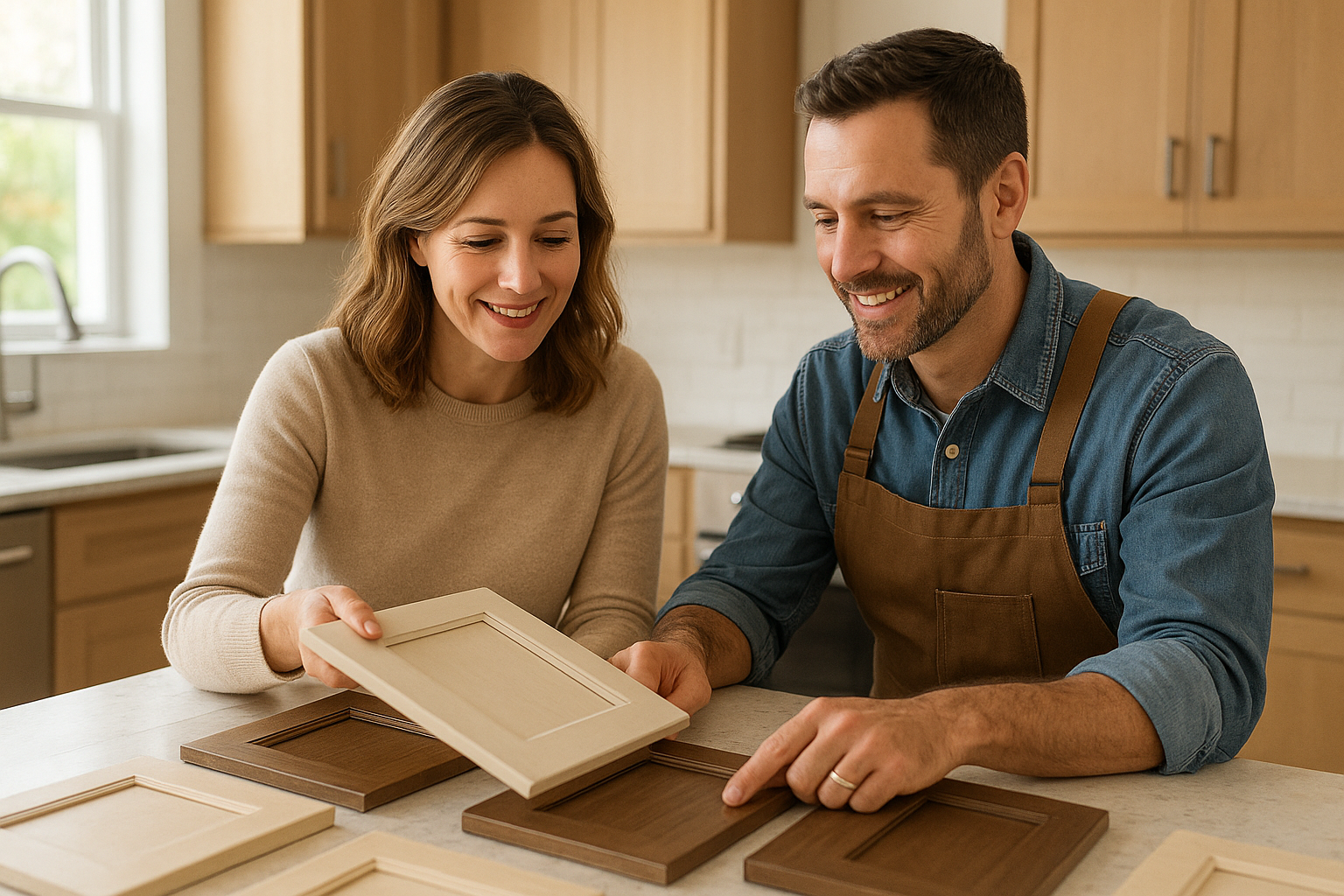
Reviewing material samples in person helps homeowners confirm they are getting quality cabinet refacing rather than a rushed job.
Common Myths About Cabinet Refacing, Debunked
Several myths keep homeowners from considering refacing at all. First, the idea that refacing is “just paint” is false — quality refacing replaces the entire visible surface with new material, not a coat over old wood. Second, some assume refacing only works for modern styles, yet traditional raised-panel, shaker, and slab doors are all readily available.
Finally, many homeowners believe refacing can’t address storage or functionality problems. As covered earlier, that simply isn’t true anymore. If you’re still wondering exactly how you can update your kitchen cabinets without full replacement, refacing checks nearly every box for style, function, and budget simultaneously.
Frequently Asked Questions About Quality Cabinet Refacing
What is quality cabinet refacing?
Quality cabinet refacing replaces cabinet doors, drawer fronts, and exposed surfaces with new materials while keeping the existing cabinet boxes intact. It should use durable veneers or solid-wood doors, moisture-resistant adhesives, and hardware built for daily use.
How is cabinet refacing different from cabinet replacement?
Refacing keeps the original cabinet boxes and updates only the visible surfaces, while full replacement tears out everything down to the studs. As a result, refacing is faster and typically costs 30 to 50 percent less than replacement.
How long does quality cabinet refacing take?
Most refacing projects are completed in three to seven days, depending on kitchen size and material choice. A full gut remodel, in contrast, can take four to eight weeks or longer. Learn more about fast kitchen renovations.
How much does quality cabinet refacing cost in Cincinnati?
Cabinet refacing in the Cincinnati area typically ranges from $5,000 to $15,000 depending on size, door style, and materials. This is generally far less than the $25,000-plus cost of full cabinet replacement. For a deeper walkthrough, see our Local Cabinet Refacer Cincinnati: Complete Hiring Guide.
Is cabinet refacing a good investment?
Yes, cabinet refacing is widely considered a strong investment because it refreshes one of the most visible parts of a home at a fraction of remodeling costs. Minor kitchen upgrades often recoup a significant share of their cost at resale. For a deeper walkthrough, see our Kitchen Refacing Guide: Costs, Process & Best Tips.
What materials are used in high-quality kitchen cabinet refacing?
High-quality refacing typically uses real wood veneer, rigid thermofoil, or solid-wood doors paired with durable edge banding. Better materials resist moisture, heat, and daily wear far longer than budget laminate options.
Can any kitchen cabinet be refaced?
Most cabinets can be refaced as long as the existing boxes are structurally sound and free of water damage or warping. A professional assessment confirms whether refacing or partial replacement fits better.
What is the biggest mistake homeowners make when choosing a refacing company?
The most common mistake is choosing a company based on price alone without checking material quality or reviews. Cheaper veneers and rushed installation often lead to peeling or warping within a few years.
How long do refaced cabinets last?
Refaced cabinets made from quality materials with professional installation typically last 15 to 20 years, similar to new cabinetry. Proper care, such as wiping spills promptly, extends this lifespan further.
Does cabinet refacing include new hardware?
Yes, most professional cabinet refacing services include new hinges, drawer slides, and hardware such as handles and knobs. Upgrading hardware alongside the surfaces gives cabinets a fully finished, cohesive look.
Is cabinet refacing less messy than a full remodel?
Yes, cabinet refacing generates significantly less dust, demolition debris, and noise than a full kitchen remodel. Because the cabinet boxes stay in place, most kitchens remain partially usable throughout the project.
How do I choose the best cabinet refacing company near me?
Look for a local company with verifiable experience, transparent pricing, and real material samples rather than just photos. Reading detailed reviews and asking about warranty coverage also helps confirm a contractor delivers quality cabinet refacing rather than a temporary fix.
Can cabinet refacing improve storage and functionality, not just looks?
Absolutely. Soft-close hinges, pull-out shelving, lazy Susans, and roll-out trays are commonly added during refacing, so the kitchen becomes more functional as well as more attractive.
Final Thoughts on Quality Cabinet Refacing
In summary, quality cabinet refacing offers Cincinnati homeowners a practical middle ground between living with dated cabinets and paying for a full remodel. Because the process preserves sound cabinet boxes while upgrading doors, surfaces, hardware, and even everyday functionality, it delivers a genuinely new kitchen with far less cost, mess, and downtime. However, the results depend heavily on material choice and craftsmanship, so it pays to vet any contractor carefully before starting.
Ultimately, whether you’re addressing worn finishes or simply craving a style refresh, working with an experienced, local specialist helps ensure your kitchen gets the lasting, high-quality result it deserves.