Refacing kitchen islands is one of the fastest, least disruptive ways to transform the visual heart of a kitchen without tearing the room apart. Instead of demolishing the entire island cabinet, refacing swaps out the doors, drawer fronts, end panels, and exposed surfaces while the existing structural frame stays exactly where it is. For Cincinnati homeowners in particular, this approach delivers a dramatic before-and-after result in a fraction of the time, mess, and cost that a full island rebuild demands.
In particular, kitchen islands absorb more daily abuse than almost any other surface in the home — spilled coffee, bumped bar stools, hot pans set down without a trivet. As a result, island finishes tend to wear out well before the surrounding perimeter cabinets do. Consequently, many homeowners find that refacing just the island, or the island alongside the rest of the kitchen, restores a showroom-fresh look without committing to a gutted, weeks-long renovation.
Quick Answer — By Kitchen Transformations team. Last updated: 2026-07-21.
Refacing kitchen islands means updating the visible cabinet surfaces — doors, drawer fronts, end panels, and trim — while leaving the island’s structural box fully in place. It typically costs 30% to 50% less than full replacement, takes a few days rather than weeks, and works best on islands whose frame and countertop are still structurally sound.
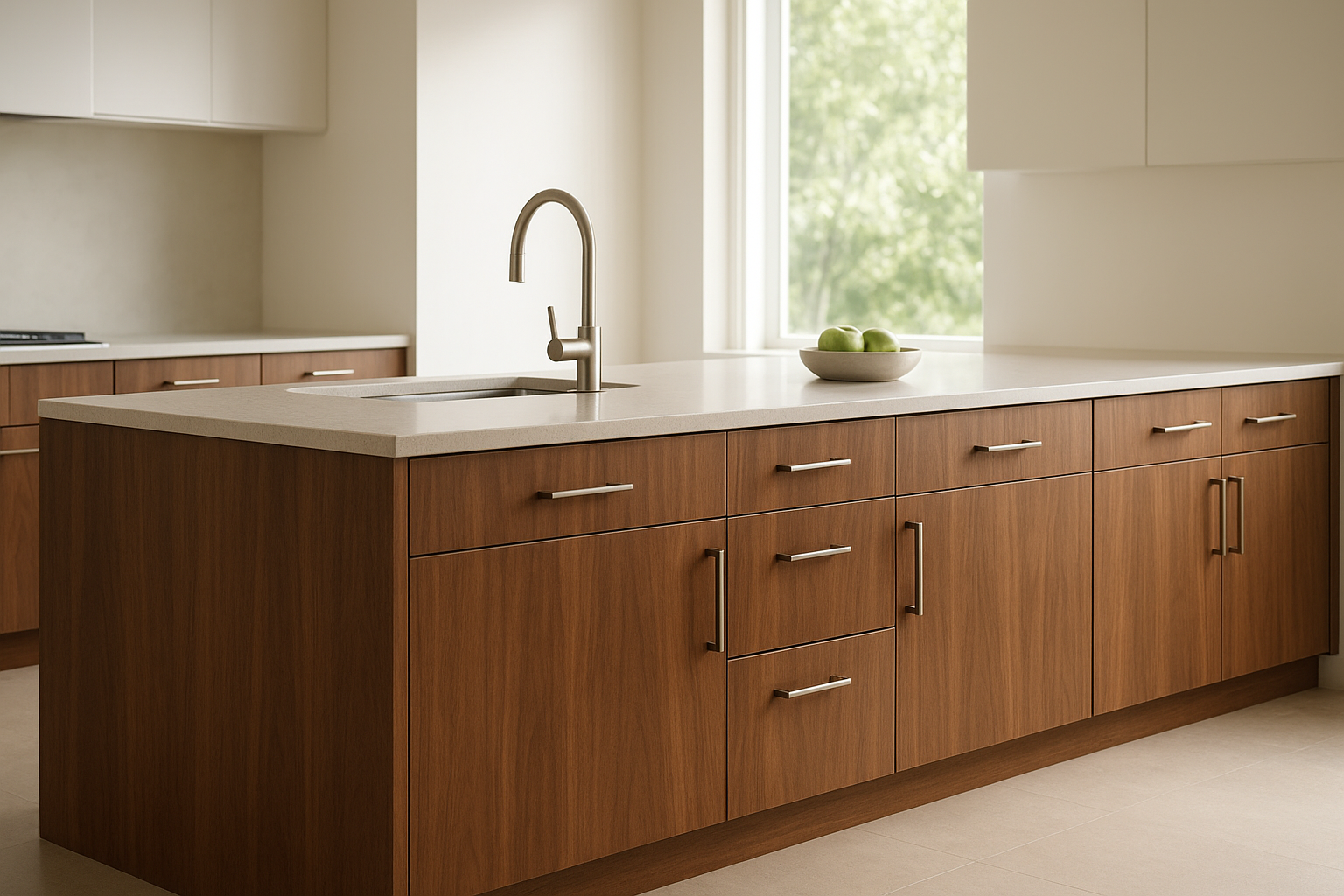
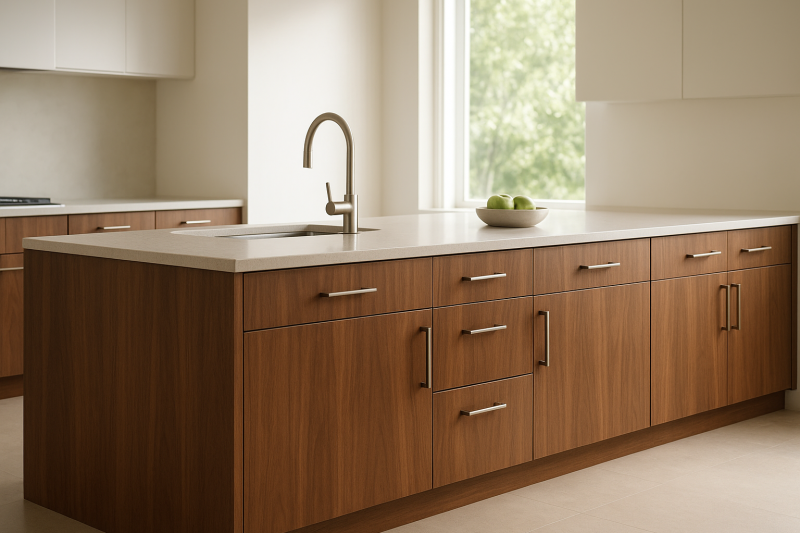
A Cincinnati kitchen island transformed through refacing kitchen islands, with new veneer doors and hardware.
What Does Refacing Kitchen Islands Involve?
Refacing kitchen islands is a process that replaces the outer, visible layers of the cabinet while keeping the internal frame and box completely untouched. Specifically, the doors, drawer fronts, side panels, and trim are removed and rebuilt or resurfaced to match a brand-new design.
Because the underlying structure stays in place, refacing avoids the demolition, plumbing adjustments, and electrical rerouting that often accompany a full island rebuild. In addition, this method preserves the countertop if it’s still in good condition, which further reduces cost and downtime. Not every island qualifies automatically, though — for a closer look at which structures work best, see this detailed answer on whether every kitchen island can be refaced like standard cabinets.
Refacing vs. Refinishing vs. Replacing
These three terms get confused constantly, so it helps to see them side by side before deciding on a project.
Painting alone only changes color — it does nothing for worn hinges, dated door profiles, or damaged drawer fronts. Refacing kitchen islands, by contrast, delivers a complete cosmetic overhaul: new doors, new hardware, new veneer, and a finish that’s built to last, not just a fresh coat that will chip within a season.
Signs Your Kitchen Island Actually Needs Refacing
Before committing to any project, it helps to confirm the island genuinely needs a facelift rather than a quick fix. Look for these telltale signs:
- Door and drawer fronts look faded, chipped, or mismatched compared to the rest of the kitchen.
- Hardware feels loose, dated, or simply out of step with current design trends.
- The island’s style clashes with a recently updated perimeter kitchen.
- The cabinet box and countertop are structurally solid, but the finish simply feels tired.
If most of these apply, refacing kitchen islands is very likely the right move. However, if the island shows sagging shelves, soft or spongy wood, or a wobbling base, that points toward a repair or partial rebuild first — a distinction covered in more depth further down this guide.
Why Homeowners Choose Island Cabinet Refacing Over Replacement
Island cabinet refacing appeals to homeowners who want a visible transformation without the disruption of a full renovation. For example, a kitchen island can typically be refaced in a matter of days, while a complete rebuild may take weeks and require the kitchen to sit unusable for extended stretches.
Cost is another major factor. According to the Cost vs. Value Report from Remodeling Magazine, cabinet refacing generally runs 30% to 50% less than full cabinet replacement, making it an attractive option for homeowners updating an island on a defined budget. Similarly, the National Kitchen and Bath Association notes that cabinetry updates remain one of the most requested kitchen improvements among homeowners nationwide.
If you’re weighing this decision for your entire kitchen, not just the island, this guide on how to modernize your kitchen without a remodel breaks down the broader trade-offs in more detail. For a complete rundown of every advantage this approach offers, this resource on the full list of benefits refacing kitchen islands delivers is worth a read too.
The Kitchen Island Refacing Process: Step by Step
Understanding the kitchen island refacing process helps homeowners set realistic expectations for timing and results. Below is the general sequence a professional refacing team follows from first inspection to final walkthrough.
- A qualified refacing team inspects the kitchen island’s cabinet box, frame, and countertop to confirm the structure is solid enough to support new surfaces without full replacement.
- Technicians carefully remove existing doors, drawer fronts, and hardware from the island, preserving the cabinet box while clearing space for new materials.
- Exposed cabinet ends and sides are cleaned, sanded, and covered with a matching wood veneer — a thin layer of real or engineered wood bonded to the existing surface.
- Custom-built doors and drawer fronts, matched to the homeowner’s chosen style and finish, are fitted and secured to the refaced island frame.
- Decorative trim, crown molding, and new hardware such as handles and hinges are installed to complete the island’s updated appearance.
- The refacing team inspects every surface for alignment and finish quality, then cleans the workspace thoroughly so the kitchen island is ready for daily use immediately.
Homeowners exploring options beyond the island itself may also find it useful to review this resource on how to update kitchen cabinets without full replacement, since the same core process applies to perimeter cabinetry.
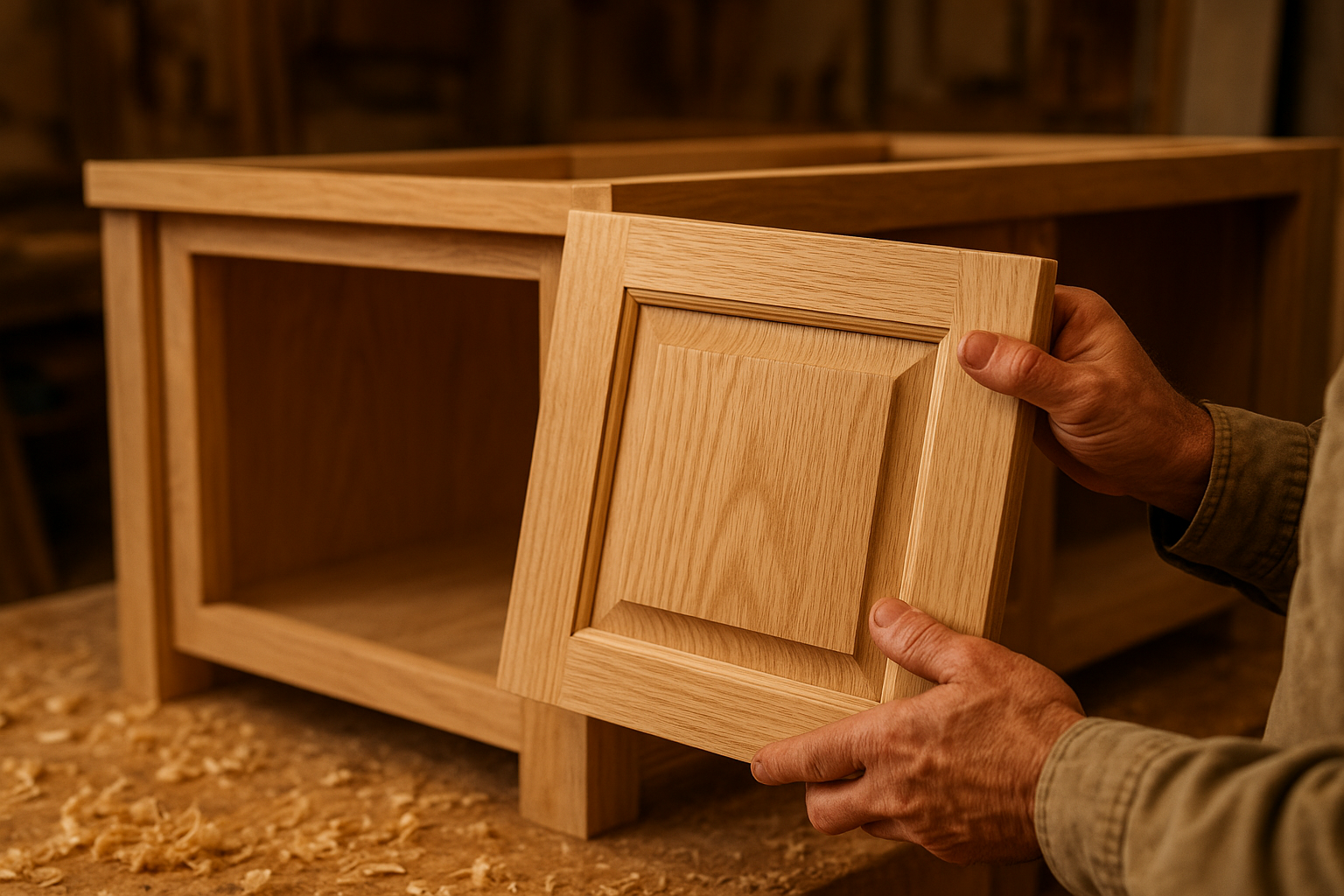
Precise installation is essential when refacing kitchen islands, since every angle is visible from around the room.
How Long Does Prep and Cleanup Take?
Most crews arrive with materials pre-measured and custom-cut off-site, so on-site prep is usually limited to protecting flooring and adjacent surfaces. Consequently, the kitchen stays livable for meals and daily routines throughout most of the project, with only the island itself out of commission for a day or two at a time.
Design Options When Refacing a Kitchen Island
Updating a kitchen island opens up plenty of design flexibility, since the island often serves as the visual anchor of the room. Popular choices include new cabinet doors, sleek flat-slab panels, and raised-panel fronts, each paired with finishes ranging from painted colors to natural wood veneers.
Two-Tone and Contrast Finishes
Two-tone kitchens remain especially popular, where the island receives a bold contrasting color while the perimeter cabinets stay neutral. Furthermore, homeowners can browse classic and contemporary options in this roundup of classic cabinet designs that transform a kitchen for inspiration before choosing a final look. For island-specific inspiration, this collection of the best design ideas for refacing kitchen islands narrows the choices down further.
Hardware, Lighting, and Seating: The Upgrades That Pair Best With Refacing
Hardware plays a bigger role than many homeowners expect. Because an island is viewed from multiple sides, handles, pulls, and hinges should be selected with both function and visibility in mind — oversized bar pulls tend to read well on large flat-slab islands, while classic knobs suit shaker or raised-panel styles.
Lighting is the next upgrade most homeowners consider alongside refacing. Pendant fixtures hung above the island draw the eye upward and highlight new door finishes below, while under-cabinet or toe-kick lighting adds warmth without competing with the cabinetry itself. Seating changes, such as widening the overhang for bar stools, are easiest to plan during a refacing project since the island is already being measured and fitted for new fronts. Rather than treating these as separate, disconnected projects, timing them alongside refacing kitchen islands means one cohesive result instead of several mismatched updates over time.
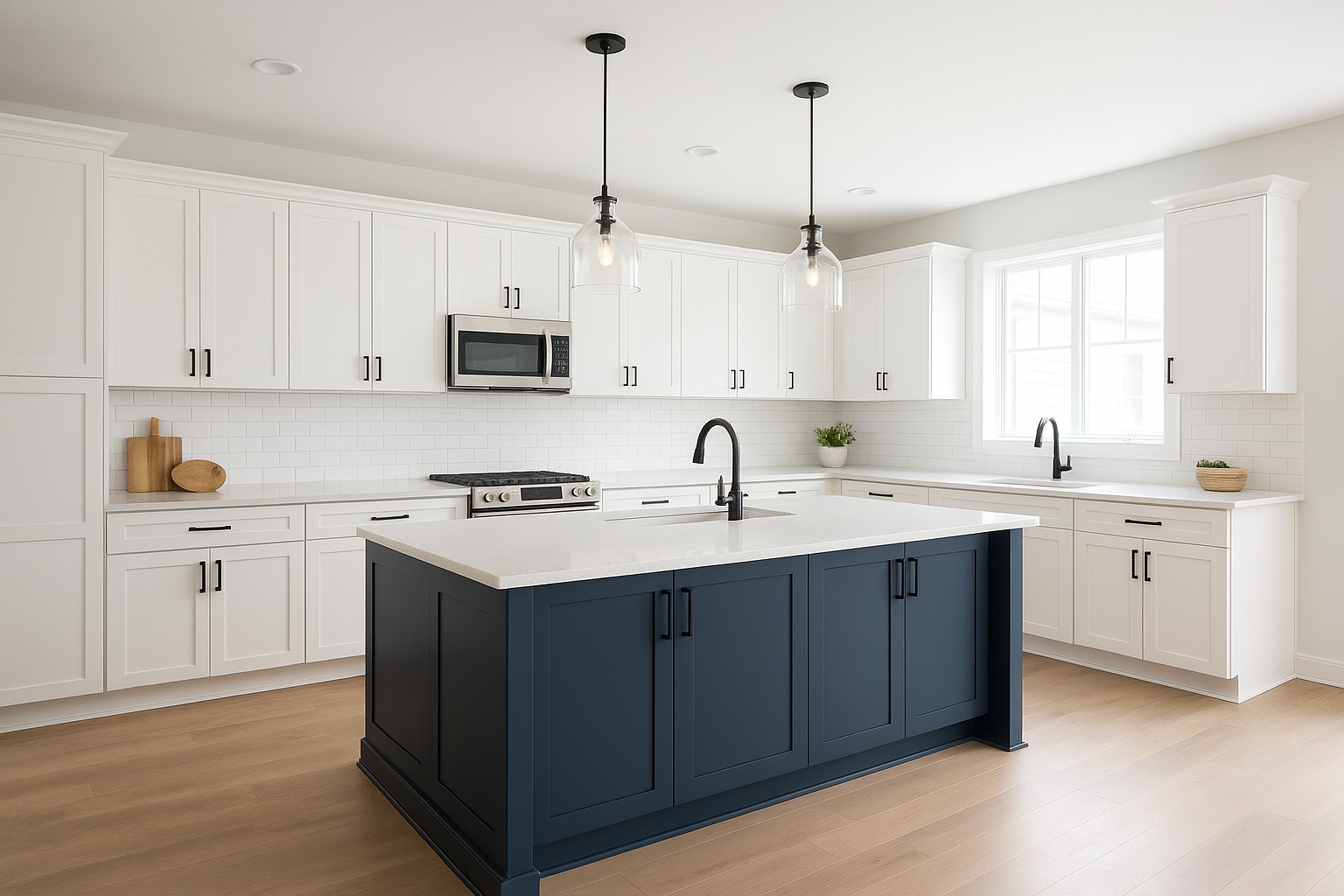
A two-tone finish is a popular design choice when updating a kitchen island through refacing.
Refacing vs. Painting a Kitchen Island: Which Lasts Longer?
Painting an island is often marketed as the quick, budget-friendly upgrade, and to be fair, a fresh coat of paint can hide surface scuffs for a season or two. However, paint does nothing to address worn hinges, dated door profiles, chipped laminate edges, or a drawer front that no longer sits flush. Over time, painted surfaces on a high-traffic island — where elbows, hips, and bar stools make constant contact — tend to chip and show wear faster than a professionally refaced surface built with new doors, sealed veneer, and upgraded hardware.
In short, painting changes color; refacing kitchen islands changes the entire surface, structure of the doors, and hardware in one durable package. For homeowners comparing the two, refacing typically delivers a longer-lasting result for a comparable investment of time.
Cost of Refacing a Kitchen Island in Cincinnati
Pricing for refacing a kitchen island depends on size, material choice, and hardware selections. However, because the project only touches one component of the kitchen, it’s generally more affordable than a full cabinetry overhaul. For local estimates and breakdowns, see refacing costs.
For a full line-item breakdown by island size and material, this detailed cost breakdown for refacing a kitchen island walks through real pricing ranges. Homeowners considering a full kitchen update alongside the island can also review pricing and process details in this guide to custom cabinet refacing in Cincinnati. In addition, the U.S. Environmental Protection Agency offers helpful background on indoor air quality considerations for finishes and coatings, which is worth reviewing when comparing material options for a family kitchen.
Common Mistakes to Avoid With Island Refacing
Even a straightforward project can go wrong without careful planning. Below are mistakes homeowners commonly make when refacing a kitchen island.
- Choosing a finish that doesn’t match the rest of the refaced kitchen, creating a disjointed look.
- Skipping hardware upgrades, which can leave an otherwise fresh island looking outdated.
- Selecting materials that aren’t rated for heavy daily contact, such as constant food prep or seating use.
- Hiring a contractor without direct experience matching cabinet refacing on high-visibility islands.
Consequently, working with a specialist familiar with the kitchen island as a functional centerpiece — not just another cabinet run — tends to produce better long-term results.
Is Refacing Right for Your Kitchen Island?
Refacing works best when an island’s frame, box, and countertop are structurally sound but the finish feels dated or worn. If you’re unsure whether your island qualifies, learn can islands be refaced. In contrast, islands with water damage, sagging shelves, or a compromised base may need more extensive repair before refacing makes sense.
A quick in-home evaluation from a local specialist, such as the team at ktcabinetrefacing.com, can confirm whether an island is a good candidate. Homeowners undecided on the scope of their project may also enjoy browsing this kitchen makeover sweepstakes for extra inspiration and ideas.
A Quick Self-Assessment Checklist
- Does the island wobble, or does the base feel solid when leaned on?
- Is the countertop free of cracks, water rings, or soft spots?
- Do the doors close evenly without dragging or sagging?
- Is the main complaint about looks rather than function?
If most answers point to “yes,” refacing kitchen islands is very likely a strong fit for the project.
Frequently Asked Questions About Refacing Kitchen Islands
What is refacing kitchen islands?
Refacing kitchen islands is the process of updating an island’s exterior — doors, drawer fronts, end panels, and trim — while keeping the existing cabinet box and countertop in place. It’s a cost-effective alternative to demolishing and rebuilding the island from scratch.
How long does it take to reface a kitchen island?
Most kitchen island refacing projects take one to three days, depending on size and design complexity. Homeowners can often continue using their kitchen throughout most of the process since only the island is affected at a time.
How much does refacing a kitchen island cost?
Costs vary by island size, materials, and hardware, but refacing typically runs 30% to 50% less than full cabinet replacement, according to industry cost comparisons like the Cost vs. Value Report. A local Cincinnati estimate can pinpoint exact pricing for a specific island.
Can every kitchen island be refaced?
Most islands with a sound cabinet box and level countertop are good candidates for refacing. However, islands with water damage, structural warping, or a failing base may need repair or partial rebuilding first.
What’s the difference between refacing and replacing a kitchen island?
Refacing keeps the existing cabinet frame and countertop while updating only the visible surfaces, whereas replacement removes the entire island and rebuilds it from the ground up. As a result, refacing is faster, less disruptive, and generally less expensive.
Is refacing a kitchen island better than just painting it?
Painting only changes surface color and doesn’t address worn hinges, damaged fronts, or dated door profiles. Refacing kitchen islands replaces the doors, drawer fronts, veneer, and hardware together, producing a more durable, complete transformation than paint alone.
Do refaced kitchen islands hold up to daily use?
Yes, when installed correctly, refaced surfaces use durable veneers and solid doors designed to withstand daily bumps, spills, and heavy use. Quality hardware and proper sealing further protect the island from wear over time.
Can I change the countertop when refacing kitchen island cabinets?
Many homeowners choose to update the countertop at the same time as refacing, since the cabinet box remains accessible during the project. This isn’t required, though, and existing countertops in good condition can typically stay in place.
What door styles work best for a refaced kitchen island?
Shaker, raised-panel, and flat-slab doors are popular choices because they pair well with most kitchen styles and finishes. Ultimately, the best style depends on the surrounding cabinetry and the homeowner’s overall design goals.
Is refacing a kitchen island a DIY project?
While some cabinet refacing kits exist for ambitious DIYers, professional installation is recommended for islands because they’re viewed from multiple angles and require precise measurements. Consequently, uneven seams or misaligned doors are far more noticeable on an island than on wall cabinets.
What are common mistakes homeowners make when refacing a kitchen island?
Common mistakes include mismatching the island’s new finish to the rest of the kitchen, skipping hardware upgrades, and choosing materials not rated for heavy daily contact. Working with an experienced refacing contractor helps avoid these pitfalls.
Can a refaced kitchen island match the rest of my cabinets?
Yes, in fact, most homeowners reface their entire kitchen at once, including the island, so every surface shares the same door style, finish, and hardware. This creates a cohesive look throughout the space.
Does refacing a kitchen island add home value?
While refacing alone won’t guarantee a specific resale increase, an updated, cohesive kitchen is consistently one of the most valued features for homebuyers. Therefore, refacing can support a stronger overall impression during a home sale.
How do I choose a contractor for kitchen island refacing?
Look for a contractor with specific cabinet refacing experience, verifiable local reviews, and a clear process for matching materials to existing cabinetry. Cincinnati homeowners can also ask to see completed island refacing projects before committing.
What materials are used in kitchen island refacing?
Refacing typically uses real wood veneer, rigid thermofoil, or laminate for surfaces, paired with solid wood or engineered doors and drawer fronts. The right material depends on budget, desired finish, and how much daily wear the island receives.
Final Thoughts
Refacing kitchen islands offers Cincinnati homeowners a practical way to transform their kitchen’s focal point without the cost, mess, or time commitment of a full rebuild. By updating doors, drawer fronts, and finishes while preserving the existing structure, homeowners get a fresh, cohesive look that matches the rest of their refaced cabinetry. Learn how to plan a kitchen cabinet makeover.
Whether you’re refreshing a single dated island or updating an entire kitchen, working with an experienced local refacing specialist, such as the team at ktcabinetrefacing.com, helps ensure durable results built for everyday life. Ultimately, refacing kitchen islands proves that meaningful kitchen upgrades don’t require starting from scratch. Last updated: add publication date and author byline to improve trust.