Value-added kitchen upgrades are the smartest way for Cincinnati homeowners to refresh their kitchens without draining their renovation budget. Rather than tearing out cabinets and starting from scratch, these upgrades focus on improvements that boost everyday function and long-term resale value at once. In fact, homeowners across the Cincinnati area increasingly choose targeted updates, like cabinet refacing, because they deliver a dramatic transformation in a fraction of the time and cost of a full remodel. Therefore, this guide breaks down exactly which upgrades offer the best return, how to plan them wisely, and what pitfalls to avoid along the way.
In short: Value-added kitchen upgrades are targeted improvements, such as cabinet refacing, hardware updates, and lighting changes, that increase a kitchen’s function and resale value without the expense of a full remodel. The most effective upgrades address both aesthetics and daily usability, so homeowners get lasting value from every dollar spent.
What Are Value-Added Kitchen Upgrades?
Value-added kitchen upgrades are improvements chosen specifically because they increase a home’s usability and market value, rather than changes made purely for style. Unlike a gut renovation, these upgrades work with the existing kitchen footprint and cabinet boxes. As a result, homeowners save significantly on labor, materials, and project timelines.
Specifically, cabinet refacing counts among the most popular value-added kitchen upgrades because it replaces worn cabinet doors, drawer fronts, and veneers while keeping the sturdy cabinet boxes intact. In addition, homeowners often pair refacing with new hardware, updated countertops, or improved lighting to round out the transformation.
What separates a value-added upgrade from a purely cosmetic one is its dual purpose. A fresh coat of paint might look nice temporarily, but it rarely improves function or holds up to daily wear. In contrast, refaced cabinets with soft-close hinges improve how the space performs every day while also appealing to future buyers. According to the Remodeling Cost vs. Value report, minor kitchen updates consistently rank among the home improvements that return a high percentage of their cost at resale, which is precisely why these upgrades remain popular among budget-conscious homeowners.
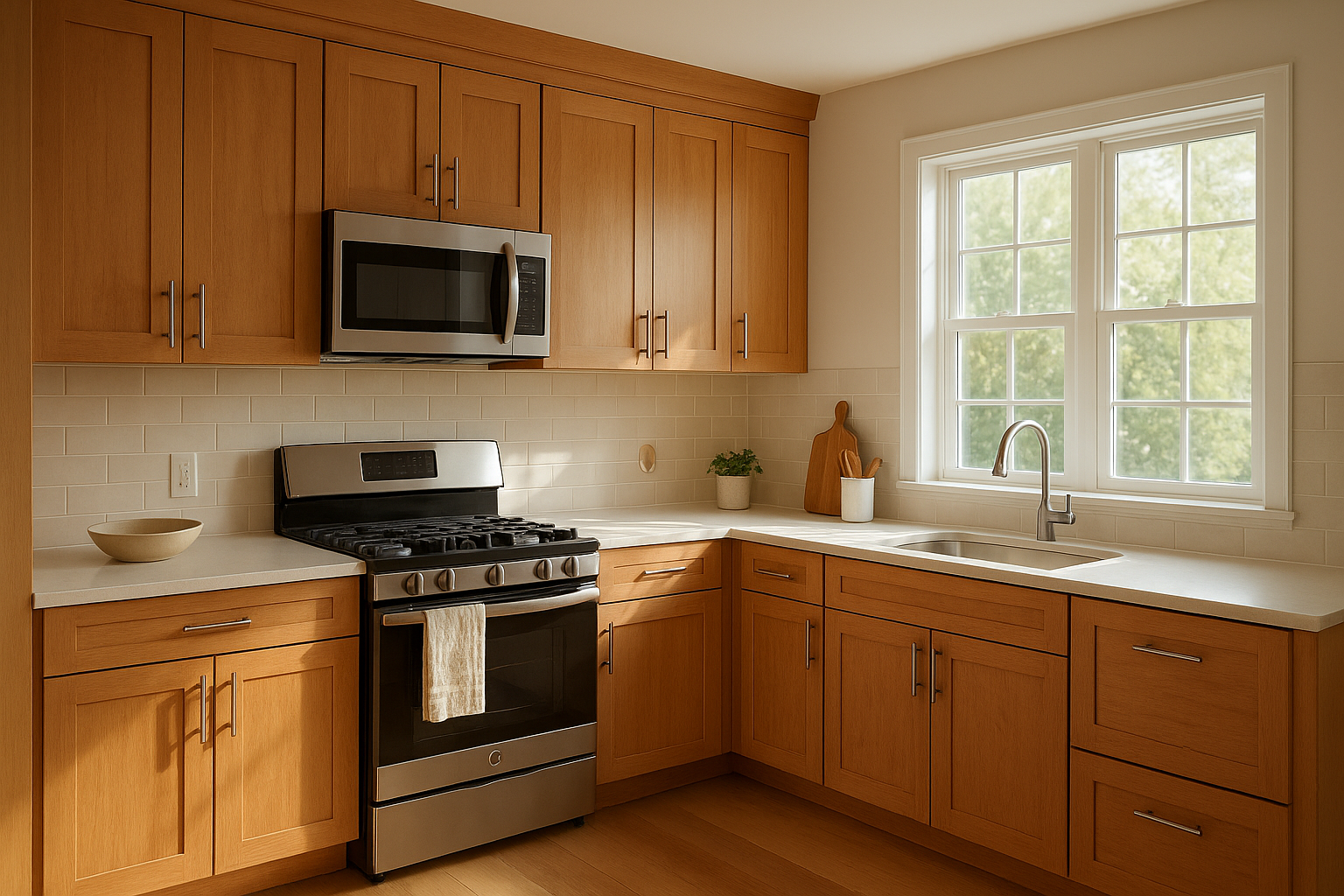
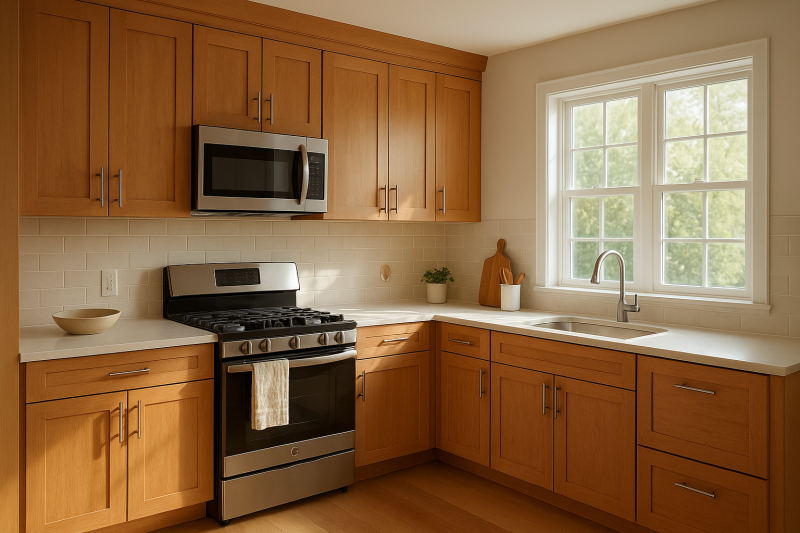
A refaced kitchen demonstrates how value-added kitchen upgrades combine fresh style with everyday function.
Why These Kitchen Improvements Matter for Cincinnati Homeowners
Cincinnati’s housing stock includes a large share of homes built several decades ago, many with kitchens that haven’t been touched since the original construction. Consequently, local homeowners face a common dilemma: invest in an expensive full remodel, or find a smarter path to a modern kitchen.
This is where value-added kitchen upgrades shine. Because they focus on the elements that matter most, such as storage function, finish quality, and visual appeal, these upgrades let Cincinnati homeowners modernize without months of disruption. For example, a family can keep cooking in their kitchen throughout most of a refacing project, since the cabinet boxes stay in place while only the visible surfaces change.
Moreover, Cincinnati’s real estate market rewards kitchens that look updated and function well, particularly in competitive neighborhoods. Therefore, choosing upgrades with proven value, rather than guessing at trends, helps homeowners protect their investment. Our guide on affordable kitchen upgrades for Cincinnati homeowners dives deeper into budget-friendly strategies tailored to the local market.
Top High-Value Kitchen Upgrades Worth Considering
Several upgrades consistently deliver strong returns for Cincinnati kitchens. Specifically, the following five improvements tend to offer the best combination of visual impact, functional benefit, and cost efficiency:
- Cabinet refacing – Replace door fronts, drawer fronts, and exposed surfaces while reusing the existing cabinet boxes, cutting costs dramatically compared with full replacement.
- Hardware and accessory upgrades – New handles, soft-close hinges, and pull-out organizers instantly modernize storage without touching the cabinet structure itself.
- Countertop refresh – Updated countertop materials pair naturally with refaced cabinets to complete the visual transformation.
- Lighting improvements – Under-cabinet and recessed lighting improve both ambiance and practical task visibility in the kitchen.
- Backsplash updates – A new backsplash ties the color palette together and protects walls from daily cooking wear.
To explore how refacing pairs with hardware specifically, see our breakdown of upgrading kitchen cabinets with refacing plus new hardware.
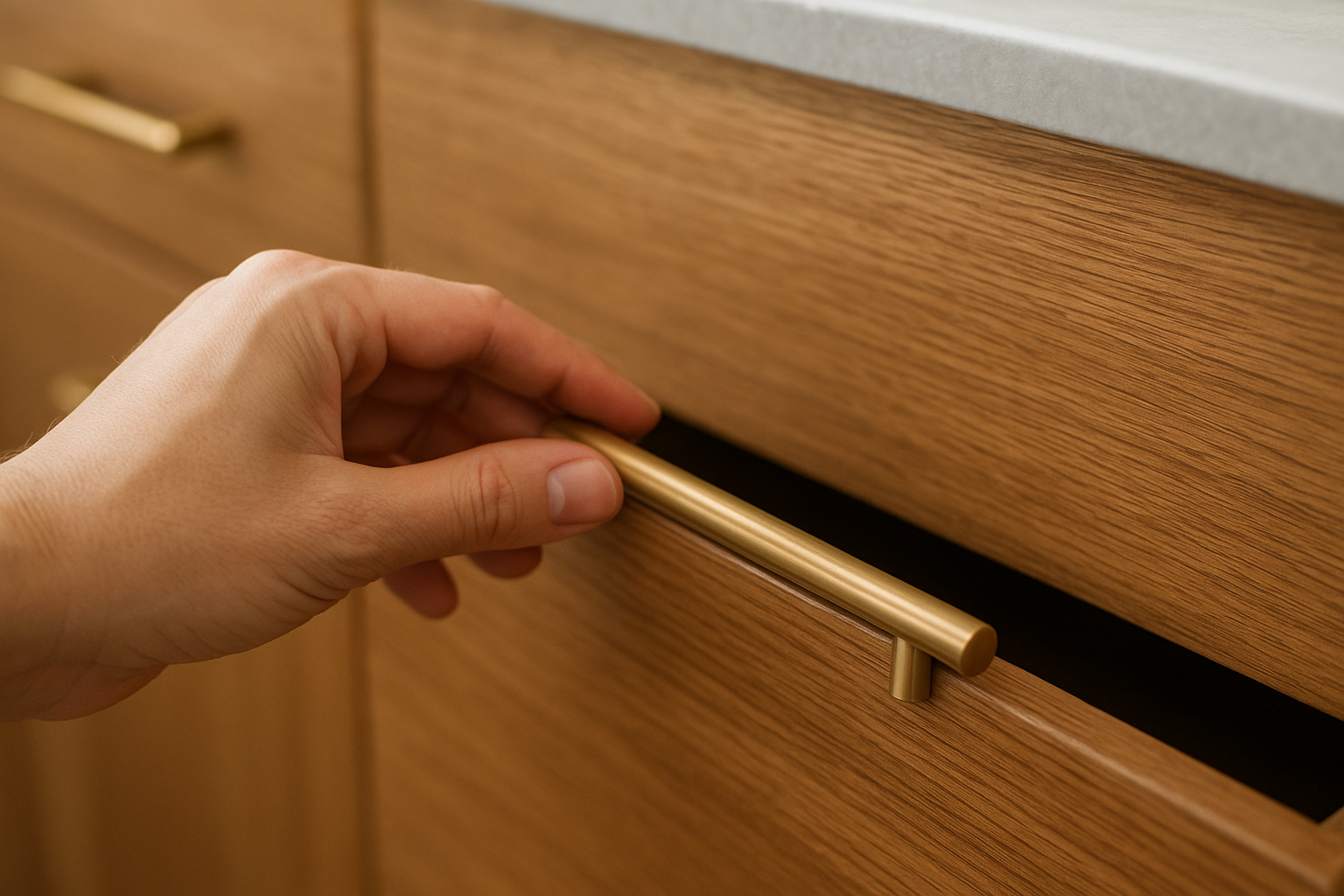
Hardware updates are a simple yet high-impact piece of many value-added kitchen upgrades.
How to Plan a Value-Added Kitchen Upgrade Project
Planning carefully helps ensure a smooth project and a strong result. Follow these five steps to approach your upgrade with confidence:
- Assess your kitchen’s current function. Walk through your kitchen and note which cabinets, drawers, or surfaces no longer meet your storage needs or daily workflow.
- Set a realistic budget. Decide how much you want to invest, then prioritize upgrades that address both appearance and performance within that range.
- Choose upgrades with proven return. Focus on improvements such as cabinet refacing and hardware updates that are known to increase both usability and resale value.
- Hire a qualified local specialist. Work with an experienced refacing team who understands Cincinnati homes and can recommend materials suited to your kitchen’s layout.
- Schedule work for minimal disruption. Plan the project timeline around your household’s routine, since most refacing projects allow the kitchen to remain partially usable throughout.
Cabinet Refacing vs. Full Cabinet Replacement
Many homeowners assume a full cabinet replacement is the only path to a modernized kitchen. However, that assumption often overlooks both cost and disruption. Full replacement requires removing existing cabinet boxes entirely, which increases labor time, generates significant demolition waste, and frequently uncovers unexpected wall or plumbing issues behind old cabinetry.
Cabinet refacing, in contrast, keeps the structural kitchen cabinet boxes in place and focuses only on the visible surfaces. As a result, projects typically finish in days rather than weeks. Furthermore, because less material and labor are involved, refacing generally costs a fraction of full replacement while still delivering a comparable visual transformation.
That said, full replacement makes more sense when cabinet boxes are water-damaged or structurally unsound. For most kitchens with solid boxes and an outdated look, though, refacing remains the more efficient value-added kitchen upgrade. To see how refacing specifically improves daily function and long-term durability, read our detailed explanation of how cabinet refacing improves kitchen function and durability.
Cost Considerations and Return on Investment for Kitchen Updates
Cost remains the top concern for most homeowners considering kitchen updates. Fortunately, value-added kitchen upgrades are structured precisely to address that concern. Cabinet refacing, for example, typically costs 30 to 50 percent less than full cabinet replacement, depending on material choices and kitchen size.
In terms of return, the National Association of Realtors’ research has consistently found that minor kitchen upgrades, like refacing combined with hardware and lighting changes, recover a substantial majority of their cost in added home value, often outperforming larger, more invasive renovations on a cost-per-dollar basis. Similarly, the Remodeling magazine Cost vs. Value report shows that minor kitchen remodels rank among the highest-returning projects nationwide.
Above all, the upgrades that perform best are the ones addressing visible wear and outdated finishes, since these are what buyers and appraisers notice first. Homeowners weighing a full renovation against smaller updates may also find inspiration in our guide to quick kitchen updates that transform your space fast.
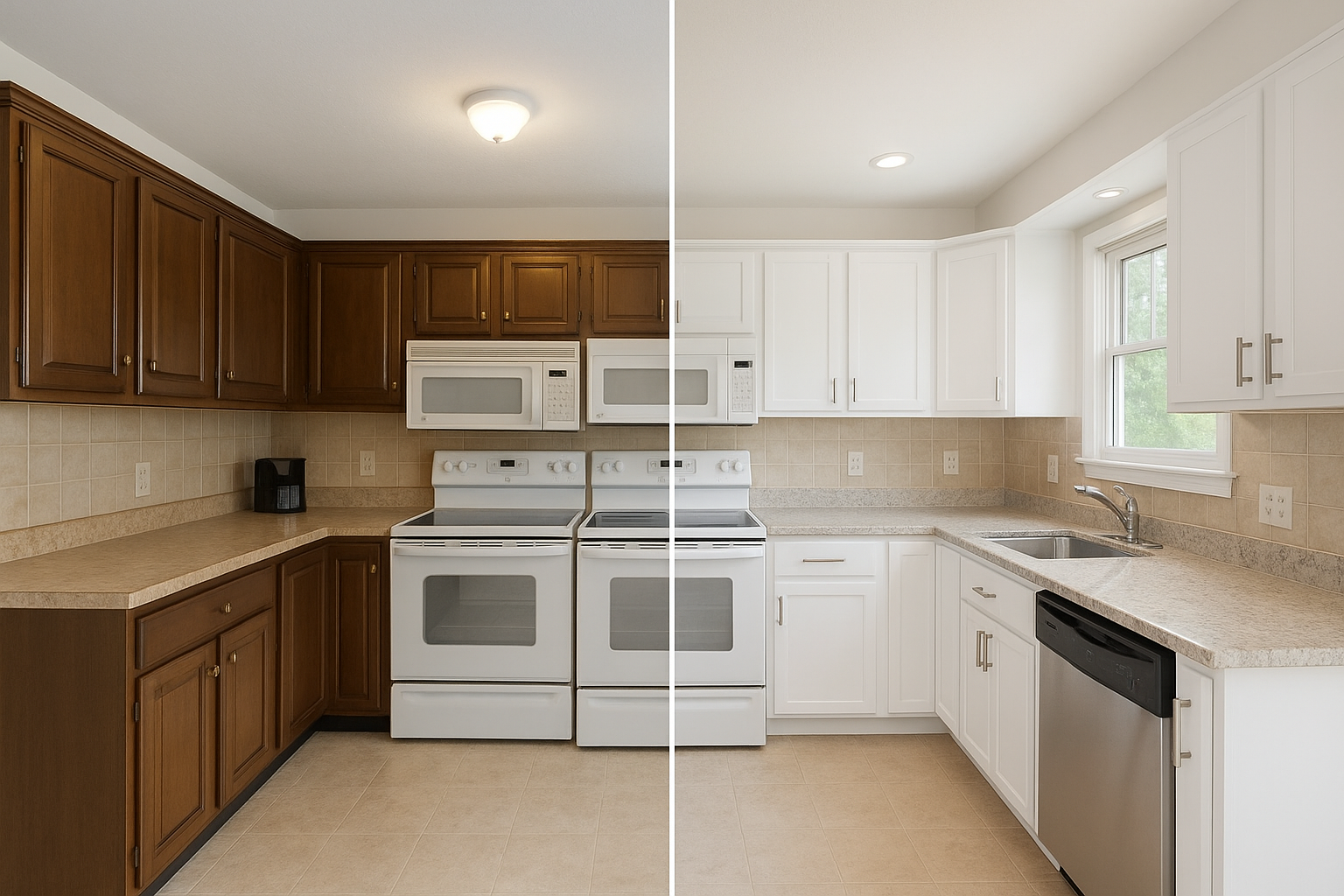
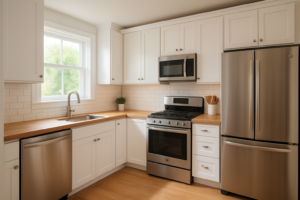
A side-by-side comparison highlights the visual impact of well-planned value-added kitchen upgrades.
Common Mistakes to Avoid With Kitchen Upgrades
Even well-intentioned upgrade projects can lose value when a few common mistakes creep in. First, choosing trendy finishes over timeless ones can date a kitchen again within just a few years. In addition, skipping hardware and lighting updates while only changing cabinet fronts leaves the transformation feeling incomplete.
Another frequent error involves underestimating the importance of hiring experienced professionals. Refacing requires precise measurements and quality materials; a poorly executed job can actually reduce a kitchen’s appeal rather than enhance it. Similarly, homeowners sometimes rush the planning phase, selecting materials before confirming they suit their kitchen’s existing layout and lighting conditions.
Finally, ignoring budget balance is a costly misstep. Spending the entire budget on premium countertops while leaving outdated cabinets in place rarely produces a cohesive, value-added result. For additional inspiration and potential savings, homeowners can also check out our kitchen makeover sweepstakes.
Frequently Asked Questions
What are value-added kitchen upgrades?
Value-added kitchen upgrades are targeted improvements, such as cabinet refacing, hardware updates, and lighting changes, that increase both a kitchen’s daily function and its resale value. Unlike purely cosmetic changes, they focus on upgrades proven to deliver a strong return.
How much do value-added kitchen upgrades typically cost?
Costs vary by scope, but cabinet refacing generally runs 30 to 50 percent less than full cabinet replacement. Homeowners can further control costs by choosing door styles and hardware that fit their budget.
How long does a cabinet refacing project take?
Most refacing projects finish within a few days to about a week, depending on kitchen size. This is significantly faster than full remodels, which can take several weeks.
Is cabinet refacing a good value-added kitchen upgrade?
Yes, cabinet refacing is considered one of the most effective value-added kitchen upgrades because it refreshes a kitchen’s appearance while preserving the existing cabinet boxes. This keeps costs lower while still delivering a dramatic visual change.
What is the difference between cabinet refacing and cabinet refinishing?
Refacing replaces door fronts, drawer fronts, and exposed surfaces with new materials, while refinishing simply repaints or restains the existing surfaces. Refacing typically offers more design flexibility and a longer-lasting finish.
Can I combine cabinet refacing with new hardware?
Absolutely. Pairing refacing with new handles, hinges, and pull-out organizers is one of the most popular ways to maximize a kitchen’s overall upgrade value.
Do value-added kitchen upgrades increase home resale value?
Yes, industry reports like the Remodeling Cost vs. Value survey consistently show minor kitchen updates recover a high percentage of their cost at resale. This makes them appealing to homeowners planning to sell in the future.
What mistakes should I avoid during a kitchen upgrade?
Common mistakes include choosing overly trendy finishes, skipping hardware and lighting updates, and hiring inexperienced installers. Balancing the budget across cabinets, countertops, and lighting produces the most cohesive result.
Are value-added kitchen upgrades better than a full remodel?
For kitchens with solid, structurally sound cabinet boxes, value-added upgrades like refacing typically cost less and finish faster than a full remodel. A full remodel only becomes necessary when cabinets are damaged or the layout needs major changes.
Will my kitchen be usable during a refacing project?
Yes, in most cases homeowners can continue using parts of their kitchen throughout the project since the cabinet boxes remain in place. This is one of the key advantages over a full gut renovation.
What materials are commonly used in cabinet refacing?
Common materials include wood veneer, rigid thermofoil, and laminate door fronts, each offering different price points and durability levels. A local specialist can recommend the best option for Cincinnati’s climate and humidity levels.
How do I choose the right company for value-added kitchen upgrades?
Look for a local specialist with proven refacing experience, clear pricing, and examples of completed projects in homes similar to yours. Reading reviews and asking about warranty coverage also helps ensure a dependable result.
Final Thoughts
Ultimately, value-added kitchen upgrades offer Cincinnati homeowners a practical path to a refreshed, functional kitchen without the cost and disruption of a full remodel. By focusing on improvements like cabinet refacing, updated hardware, and smart lighting, homeowners can achieve a transformation that looks great today and holds its value for years to come.
As this guide has shown, the key lies in choosing upgrades with proven returns, planning the project carefully, and avoiding common budget mistakes. Whether you’re preparing to sell or simply want a kitchen that works better for daily life, thoughtfully chosen value-added kitchen upgrades deliver lasting results. For a personalized plan, Cincinnati homeowners can visit ktcabinetrefacing.com to explore the best options for their space.