Refinishing wooden cabinets is the single fastest way to transform a dated kitchen into a space that feels brand new, and it typically costs a fraction of a full remodel. Rather than tearing out cabinet boxes and starting from scratch, refinishing wooden cabinets means stripping away old stain or paint, sanding the bare wood, and applying a fresh finish that restores grain, tone, and durability. For families across the greater Cincinnati area, this project can deliver a like-new kitchen in days rather than weeks — without the dust, debt, or disruption of a gut renovation.
Quick Answer: Refinishing wooden cabinets involves stripping the existing stain or paint, sanding down to bare wood, and applying a new stain or paint plus a protective topcoat. Most kitchens finish in three to seven days, and professional pricing usually lands between $1,500 and $4,500 — far less than the $10,000-plus that full cabinet replacement often demands.
What Is Cabinet Renewal?
Refinishing wooden cabinets means removing the current surface layer — whether that’s stain, varnish, or paint — and replacing it with a new finish suited to your kitchen’s updated style. Unlike full replacement, the underlying cabinet structure stays exactly as it was. As a result, homeowners keep sturdy, well-built boxes while simply refreshing the exterior appearance.
This technique works best on solid wood because it absorbs stain and holds paint evenly. According to general wood finishing principles, properly prepared wood surfaces bond significantly better with new coatings, which is why sanding and cleaning matter so much before any color goes on. In contrast, laminate or thermofoil cabinets typically cannot be refinished successfully, since their surfaces aren’t real wood underneath the printed layer.
Notably, refinishing differs from simple touch-up work. A touch-up might hide a scratch, but true wood cabinet refinishing strips the entire surface down to raw wood so the new color and topcoat cure as one uniform layer. That distinction matters because uneven prep is the number-one cause of blotchy, unprofessional-looking results.
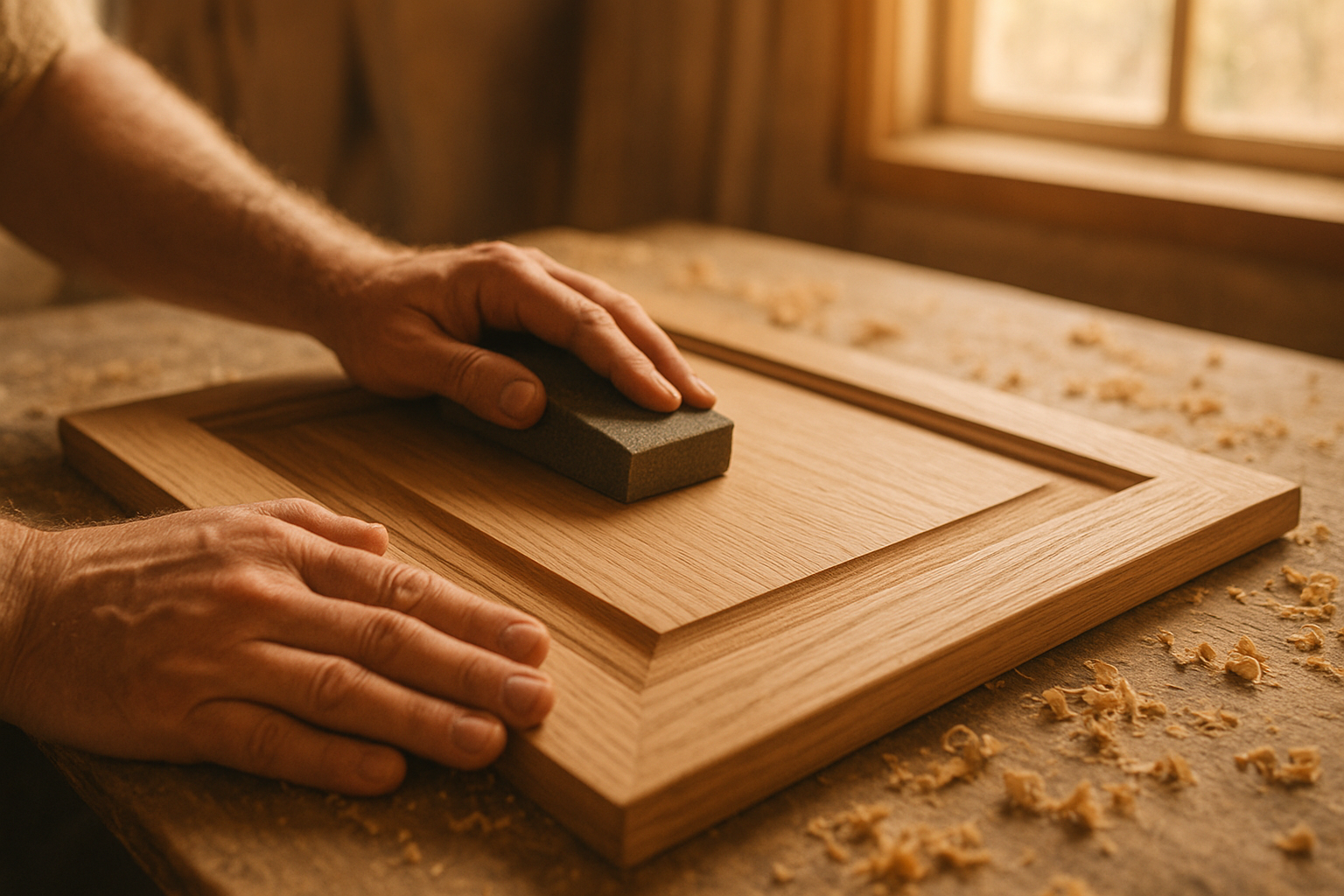
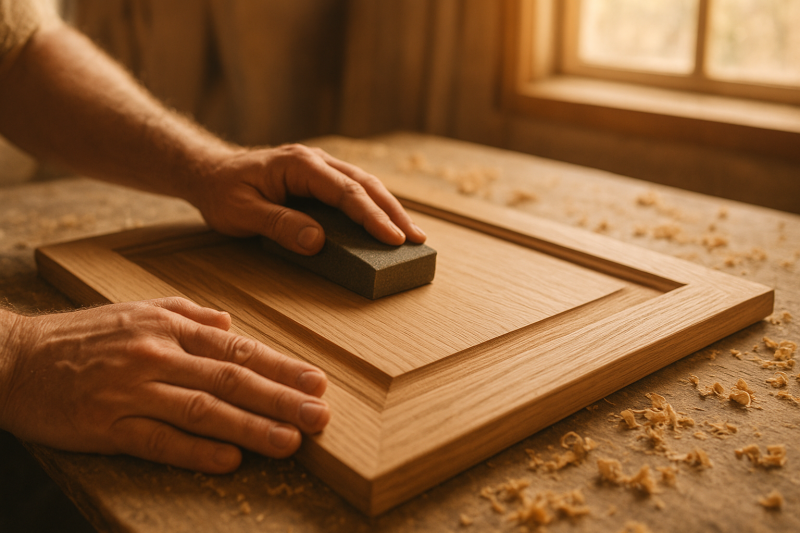
Careful sanding prepares wood surfaces before refinishing wooden cabinets with new stain.
Signs It’s Time to Refinish Your Wood Cabinets
Several clues suggest your kitchen is overdue for restoring wood cabinets rather than tolerating their current condition. Faded or blotchy stain, visible scratches, and a dull, worn sheen are the most obvious signals. In addition, sticky residue that won’t wipe clean often indicates the protective topcoat has broken down entirely.
- Stain color looks patchy or has faded unevenly across doors and drawer fronts.
- Surfaces feel sticky or tacky even right after cleaning.
- Small scratches, water rings, or dings show clearly under kitchen lighting.
- The wood tone no longer matches your countertops or flooring.
- Cabinet doors look dated compared to newer kitchens you admire online.
However, if cabinet boxes are warped, water-damaged, or structurally unsound, refinishing alone won’t solve the problem. In those cases, weighing the pros and cons of refinishing wooden cabinets against replacement can save you from investing in a finish that won’t hold. Similarly, exploring updating cabinets without a full replacement can help you decide between refinishing, refacing, or a more targeted repair before you spend a dime on materials.
Refinishing vs. Refacing vs. Painting vs. Replacement
Homeowners often lump these four options together, yet each solves a different problem. Refinishing wooden cabinets keeps the existing doors and boxes, changing only the color and topcoat on solid wood. Refacing, by comparison, replaces door fronts and applies new veneer to box exteriors, opening the door to entirely new profiles and materials. Painting is essentially a subtype of refinishing that swaps stain for opaque color, while full replacement removes everything down to the studs.
Specifically, refacing makes sense when you want a different door profile or your cabinets are laminate rather than solid wood. Meanwhile, refinishing is ideal for homeowners who already love their cabinet style and simply want a cleaner, more current finish. Because both approaches avoid demolition, they save significant time and money compared to gutting a kitchen entirely. If your cabinet boxes are laminate or badly damaged, though, cabinet resurfacing as an option to refresh outdated kitchen cabinets may be a smarter starting point than refinishing raw wood that isn’t there.
A Quick Comparison at a Glance
- Refinishing: Best for solid wood cabinets in good structural shape; changes color and sheen only.
- Refacing: Best when you want a new door style or your cabinets aren’t solid wood.
- Painting: A refinishing variant that fully covers the wood grain with opaque color.
- Replacement: Best when boxes are warped, water-damaged, or structurally compromised.
If you’re still weighing which path fits your home, browsing popular cabinet styles for refacing can clarify whether a style change or a simple refresh better matches your goals.
How to Refinish Wooden Cabinets: Step-by-Step Process
Refinishing wooden cabinets follows a fairly consistent sequence, whether tackled by a homeowner or a professional crew. Following each step in order — and resisting the urge to skip ahead — prevents the most common finishing mistakes.
- Remove doors and hardware. Take off all doors, drawer fronts, hinges, and knobs, labeling each piece with painter’s tape so it returns to the exact same spot later.
- Clean and degrease surfaces. Wash every wood surface thoroughly with a degreasing solution, since cooking residue and grease film prevent new finish from bonding correctly.
- Sand or strip the old finish. Work through progressively finer sandpaper grits, or use a chemical stripper, until you reach smooth, bare wood free of old coating.
- Apply stain or paint. Brush or spray thin, even coats, allowing full drying time between applications so color depth stays consistent across every door.
- Seal with a protective topcoat. Two or three coats of polyurethane or conversion varnish shield the wood from moisture, grease, and daily wear for years to come.
- Reinstall doors and hardware. Once fully cured, rehang doors and drawers, checking hinge alignment so everything opens and closes smoothly.
Above all, patience during drying time separates a professional-looking result from a rushed, uneven one. Each coat needs adequate cure time — often 24 hours or more — before the next layer goes on. Rushing this stage is, without question, the single biggest reason DIY refinishing projects fail.
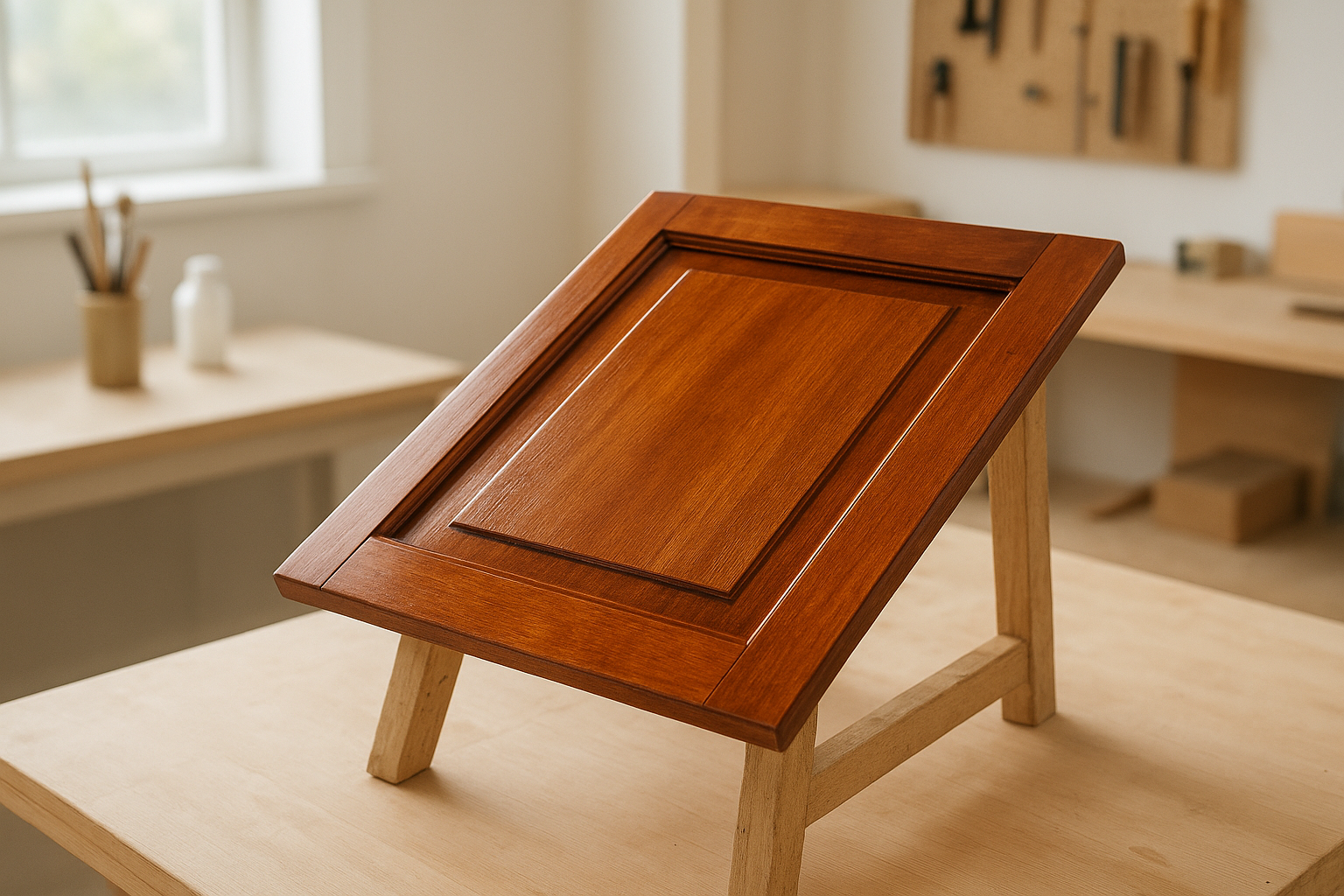
A new stain coat cures before the final protective topcoat is applied.
Tools and Materials You’ll Need
For readers considering the DIY route, having the right supplies on hand before starting prevents mid-project trips to the hardware store. A basic kit includes 120- and 220-grit sandpaper, a chemical stripper or citrus-based degreaser, tack cloths, a quality synthetic-bristle brush or HVLP sprayer, wood conditioner for uneven grain, your chosen stain or paint, and a durable topcoat such as polyurethane or conversion varnish. In addition, a well-ventilated workspace and a box fan help finishes cure evenly and safely.
What Does It Cost to Refinish Wood Cabinets?
Cost is often the deciding factor for homeowners comparing kitchen update options. Professional cabinet refinishing typically runs between $1,500 and $4,500 for an average-sized kitchen, depending on cabinet count, wood condition, and finish complexity. In comparison, full cabinet replacement frequently exceeds $10,000 once labor, materials, and installation are included.
Typical Cost Breakdown
- Small kitchen (10-15 doors): roughly $1,500 – $2,500
- Average kitchen (16-25 doors): roughly $2,500 – $3,800
- Large kitchen (26+ doors): roughly $3,800 – $4,500+
- Full replacement, for comparison: generally $10,000 – $25,000+
Consequently, refinishing offers a strong return for kitchens where the cabinet boxes remain structurally solid. Materials like paint, stain, and topcoat sealant account for a smaller share of the budget, while labor and prep work — sanding, stripping, and cleaning — make up the bulk of professional pricing. For homeowners weighing every budget-friendly angle, the guide to seven budget-friendly fixes for outdated cabinets outlines additional low-cost updates that pair well with a refinishing project.
How Long Does Refinishing Wooden Cabinets Take?
Most kitchens take between three and seven days from start to finish, though larger kitchens or complex color changes can stretch to two weeks. Drying and curing time between coats — not the labor itself — usually accounts for most of that timeline. Humidity, temperature, and finish type all influence how long each layer needs before the next step can begin.
Therefore, scheduling refinishing work during milder, low-humidity weeks can shave a day or two off the total project timeline. Professionals often stagger work across multiple zones of the kitchen so one section cures while another is being prepped, which keeps the overall project moving efficiently.
Choosing the Right Finish and Style
Selecting a finish is where personal style meets practical durability. Matte stains highlight natural wood grain, while satin or semi-gloss topcoats resist fingerprints and everyday splashes better. In particular, kitchens with heavy daily use benefit from tougher conversion varnish finishes that stand up to grease and moisture over time.
For homeowners exploring visual direction before committing, reviewing available finishes for cabinet refacing and classic cabinet designs can help narrow down a color palette that complements existing countertops and flooring. Warm honey and walnut tones remain popular for traditional kitchens, while charcoal-gray stains and matte black paints continue trending in more contemporary spaces.
DIY vs. Professional Refinishing: Which Is Right for You?
Although small refresh projects can be DIY-friendly, larger kitchens or complex color changes often benefit from professional help. Uneven sanding, poor ventilation, and rushed drying times are common pitfalls that experienced crews know how to avoid. Furthermore, professionals can quickly identify whether cabinets are genuine solid wood suited to refinishing or better candidates for full refacing.
It’s also worth noting that indoor air quality matters during any refinishing project. The U.S. Environmental Protection Agency notes that certain stains and finishes release volatile organic compounds during application and curing, so proper ventilation is essential regardless of whether the work is done by a homeowner or a professional crew (EPA, Indoor Air Quality). Similarly, sanding generates fine wood dust that can irritate the lungs and eyes; the Occupational Safety and Health Administration recommends dust masks, eye protection, and adequate airflow whenever sanding or stripping wood surfaces.
Homeowners throughout the greater Cincinnati area can turn to ktcabinetrefacing.com for hands-on craftsmanship and personalized guidance on whether refinishing, refacing, or a hybrid approach best fits a specific kitchen’s needs and budget. Their streamlined process is designed to minimize downtime in one of the busiest rooms in the house, according to information published on the company’s own resource pages.
Common Mistakes to Avoid When Refinishing Cabinets
Even careful DIYers run into a handful of predictable pitfalls. Skipping proper sanding leaves old finish trapped beneath the new coat, which almost always causes peeling within months. Working in humid conditions slows curing and can cloud the finish, while rushing dry times between coats leads to tackiness that never fully resolves. In addition, failing to label doors before removal often results in mismatched grain patterns once everything is reinstalled.
Consequently, taking an extra day for prep and labeling almost always saves multiple days of rework later. A little patience upfront consistently produces a smoother, longer-lasting finish.
Caring for Newly Refinished Wood Cabinets
Once refinishing wraps up, proper care extends the life of the new finish considerably. Wipe surfaces with a soft, damp cloth rather than abrasive sponges, and avoid ammonia-based cleaners that can dull or strip protective coatings over time. Similarly, wiping up spills quickly prevents moisture from seeping into seams around hinges and edges.
For a complete maintenance routine, the complete care guide for newly refaced cabinets covers cleaning schedules and product recommendations that keep finishes looking sharp for years.
Frequently Asked Questions About Refinishing Wooden Cabinets
What is refinishing wooden cabinets?
Refinishing wooden cabinets is the process of stripping, sanding, and reapplying stain, paint, or a protective topcoat to existing wood cabinet surfaces. It restores color and shine without replacing the cabinet boxes or doors themselves.
How long does refinishing wooden cabinets take?
A typical kitchen takes between three and seven days, depending on cabinet count and drying time between coats. Humidity and finish type can extend the timeline slightly.
How much does it cost to refinish wood cabinets?
Professional refinishing generally costs between $1,500 and $4,500 for an average kitchen, compared to $10,000 or more for full replacement. Price varies based on cabinet size, current condition, and chosen finish.
What’s the difference between refinishing and cabinet refacing?
Refinishing changes only the surface color and sheen of existing wood, while refacing replaces door fronts and veneers while keeping the original cabinet boxes. Refacing offers more style flexibility, while refinishing is often the more budget-friendly choice for solid wood cabinets in good structural shape.
Can all wood cabinets be refinished?
Most solid wood cabinets can be refinished successfully, but laminate, thermofoil, or veneer surfaces often cannot hold stain properly. A quick scratch test on an inconspicuous area reveals whether the material is solid wood.
Do I need to remove cabinet doors before refinishing?
Yes, removing doors and drawer fronts allows for even sanding and finish application without drips or missed edges. It also makes it easier to work flat on a table or sawhorses.
What type of finish lasts longest on kitchen cabinets?
Catalyzed conversion varnish and quality polyurethane topcoats tend to outlast standard lacquer in busy kitchens. These finishes resist moisture, grease, and daily wear better than single-coat options.
Is refinishing wooden cabinets a DIY-friendly project?
Simple stain refreshes can be manageable for confident DIYers, but full stripping and color changes require ventilation, patience, and proper safety equipment. Many homeowners hire professionals to avoid uneven finishes and lingering fumes.
How do I know if my cabinets are real wood or laminate?
Check cabinet edges and interior surfaces for consistent wood grain that continues through cuts and corners. Laminate typically shows a printed pattern that looks flat or repeats unnaturally.
What are common mistakes when refinishing cabinets?
Skipping proper sanding, applying finish in humid conditions, and rushing dry times between coats are frequent errors. These mistakes often lead to peeling, tackiness, or an uneven sheen.
How often should refinished cabinets be maintained?
Wipe cabinets weekly with a soft, damp cloth and avoid harsh chemical cleaners that break down the topcoat. A gentle wood-safe polish every few months helps preserve shine and protection.
Is refinishing better than replacing cabinets?
For structurally sound wood cabinets, refinishing is usually more cost-effective and faster than full replacement. Replacement makes more sense when boxes are water-damaged, warped, or no longer functional.
Final Thoughts on Refinishing Wooden Cabinets
Refinishing wooden cabinets remains one of the smartest ways to modernize a kitchen without the cost and disruption of a full remodel. As long as cabinet boxes are structurally sound, a careful sanding, staining, and sealing process can deliver a dramatically refreshed look for a fraction of replacement pricing. Ultimately, whether you tackle the project yourself or bring in a local specialist, understanding the steps, costs, timeline, and care involved helps ensure results that last for years to come.